

Summary of this article
Buyers are focusing more on everyday issues such as road connectivity, public transport, drainage, water availability and liveability before investing in any property.
This trend is especially seen in major residential markets such as Delhi-NCR, Bengaluru, Hyderabad, Chennai, Pune and the Mumbai Metropolitan Region.
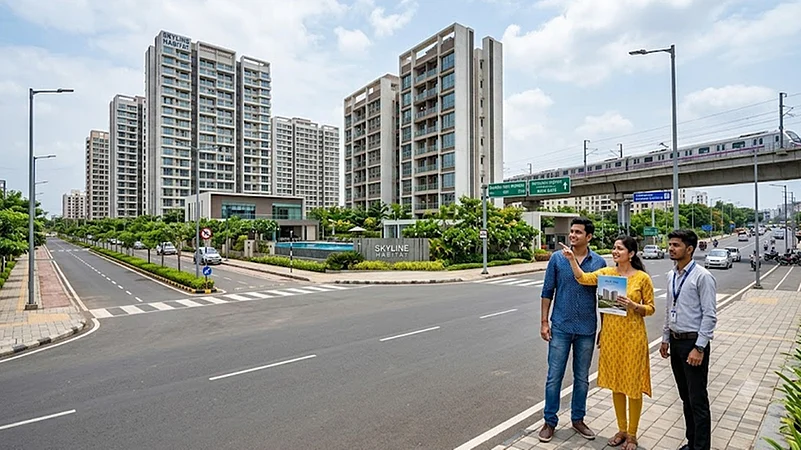
Several micro-markets are witnessing rising buyer confidence due to operational metro corridors, better road networks and dependable civic services.
Location, price and construction quality have always been the top priorities of homebuyers in India's residential real estate market. But these parameters are now being considered along with the preparedness and quality of the infrastructure surrounding the property.
Industry experts say buyers are focusing more on everyday issues such as road connectivity, public transport, drainage, water availability and liveability before investing in any property. This trend is especially seen in major residential markets such as Delhi-NCR, Bengaluru, Hyderabad, Chennai, Pune and the Mumbai Metropolitan Region (MMR).
According to ANAROCK Research, the total value of residential transactions in the top seven cities of India grew 6 per cent in 2025 from about Rs 5.68 lakh crore in 2024 to over Rs 6 lakh crore in 2025, while residential sales declined 14 per cent year-on-year from 4,59,645 units in 2024 to 3,95,625 units in 2025. That divergence indicates buyers are becoming more discerning, favouring projects with better long-term fundamentals over those with just better short-term affordability.

Infrastructure is rapidly becoming one of those basic building blocks. Several micro-markets are witnessing rising buyer confidence due to operational metro corridors, better road networks and dependable civic services.
Conversely, locations where infrastructure projects are still being built are experiencing relatively muted demand, as buyers are looking for more before committing financially for the long term.
Santhosh Kumar, Vice Chairman, ANAROCK Group, says, “Infrastructure and proximity to workplaces now influence homebuyer decisions more strongly than before. In fact, infrastructure quality is becoming a key buying criterion. Today's informed homebuyers tend to look beyond the property itself and also consider overall connectivity, the width of roads, reliable availability of water and power, and the social infrastructure of an area. These factors are playing an increasingly bigger role in shaping demand and long-term value. Quality infrastructure has a direct correlation to quality of life, property values and overall desirability of a location.”
Water security has also become a key consideration in urban homebuying. Bengaluru will have a daily shortfall of about 500 million litres of water in the summer of 2026, according to BWSSB and IISc data.
To this end, developers are increasingly integrating features like rainwater harvesting systems, sewage treatment plants and water recycling mechanisms to reduce dependence on municipal supply and improve sustainability.
Infrastructure-led development along a number of emerging corridors continues to affect property values. According to CREDAI-Colliers-Liases Foras, residential prices in the Dwarka Expressway corridor have seen a significant increase in the capital value with better connectivity.
Similarly, the Housing.com Market Trends notes that Sector 150, Noida, is witnessing a continuous rise in prices, thanks to planned urbanisation and infrastructure development. The Pune Metropolitan Region Development Authority (PMRDA) notes that the residential markets around Pune Metro Line 3 have also responded positively as connectivity has improved.
Industry experts say this is a sign of a wider evolution in buyer behaviour, rather than a fad. Buyers now have more access to digital platforms, regulatory disclosures and market data to take a more comprehensive look at projects than ever before.
Avneesh Sood, Director, Eros Group, says infrastructure is becoming central to residential value creation. “A quality home today is defined not only by the building itself but also by the surrounding ecosystem. Buyers consider connectivity, water security, drainage and overall liveability when making a purchase decision. Developers that design for long-term infrastructure resilience and are transparent with their customers are likely to build better trust and create more sustainable value over the long run,” he adds.
The Indian residential market is maturing, and buying decisions are based more on long-term usability than short-term considerations. As cities continue to invest in transport networks and urban infrastructure, completed connectivity and reliable civic services are set to have even higher impact on demand, pricing and buyer confidence across residential markets.