







Summary of this article
Nifty Bank rose 2 per cent after RBI announced a new forex swap facility
RBI's move could help banks attract cheaper overseas deposits from NRIs
Lower funding and hedging costs may support bank profits and liquidity
Nifty Bank Today: Banking stocks rallied on June 9 after the Reserve Bank of India (RBI) shared details of its new concessional forex swap facility, a move aimed at attracting more foreign money into India.
The Nifty Bank index, which tracks 14 major banking stocks, rose as much as 2 per cent to an intraday high of 55,134.60. Public sector lenders were the top gainers, with the Nifty PSU Bank index rallying up to 3.50 per cent, while the Nifty Private Bank and Nifty Financial Services also rose around 1.50 per cent each.
Among the top gainers in the Nifty Bank index were Bank of Baroda, which jumped 5.5 per cent, Canara Bank, up nearly 4 per cent, and Punjab National Bank, which gained 3.8 per cent. Federal Bank and IDFC First Bank also climbed around 3.25 per cent each. However, index heavyweight HDFC Bank was trading flat.
What RBI Announced?
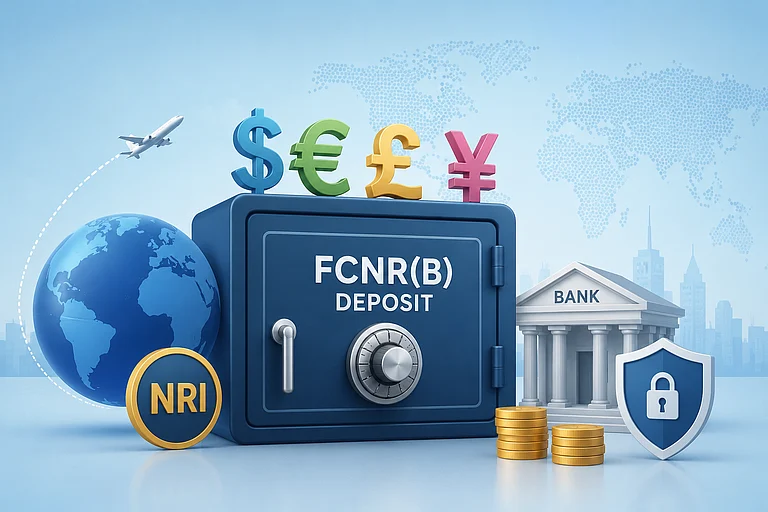
The RBI introduced a dollar-rupee forex swap facility for fresh Foreign Currency Non-Resident (Bank), or FCNR (B), deposits with maturities of three to five years.
The facility is designed to encourage banks to attract more foreign currency deposits from non-resident Indians (NRIs). FCNR (B) deposits allow NRIs to keep their savings in foreign currencies such as the US dollar, pound sterling or euro without taking on exchange-rate risk.
Under the new framework, banks can raise fresh FCNR (B) deposits in any freely convertible foreign currency. However, when they want to swap those funds with the RBI, the transaction will be carried out only in US dollars.
The facility has come into effect immediately and will be available for eligible FCNR (B) deposits raised between June 8 and September 30, 2026. Banks can access the swap window until October 16, 2026.
The move is aimed at making it easier and cheaper for banks to attract overseas deposits. Typically, banks raising foreign currency deposits have to manage the risk of currency fluctuations, which can add to their costs. By offering a concessional swap facility, the RBI is helping reduce that burden.
Why Did Banking Stocks React Positively?
Investors believe the measure could encourage banks to attract more overseas deposits while helping them manage currency risk at a lower cost.
According to Vinod Nair, head of research at Geojit Investments, the market sees the move as beneficial because it could improve banks' funding profiles while lowering costs.
He said the forex swap facility is a "liquidity-positive measure that reduces hedging costs and enables banks to access stable long-tenor foreign funding, thereby strengthening liability profiles."
Nair added that large private-sector banks and major public-sector lenders are likely to benefit the most because they have better access to global funding markets. If banks are able to mobilise FCNR (B) deposits and external commercial borrowings at lower costs, it could support profitability, improve funding efficiency and attract additional capital inflows.



He also noted that easier access to overseas funding could eventually lead to a valuation re-rating for some banking stocks, although the actual benefits will depend on how successfully banks utilise the facility and on global market conditions.





