





Summary of this article
NSE's DRHP filing has put several shareholder stocks in focus
SBI, LIC, Bank of Baroda and GIC Re could benefit from the listing
Investors are watching if the IPO helps unlock the value of their NSE stakes
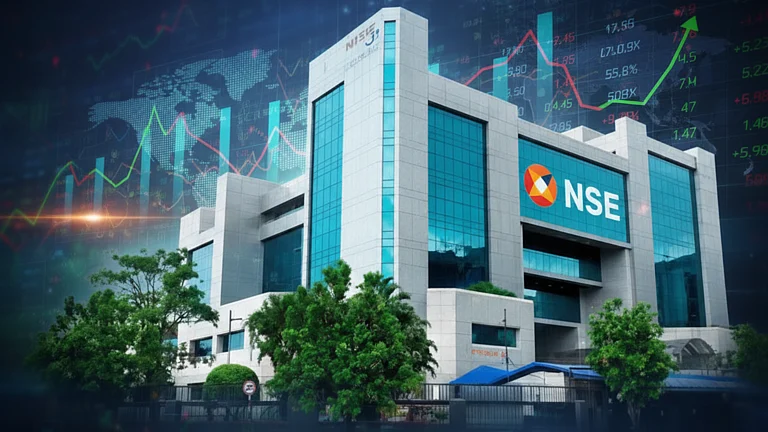
NSE IPO: The National Stock Exchange's (NSE) long-awaited initial public offering (IPO) has brought several shareholder stocks into focus, including State Bank of India (SBI), Bank of Baroda, General Insurance Corporation of India (GIC Re), Life Insurance Corporation of India (LIC), IFCI and Tata Investment Corporation.
The renewed attention comes after NSE on June 17 filed its Draft Red Herring Prospectus (DRHP) with market regulator Securities and Exchange Board of India (Sebi) for its proposed public issue. The IPO will be entirely an offer for sale (OFS) of up to 148.90 million shares, accounting for nearly 6 per cent of the exchange's equity capital. Since no fresh shares will be issued, existing shareholders will use the IPO to sell part of their holdings and unlock value.
The filing has renewed the value-unlocking theme around companies that own stakes in the unlisted exchange. Investors are assessing whether NSE's eventual market valuation could help narrow the gap between the carrying value of these investments and their potential market worth.
Key Shareholders In Focus
The DRHP shows that LIC is NSE's largest shareholder, holding a 10.72 per cent stake, or 265.30 million shares. SBI owns 3.23 per cent of the exchange, while its subsidiary SBI Capital Markets holds another 4.33 per cent. Stock Holding Corporation of India (SHCIL) owns 4.44 per cent, GIC Re holds 1.64 per cent, and The New India Assurance has a 1.42 per cent stake.
Several of these investors will sell part of their holdings through the NSE IPO. SBI plans to offload up to 24.75 million shares, Bank of Baroda up to 1.10 crore shares, GIC Re up to 1.07 crore shares, and SHCIL up to 10.99 million shares. New India Assurance, National Insurance Company and United India Insurance Company are also participating in the offer for sale.
LIC is not selling any shares in the IPO. Even so, investors are closely watching the insurer because it remains NSE's largest shareholder and could benefit from any value unlocking following the listing.
Tata Investment Corporation, which owns a 0.20 per cent stake in NSE, has also attracted attention despite its relatively small holding. Other listed NSE shareholders include HDFC Life Insurance, Indian Bank, SBI Life Insurance and Punjab National Bank.
IFCI's exposure to NSE is indirect. The state-owned financial institution owns 52.86 per cent of SHCIL, one of the exchange's largest shareholders and a participant in the offer for sale. As a result, some investors view IFCI as a proxy play on the NSE listing, although the extent to which the benefits may flow through to IFCI remains a subject of debate.
How NSE's Listing Could Unlock Value
The DRHP filing is seen as an important step towards listing one of India's largest unlisted companies, giving investors a clearer picture of NSE's market value.
Reports suggest the IPO could value the exchange at around Rs 30,000 crore, although the final valuation will only be known after the company announces its price band. Investors are also keen to see how the IPO valuation compares with NSE's current valuation in the unlisted market.
For many market participants, the bigger story is the value of NSE shares held by banks, insurers and investment companies. A successful listing could help investors better assess the worth of these holdings, especially for shareholders that bought their stakes years ago at much lower prices.





