







Summary of this article
NSE filed its DRHP for a historic public issue
Estimated total IPO size ranges up to Rs 30000 crore
The public offer consists entirely of an offer for sale
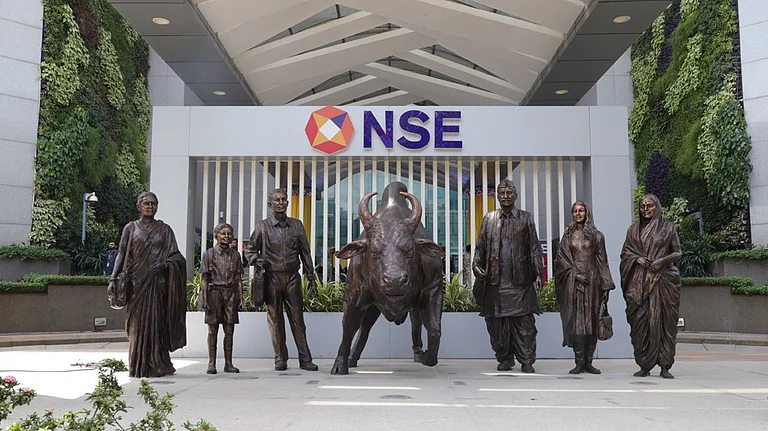
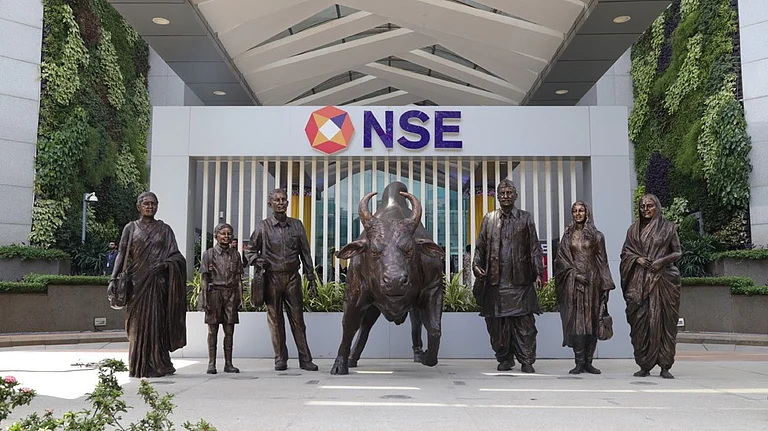
The National Stock Exchange (NSE) officially filed its draft red herring prospectus (DRHP) with the Securities and Exchange Board of India (Sebi) on June 17, 2026, paving the way for one of the most highly anticipated initial public offerings (IPOs) in the Indian capital markets.
Based on the exchange’s DRHP and recent market reports, here is a look at the key things investors need to know about the upcoming NSE IPO.
NSE IPO: Estimated Issue Size
The exchange’s public issue comprises up to 14,89,05,525 equity shares of face value of Re 1 each. According to multiple market reports the total IPO size of the company is set to range between Rs 21,000 crore and Rs 30,000 crore, making the public issue one of the largest issues in the history of the Indian primary market. Notably, the company had first filed draft papers for a public issue of Rs 10,000 crore in 2016.

NSE IPO: OFS Participants
NSE’s public issue is set to consist only of an offer-for-sale (OFS) component consisting entirely of no fresh issue of shares. The top 10 corporate selling shareholders paring their stakes include State Bank of India with up to 24.75 million shares, MS Strategic (Mauritius) offering up to 16 million shares, and Canada Pension Plan Investment Board, which is selling up to 11,874,060 shares.
Other major sellers are Aranda Investments (Mauritius) Pte with up to 1,12,46,336 shares, Bank of Baroda with up to 1,09,86,250 shares, and Stock Holding Corporation of India with up to 1,08,90,000 shares. General Insurance Corporation of India is set to offload up to 1,06,58,000 shares, followed by The New India Assurance Company with up to 1,05,00,000 shares. National Insurance Company Limited and United India Insurance Company are each offering up to 60,00,000 shares.
NSE IPO: Company’s Financials
The exchange reported a total income of Rs 18,713.37 crore for financial year 2026, down nearly 3 per cent from Rs 19,176.831 crore in FY 2025. For the financial year ending March 31, 2026, the net profit stood at Rs 10,302.061 crore, a 15 per cent decrease from the Rs 12,187.68 crore recorded in FY 2025.
NSE IPO: Business Model
NSE functions as a Market Infrastructure Institution (MII) which offers investors facilities such as trading, clearing, and settlement services. The company offers services across the cash market, futures, options, commodity derivatives, and currency derivatives. The company's business is heavily reliant on transaction charges, which accounted for 78.65 per cent of its revenue from operations in Fiscal 2026. The exchange’s options business also contributed 60.22 per cent of the operating revenue during the same period.
The exchange faces intense competition across various segments from other Indian stock exchanges, global exchanges, alternative trading platforms, and non-traditional venues, such as multilateral trading facilities and over-the-counter service providers, according to the DRHP.
NSE IPO: Objective
As the NSE IPO is purely an OFS, the exchange will not receive any proceeds from it. The primary objective of the offer is to carry out the sale of shares by the selling shareholders. All offer proceeds will be distributed directly to these respective selling shareholders in proportion to the shares they offer.
NSE IPO: Brief Timeline
The journey to the public listing of the National Stock Exchange has gone on for a decade. The exchange first filed its initial draft papers in December 2016. However, the process was stalled for years together on account of regulatory investigations and legal battles concerning governance and compliance issues.
The exchange encountered a significant roadblock in April 2019, when Sebi passed a Whole Time Member order against the exchange regarding the colocation scandal, prohibiting the company from accessing the securities market for a period of six months.

NSE appealed against the order, and later in January 2023, the Securities Appellate Tribunal (SAT) set aside the Sebi order while upholding non-monetary directives. However, the exchange finally achieved a major breakthrough in January 2026, when the market regulator granted it a no objection certificate (NOC) for filing draft papers for its public issue. The regulatory clearance received in January led to the exchange filing its DRHP.
What is the estimated issue size of the upcoming NSE IPO?
The total issue size of the NSE IPO is estimated to range between Rs 21,000 crore and Rs 30,000 crore.
Who are the major institutional shareholders selling their stakes in the NSE IPO?
State Bank of India, Bank of Baroda, and Canada Pension Plan Investment Board are among the top institutional sellers offloading shares.


Why did it take a decade for the National Stock Exchange to file its DRHP?
The listing process was delayed for years due to regulatory investigations and legal battles surrounding the colocation scandal.





