

Summary of this article
Amid slowing residential real estate activity in many saturated markets of NCR, Panipat has emerged as a profitable residential investment destination in a very short span of time.
It is fast gaining momentum as a potential real estate destination in Haryana.
Haryana’s Vision 2047, aiming for a $1 trillion economy and nearly 50 lakh new jobs, is likely to further boost long-term housing demand across emerging cities like Panipat.
For years, Panipat's identity rested on two things: its historic battles and its textile industry. That perception is now shifting. Investors and homebuyers looking at Panipat today see more than its past; they see its future, and real estate is the biggest reason for that change.
Infrastructure, connectivity and robust industrial development have accelerated this transition. Amid slowing residential real estate activity in many saturated markets of the National Capital Region (NCR), Panipat has emerged as a profitable residential investment destination in a very short span of time. It is fast gaining momentum as a potential real estate destination in Haryana. The city has developable land inventory as well as developer interest and demand from end homebuyers.
A New Growth Centre: Panipat
Expanding market outreach of NCR has prompted buyers and investors to look at cities like Panipat, which are offering better lifestyle at greater value with connectivity to employment hubs. Cost of living and buying a house in Tier-II cities is 25-50 per cent lower than Tier-I cities.
The Union Budget 2026-27 further strengthened this trend with an unprecedented capex outlay of Rs 12.2 lakh crore with continued focus on infra, housing, urbanisation and connectivity projects that will drive demand for goods and services across Tier-II and Tier-III cities.

Thriving on Connectivity
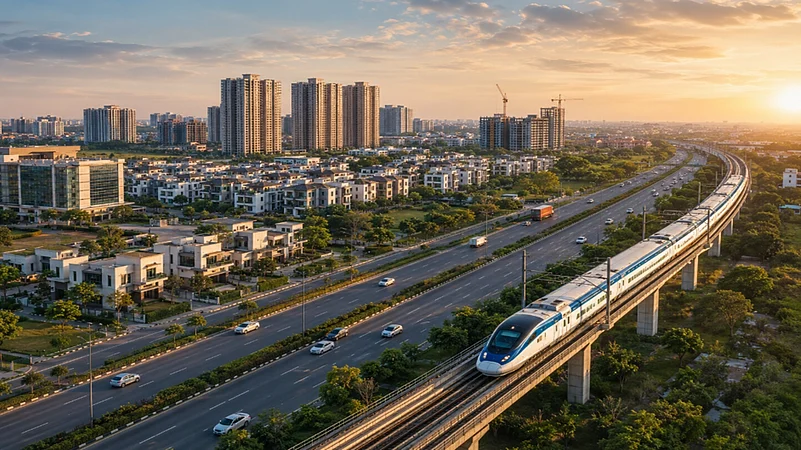
Real estate in Delhi and Gurugram have already boomed but high prices and limited availability have started driving buyers towards new destinations. Panipat offers buyers larger plots of land at competitive prices. Wth scope for planned development and with the Namo Bharat corridor coming up, living in Panipat and working at NCR’s job centres is only going to get convenient.
The Haryana Cabinet has approved the Rs 33,051 crore Delhi-Panipat-Karnal Namo Bharat corridor, set to cut travel time between the two cities and spur development along the route. The newly-inaugurated 40.6 km Jind-Gohana Greenfield Highway adds to this, cutting Jind-Gohana travel time from about two hours to just 40 minutes and improving connectivity to Panipat, Rohtak and Delhi-NCR. In fact, Haryana's Budget 2026-27 has prioritised regional connectivity through proposed RRTS corridors and major transport investments, reinforcing the state's long-term urban expansion strategy.
Parvinder Singh, CEO, Trident Realty, says, “Haryana’s growth story is expanding beyond its traditional urban hubs. Panipat is fast-emerging as one of the most sought-after growth destinations in the state. The city’s growth can be attributed to multiple factors such as improving connectivity, expansion of industrial infrastructure and rising developer interest in the city. Whether it’s the Delhi–Panipat–Karnal Namo Bharat corridor project or continued enhancements along NH-44, improved connectivity is making Panipat an attractive destination for homebuyers and investors alike."
"Its industrial base is already among the strongest in the region - Panipat is India's largest textile recycling hub and the biggest centre for recycled fibre production in Asia, anchored by close to $50 million in investment. Combined with its evolving urban infrastructure, Panipat is well-positioned to transform into a modern integrated residential and commercial hub, creating sustained long-term value for residents, businesses and the real estate sector alike,” he adds.
Homebuyers today want integrated townships, gated communities, clubhouse amenities, wellness-focused living and larger homes, and this is driving demand for organised residential development in emerging markets like Panipat.
Robin Mangla, President, M3M India, says, “Panipat is gradually emerging as one of the Haryana's promising real estate destinations where infrastructure, industrial growth and well-planned urban development are creating a strong foundation for sustained growth. Today's homebuyers are looking beyond standalone residences and increasingly prefer self-sustaining ecosystem that bring together quality living, convenience, recreation as well as wellness within a single destination. Developments that seamlessly integrate residential, commercial and recreational spaces are redefining urban lifestyles by offering a holistic living experience. The combination of modern architecture along with top-notch amenities and thoughtfully-curated green spaces is elevating the standard of urban living in Panipat while establishing it as one of Haryana’s most promising real estate markets."
Industrial Strengths Drive Housing Demand
Panipat is already poised for a robust real estate market with economic underpinnings. It is among India’s top textile hubs, famous for carpets, blankets, home furnishings and recycled textile manufacturing, with thousands of businesses providing employment for a large working population.
This industrial base naturally feeds demand for housing, rentals, warehouses and commercial space and has been the reason for Panipat’s steady development over the years. Unlike newly-planned locations banking purely on future promise, Panipat already has an established economy to build on. Haryana’s Vision 2047, aiming for a $1 trillion economy and nearly 50 lakh new jobs, is likely to further boost long-term housing demand across emerging cities like Panipat.




Panipat is now in a growth phase, backed by improving infrastructure, expanding industry, rising housing demand and increasing investor interest. As connectivity projects progress and organised residential development scales up, strategic infrastructure, a strong manufacturing base and shifting homebuyer preferences together position Panipat as one of North India’s most promising residential and investment destinations.