




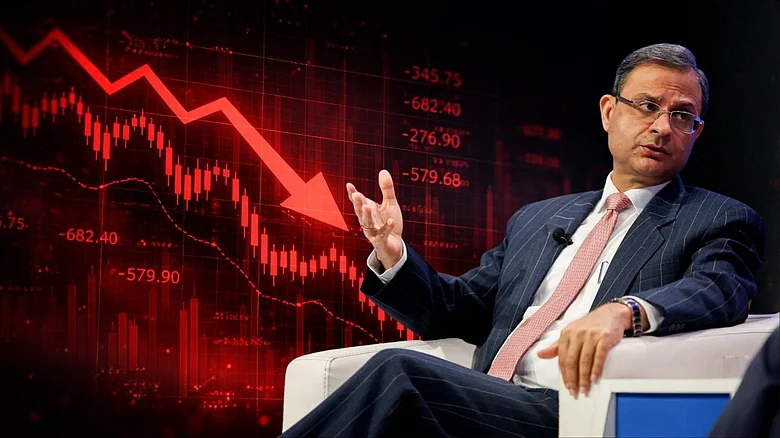

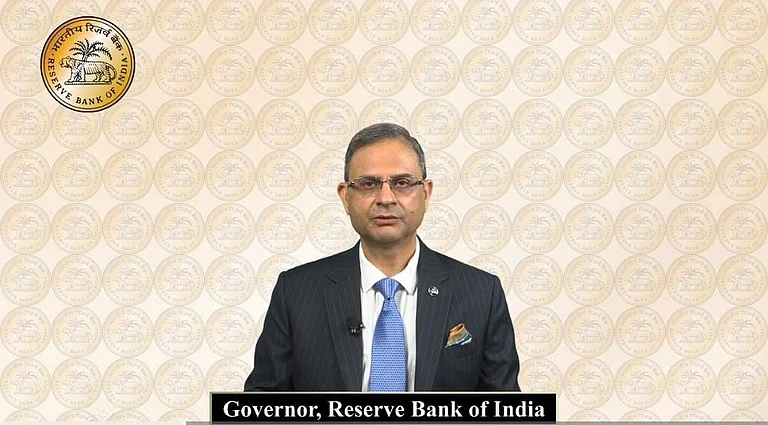
RBI MPC Meet 2026: Equity benchmark indices opened in the red on February 6, 2026 and continued to stay under pressure after the Reserve Bank of India’s (RBI) monetary policy committee (MPC) opted to maintain status quo on interest rates and policy stance. The MPC voted unanimously to keep the repo rate unchanged at 5.25 per cent, and maintained a neutral policy stance, RBI Governor Sanjay Malhotra announced, citing benign inflation levels, steady growth momentum, and rising external uncertainties.
However, later the benchmarks pared losses to trade around flat levels.
Rate-Sensitive Sectors Trade Mixed
Shares of rate-sensitive sectors such as banks, non-banking financial companies (NBFCs), real estate, and automobiles traded on a mixed note. Nifty Auto tumbled as much as 1.10 per cent, Nifty Realty plunged as low as 1.50 per cent, Nifty Bank fell up to 0.70 per cent, and Nifty Financial Services dipped as much as 0.57 per cent.
However, at the time of writing, Nifty Auto and Nifty Bank were still trading in the red, about 0.20-0.50 per cent lower, while Nifty Realty, and Nifty Financial Services were trading flat-to-positive.
Losses extended to other sectors as well. Nifty IT traded under pressure amid lingering concerns over AI-led disruption, following the launch of new automation tools for the Claude platform by US-based AI firm Anthropic. The IT index tumbled as much as 2.57 per cent during the session. Nifty Metal and Nifty Pharma also declined over 1 per cent each. On the other hand, Nifty FMCG bucked the overall trend, rising over 1.50 per cent, led by gains in sector heavyweight ITC Ltd.

RBI MPC Meet 2026: Rationale Behind Keeping Rates Unchanged
The MPC said external headwinds have intensified since the last policy review, though the successful completion of trade deals has improved the overall economic outlook. It noted that near-term domestic inflation and growth conditions remained supportive.
Headline inflation stayed below the upper tolerance band during November-December, while the CPI inflation outlook for Q1 and Q2 of FY27 remained benign and close to the target. The marginal upward revision in inflation projections was attributed mainly to higher precious metal prices, even as underlying inflation pressures stayed muted.
On growth, the MPC said economic activity continued to be resilient, as the First Advance Estimates indicated sustained momentum largely led by domestic demand despite a challenging global environment.
The minutes of the meeting will be released on February 20, 2026, and the next MPC meeting is scheduled for April 6-8, 2026.
What RBI MPC's Decision Means For Investors
The RBI MPC’s decision to hold rates indicates a phase of wait-and-watch for investors. Experts say that this augurs well for banking stocks.
According to Vaqarjaved Khan, CFA, senior fundamental analyst at Angel One, the single-biggest takeaway from RBI MPC's decision is the signal of "policy stability" amid moderating inflation and resilient growth. He told Outlook Money: "This avoids any hawkish surprises that could pressure rate-sensitive sectors like banking, real estate, and autos, while keeping the door open for potential easing if global risks subside bolstering market sentiment in a volatile environment."
He advised investors to selectively increase exposure in equities, focusing on quality growth stocks where valuations are reasonable and earnings visibility is strong. However, he added caution, advising investors to stay defensive in cyclicals and high-debt names, as persistent rupee weakness and global trade uncertainties could sustain volatility. Overall, he said, the neutral pivot supports a constructive outlook for Indian markets going forward.
Nikunj Saraf, CEO of Choice Wealth, said the RBI’s decision reflected that the current policy setting was “adequately balanced” and did not call for any immediate action in either direction. He said that by maintaining a neutral stance, the central bank had deliberately kept its options open at a time when the impact of earlier rate cuts was still playing out in the economy.


“After substantial rate reductions over the past year, the focus now is on allowing full transmission of earlier actions while remaining firmly data-dependent,” he said.
According to Saraf, the message from today’s policy was one of patience and stability, aimed at anchoring expectations and protecting macroeconomic balance, with any future action contingent on clear signals from the data.
VK Vijayakumar, chief investment strategist at Geojit Investments, said the RBI’s monetary policy announcement was largely on expected lines.
He said the RBI Governor sounded optimistic about the growth prospects in FY27 since “high frequency indicators suggest continuation of the growth momentum.” Vijayakumar added that his remarks on trade pacts were particularly encouraging, as these are likely to improve investments and further strengthen growth prospects.
According to him, an important takeaway from the policy was the Governor’s observation of an “uptick in bank credit growth in recent months,” a development that could translate into improved profitability for banks going ahead, which is a positive cue for banking stocks.





