



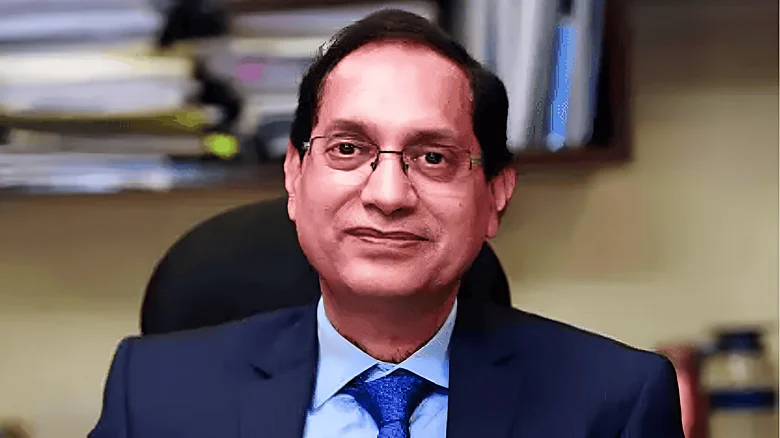

The Securities and Exchange Board of India (Sebi) is considering new regulations for stockbrokers, the primary market and mutual funds. At the ICICI Securities -India Investor Conference 2026, Sebi Chairman Tuhin Kanta Pandey mentioned that the capital market regulator is reviewing regulations across different facets of the capital market and highlighted the role of the intermediaries in the capital market and the need for greater trust in the ecosystem.
He said Sebi is currently reviewing regulations for stockbrokers, mutual funds, public issues and research analysts as they play a crucial role in the securities market and are often the first point of contact for investors.
“Stock brokers, in particular, they are the face of the market for millions of investors. They are the first point of contact. They interpret complexity and shape investor experience. And with that comes responsibility, the responsibility to ensure robust onboarding through proper KYC, responsibility to prevent misuse and fraud, responsibility to provide fair, transparent, and prompt service, and above all, responsibility to act with integrity-avoiding conflicts of interest and mis-selling. It is because ultimately, investors experience the market through intermediaries,” said Pandey.
Pandey added that Sebi is currently reviewing regulations for stockbrokers, mutual funds, initial public offerings (IPOs) and research analysts.



Variable Net-Worth Requirements For Stockbrokers
Pandey said that Sebi is currently reviewing a framework which can allow variable net worth requirements for stockbrokers. The new framework is expected to allow stockbrokers to base their minimum capital requirements on the size of their business and risk exposure rather than applying a single flat rate.
“We are currently reviewing the framework for variable net worth requirements for stock brokers so that capital requirements better reflect operational scale and risk,” Pandey said.

Pre-Open Call Auction For IPOs
Sebi is also looking at enhancing price discovery for shares of newly listed companies through the opening of a designated trading window before the regular market hours.
“We are examining improvements in price discovery, particularly through the pre-open call auction mechanism for initial public offerings (IPOs) and relisted securities to ensure more stable and efficient market openings,” Pandey said.
The pre-open call auction for IPOs can potentially reduce extreme opening-minute price volatility and protect investors from buying stocks at artificially inflated peaks or selling them in a panic.
Easing Compliance for Research Analysts
The capital market regulator is also seeking to simplify and reduce the regulatory and administrative paperwork burdens placed on market analysts, such as relaxing strict call recording rules during institutional discussions.
“We are also working towards easing compliance requirements for research analysts, including rationalising requirements, such as call recording obligations in institutional interactions,” Pandey said.
Intraday Borrowing Framework For Mutual Funds
Sebi has also proposed to establish a flexible system allowing mutual funds to borrow money during a single trading day to cover short-term cash flow gaps rather than using borrowing strictly as an emergency last resort. “For mutual funds, we are proposing a more practical framework for the use of intra-day borrowing not just as a contingency tool, but as an efficient mechanism for managing temporary liquidity mismatches,” Pandey said.
The introduction of such a framework can potentially ensure smoother fund operations and protect performance, as fund managers won’t be forced to sell stocks at low prices just to meet temporary redemption demands.
Sebi's Moves To Enhance Capital Market Participation
Pandey also highlighted the several steps Sebi has recently taken for the growth of the capital market. The Sebi chair highlighted that the regulator has accelerated IPO timelines, speeded up rights issues, rationalised listing norms, and expanded the corporate bond market architecture to include REITs and InvITs. Additionally the regulator has also eased access for global capital by introducing the SWAGAT framework for single-window onboarding along with simplified FPI processes using digital signatures, and collaborated with the Reserve Bank of India to reduce registration timelines.

The regulator has also granted flexibility to accredited investor schemes alongside the introduction of fast-track fund launches and the dematerialisation of alternative investment fund units.





