






Summary of this article
Luxury housing demand surges across Indian cities
Buyers prioritise lifestyle, space, and wellness
Income growth and aspirations drive premium demand
The residential real estate market in India is undergoing a chain of changes. Even as the overall housing volumes remain stable, the value of transactions has surged, which is largely driven by a sharp rise in luxury housing demand. Homes that are priced above Rs 1 crore dominate the sales in Tier-I and Tier-II markets. These units have a specified target audience of affluent buyers, NRIs, and high-income professionals; both factors affect the demand curve in the market.

Post-Pandemic Changes In Buyer Sentiment
The pandemic turned out to be one of the most challenging times for people, just as it did for the real estate market. The buyer preferences and how demand is viewed have changed significantly. Homes are not just consumption assets or a form of investment; they are now largely viewed as spaces that combine work, living, wellness and lifestyle standards for buyers. “Post pandemic, we’ve witnessed a historic shift; the home has moved from being a status symbol to now a sanctuary,” says Jitender Yadav, Director, Roots Developers.
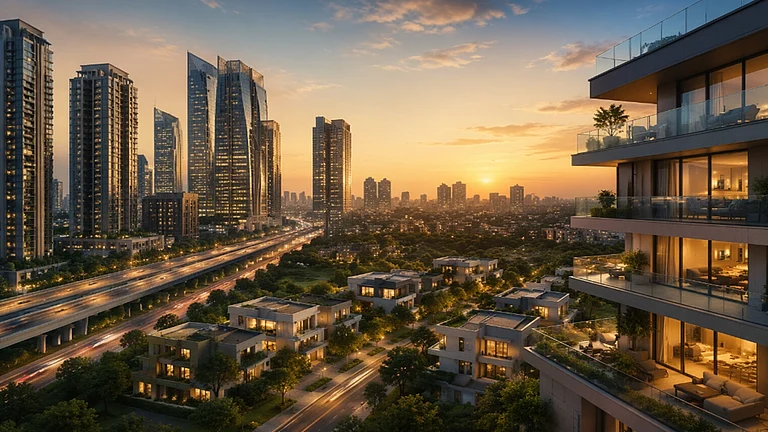
Buyers prefer space, privacy, and quality of living over affordability, rooted in the rise of hybrid and flexible work models. These work upgrades have also upgraded how buyers are looking for larger homes with amenities that help in leading a healthy lifestyle. “The psychology has shifted towards wellness-integrated living, where private gyms, home offices, and terraces are viewed as essential health infrastructure. This shift is visible in the growing demand for ultra-luxury high rises, where gated communities now offer resort-style living as a standard, not a perk,” adds Yadav.
In essence, the post-pandemic psychology has moved from a price-cautious buyer to a value-sensitive buyer, who opts for a lifestyle which sometimes outweighs cost considerations.
Future Outlook Of This Demand
Most reports throughout 2025 and 2026, for example, the Q1 India Real Estate Report by Knight Frank, mentioned how the premium segment has performed in various markets. The data varied; however, the result was the dominance of the premium segment in the markets. One can attribute this growth to various factors, but the highlight remains on how the user demand has changed.
One might question how this is expected to turn out in the next few years. “Looking at the current momentum, the demand for India’s real estate sector feels quite sustainable over the next 3 to 5 years. We’re seeing genuine end-user interest driven by rising income levels, better infrastructure, and a shift towards quality, sustainable homes rather than pure speculation. With steady economic growth and urbanisation, absorption must remain healthy without the wild swings of the past. Premium and mid-segment projects focused on wellness and green living are drawing both buyers and investors who want to stay for the long haul,” adds Yadav.
While the growth may be moderate in a few markets, the demand is expected to remain resilient rather than to collapse entirely. This segment is anchored by a strong demand from users who value quality of living more than just having a home as an asset.
Rising Income Or Aspirational Living?
Luxury housing is also supported by the growing lifestyle of people, growing economies, better pay, and aspirational housing influenced by many foreign markets. On one hand, there is a rise in disposable incomes, which is prominent in urban employment hubs, where the buyer pool has expanded, who can afford premium homes. On the other hand, there is a disproportionate rise in sales value as compared to unit volumes, which highlights that buyers are choosing better homes and not just more homes.
Rishabh Periwal, Vice President, Pioneer Urban Land and Infrastructure, says, “There is a clear shift towards larger homes, better layouts, and developments that offer a more complete lifestyle. Many buyers today are not just purchasing a home; they're upgrading their standard of living. Global exposure with evolving work-life dynamics and a stronger focus on comfort and well-being are all contributing to this shift. So while income enables the decision, it is aspiration and lifestyle intent that are clearly driving it.”
How Has ‘Luxury’ Changed?
In recent years, the definition of luxury has evolved. It is not just confined to the Tier-I high-end buyer; luxury segments are also available to a wider audience now. In 2026, luxury is defined as a more holistic concept, such as experience-driven living, technological integrations, sustainability, low-density planning, and projects of a low-density nature.
“Earlier, it was largely defined by location and scale. Today, it is far more nuanced and experience-driven. Buyers are looking for housing that offers privacy and lower density. There is also a growing emphasis on wellness, technology integration, and seamless service elements that were once considered premium add-ons but are now expected. The idea of luxury today is less about extravagance and more about comfort, convenience, and a sense of exclusivity that is built into the daily living experience,” adds Periwal.
The Indian luxury boom is now evolving into a deeper structural transformation in terms of economic capacity and consumer mindset. The segment is also no longer just available to a niche audience. It has evolved into a growth engine for the housing market.





