
Can you tell us about your first job and how much was your first pay cheque?
Growing up, I was surrounded by farms and I was always working and helping my father with his cultivation business. I wanted to be an entrepreneur, in particular a floriculturist. However, my father’s love for flights and machines got me into aeronautical engineering.
My first real job after college was at the Power Grid Corporation of India, around the year 2000. There, I worked on civil projects as a site project manager on a salary of Rs 3,000.
Was it enough for your needs back then?
Yes, it was enough for my needs at that time, and I still have the same humble lifestyle I had during my upbringing.
When you earn your own money, you understand the value of effort and discipline. You become more mindful about spending and respectful of what you earn
Do you remember doing anything special with your first pay cheque?
I used to work at the power plant on the construction site. We lived in a small hut we had built there, while doing site work. I used to handle the site workers and cash-related work for the company. This meant I had to take care of workers’ union, and help them with petty cash to keep the construction going.
I spent my first salary helping construction workers with their financial needs. That experience stayed with me, and it taught me the value and importance of supporting people around you.
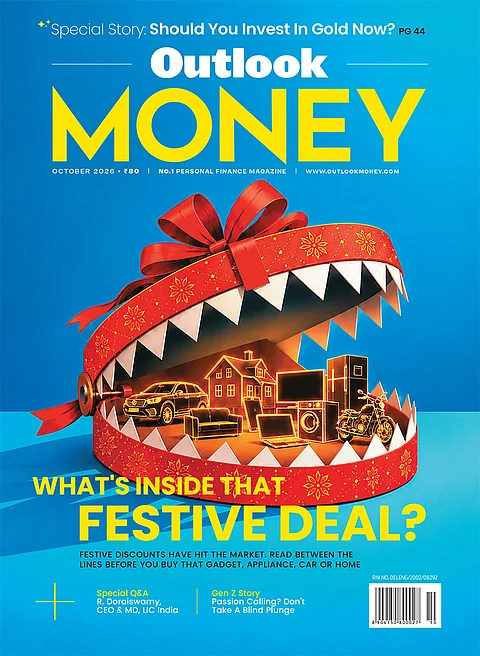
1 October 2026
Get the latest issue of Outlook Money

Do you have any regrets about how you should have spent your first pay cheque?
Not at all. I truly valued being able to help the construction workers. At that time, I was also handling procurement for raw materials, which helped me understand the practical value of money very early in my career.
Would you like to give your younger self any advice?
Working for yourself will be your biggest teacher. Building Alice Blue over the last 20 years has taught me far more than any job I ever did.
Is there any story or experience that reminds you of your first pay cheque?
What stands out is the sense of responsibility I felt. Living on-site, building my own shelter, and working closely with labourers gave me a very grounded perspective. It taught me humility and respect for every role, regardless of scale.
Do you think earning your own money changed your worldview about how you spend and save? Could you elaborate?
Absolutely. When you earn your own money, you understand the value of effort and discipline. It made me more mindful about spending, and more respectful of every rupee that I earned. It also shaped how I think about money, not just as something to spend, but something to use for a purpose.
Do you think your first pay cheque shaped your career or was a stepping stone? How was that so?
Yes, it definitely played an important role.
That early exposure I got from doing ground-level work, responsibility, and managing resources shaped my approach to business later. It helped me stay practical and people-focused when I started building my own company eventually.
Almost every advisor says one should start saving as soon as you get your first salary. Did you do so?
Not at all, like I said, my first salary just went away in taking care of the site workers.
How would you define your relationship with money then and now?
Back then, money was about meeting basic needs and learning responsibility. Today, it’s about creating impact. I started Alice Blue in 2006 with `5 lakh that I took from my father. Over the last two decades, we have built Alice Blue, which now has over 400 people, focused on making investing accessible to a wider audience.
For me, money now represents opportunity, whether it’s about creating jobs or contributing to the community.
Do you have any advice for young professionals and how they should spend their first pay cheque?
Don’t go for equated monthly instalments (EMIs) early on, but do enjoy your first pay cheque as it’s special. At the same time, build good financial habits from the very beginning.
letters@outlookmoney.com