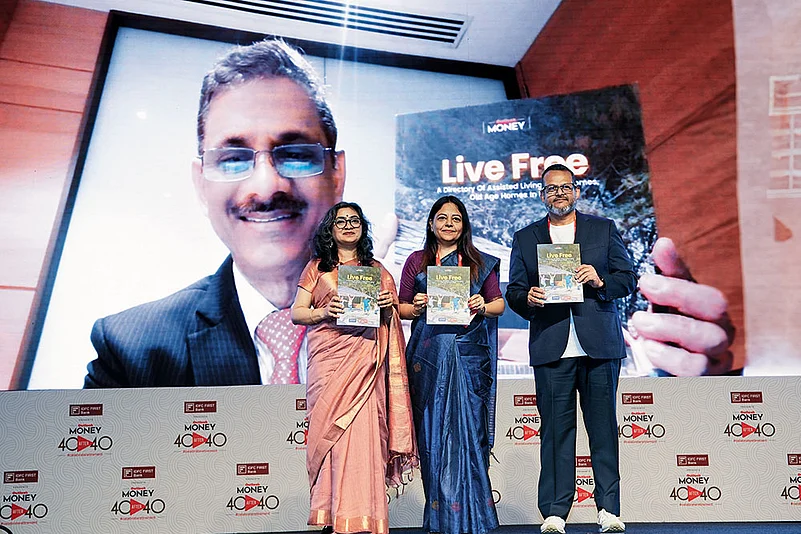
India is rewriting its narrative on retirement planning, with the youth taking a keen interest in the issue. At the fourth edition of the IDFC FIRST Bank presents Outlook Money 40After40 Retirement and Financial Planning Expo held in Mumbai on February 20-21, 2026, regulators, industry leaders and experts shared their views on planning for the future.
What emerged was not the old template of retirement that has been followed for ages, but a modern framework of planning, financial security, and finding a tangible purpose that suffices in the second innings of individuals.

Planning For Retirement

3 September 2026
Get the latest issue of Outlook Money

The event began with an address by Outlook Group CEO Indranil Roy, who highlighted the importance of retirement planning in view of India’s rapidly rising ageing population. He said by 2050, about 20 per cent of India’s population will be over the age of 60. “The fertility rates are declining and life expectancy is rising; this translates into a structural burden for Indians if they remain underprepared for retirement.”
Nidhi Sinha, Editor, Outlook Money, said that following several discussions and conversations with policymakers and experts, “we have recalibrated ourselves to make the conversation around retirement planning more holistic that includes not just financial freedom but also facets like emotional resilience, physical well being and building a purposeful and meaningful life”.
AI In Retirement Planning
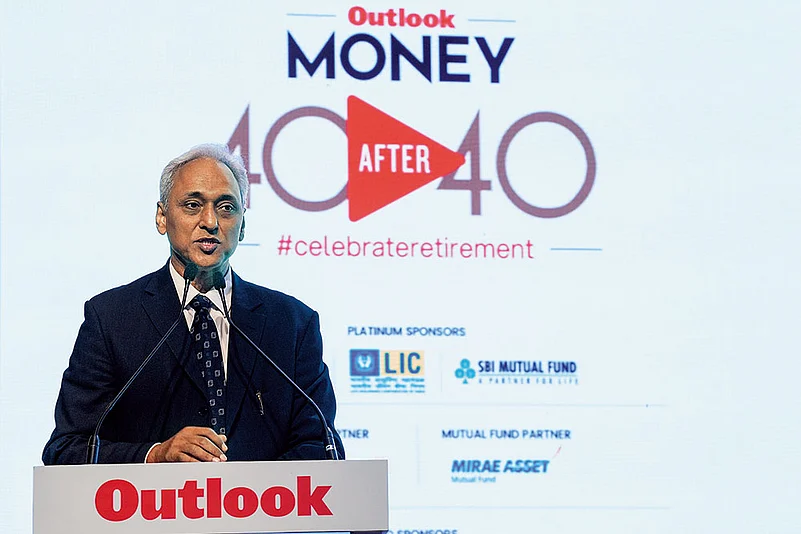
V. Vaidyanathan, MD and CEO of IDFC FIRST Bank, spoke about technology and the potential of artificial intelligence (AI) in retirement planning.
He said: “An individual can never do all this algorithmic work which an AI tool can do. So, providing these tools is what IDFC FIRST Bank is bringing to the consumers, because they don’t know how much to invest. It’s got math, and people often miss it.”
He said AI-powered tools can analyse income, expenses, risks, risk appetite and real-life long-term goals, which can in turn generate customisable retirement pathways. For the middle-class investor who may not have access to dedicated advisors, such tools can act as a high-quality financial guide, he said.
He, however, cautioned that complete reliance on technology should not be practised as it cannot replace human judgement.
Financial Inclusion
M. Nagaraju, Secretary of the Department of Financial Services at the Ministry of Finance, Government of India, focused his address on financial inclusion; strengthening pension preparedness for an ageing society; and digital public infrastructure and financial empowerment for financial security for Viksit Bharat 2047.
He said regulators and financial institutions have strengthened fraud monitoring and authentication systems to safeguard investors.
He said, at present, India’s pension assets are around 5 per cent of the gross domestic product (GDP), while in many developed economies, pension assets range between 70 and 100 per cent of the GDP. This gap highlights both the need and the opportunity to strengthen pension participation and retirement planning, he added.
Pension Security
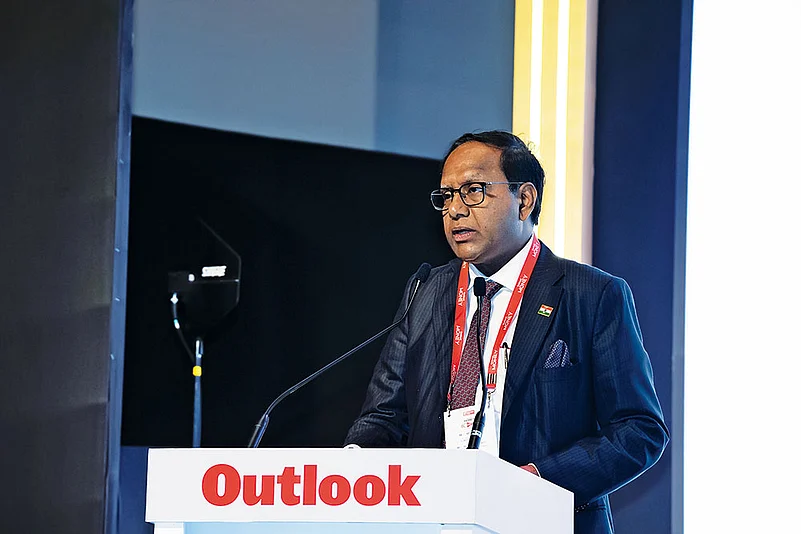
S. Ramann, Chairman, Pension Fund Regulatory and Development Authority (PFRDA), said individuals today are no longer bound to the concept of a rigid work-life system and retirement at 60. More people today identify with the financially independent, retire early movement. Accordingly, PFRDA has made National Pension System (NPS) more flexible by introducing the Multiple Scheme Framework and brought more people into the pension fold. He added that PFRDA is now working to extend the access of pension schemes across socio-economic classes, such as farmers and gig workers, among others.
The regulator is also looking at ways to integrate digital payment systems with pension funds.
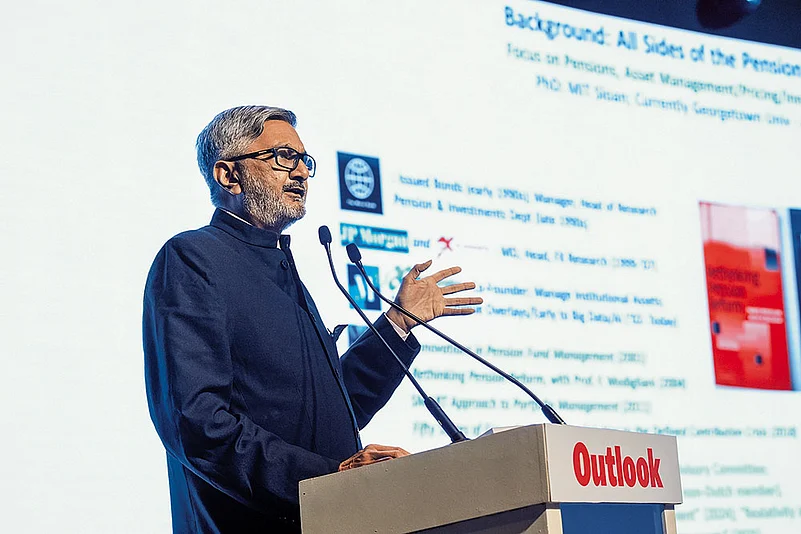
Arun Muralidhar, Co-Founder of MCube Investment Technologies and Adjunct Professor, Georgetown University, said inflation remained one of the biggest hidden risks for retirees. “Even modest price increases, compounded over 20–30 years, can erode fixed incomes... A truly inclusive pension model should be easy to join, transparent in cost, and flexible enough to adapt to varied work patterns,” he said.
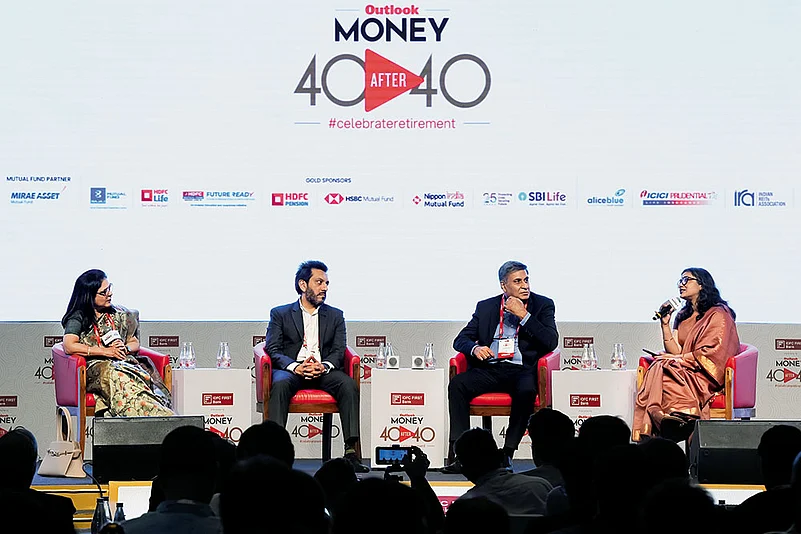
At a panel discussion on innovation in insurance annuities, panellists discussed the nuances of annuities and how they can give one a regular income after retirement. The panellists included Vibha Padalkar, MD and CEO, HDFC Life insurance; Sumit Madan, MD and CEO, Axis Max Life Insurance; and Ashish Vohra, ED and CEO, IndusInd Nippon Life Insurance. Padalkar said that annuities are probably the simplest of products that exist today. “The only aspect that isn’t understood enough is the longevity risk, and that is because India is a relatively young country.”
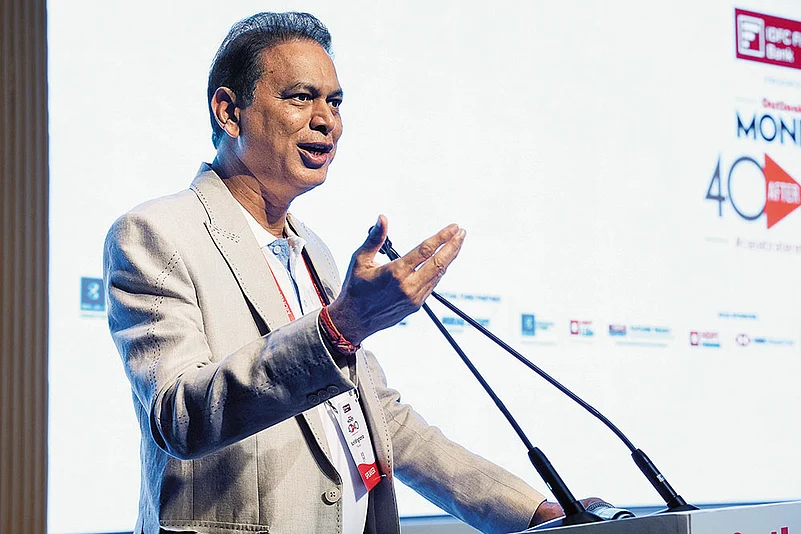
P.K. Saxena, MD and CEO of LIC Pension Fund, said that NPS remains a cornerstone for retirement planning.
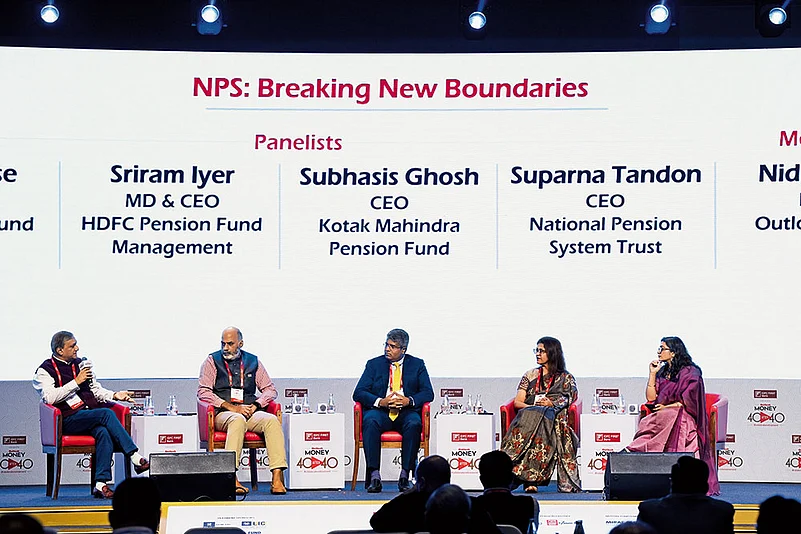
In a panel discussion on innovations in NPS, the conversation revolved around the recent reforms introduced by PFRDA and what they mean for investors. The panellists were Kurian Jose, CEO of Tata Pension Fund; Sriram Iyer, MD and CEO of HDFC Pension Fund Management; Subhasis Ghosh, CEO of Kotak Mahindra Pension Fund; and Suparna Tandon, CEO of NPS Trust.
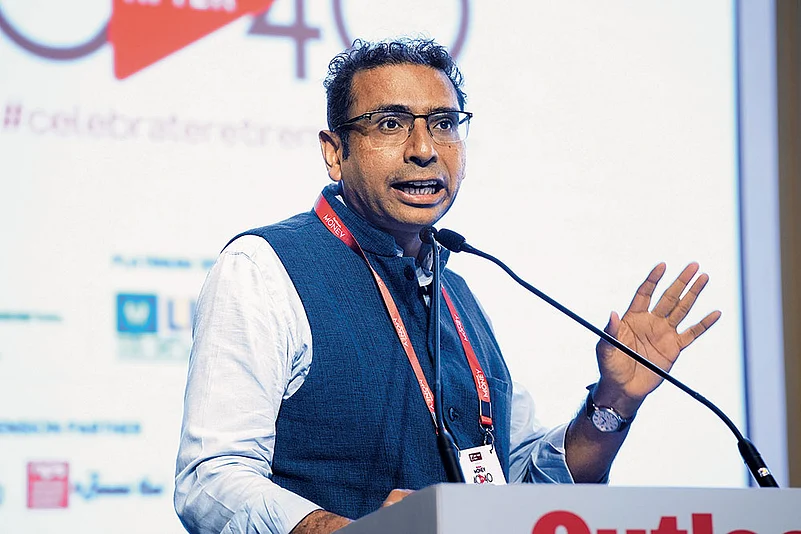
How Equities Can Help
Tuhin Kanta Pandey, Chairman, Securities and Exchange Board of India (Sebi), said the investor base in India has grown sharply in the last five years and now stands at 140 million, thanks to technology, but general awareness about securities market is still low, which makes investors vulnerable to scams.
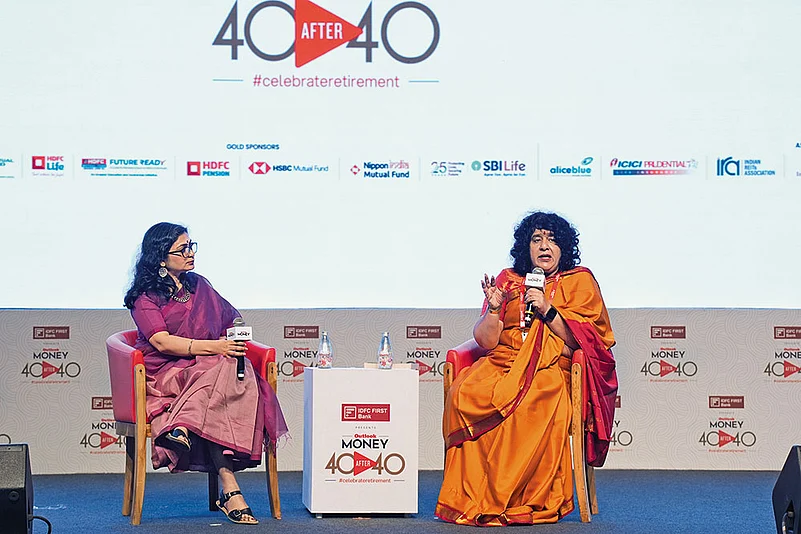
“Investing is no longer limited to the top-tier cities, but has seeped into household conversation, even in rural locations. Technology has made onboarding easier, access wider, and participation inclusive. But Sebi’s investor survey shows a gap between awareness and informed participation. It means many investors are entering markets with moderate knowledge, making them vulnerable to mis-selling and scams. So, trust has to be built through protection, transparency and education,” he said.
He said Sebi is now focusing on initiatives to strengthen investor trust and protect them from risks.
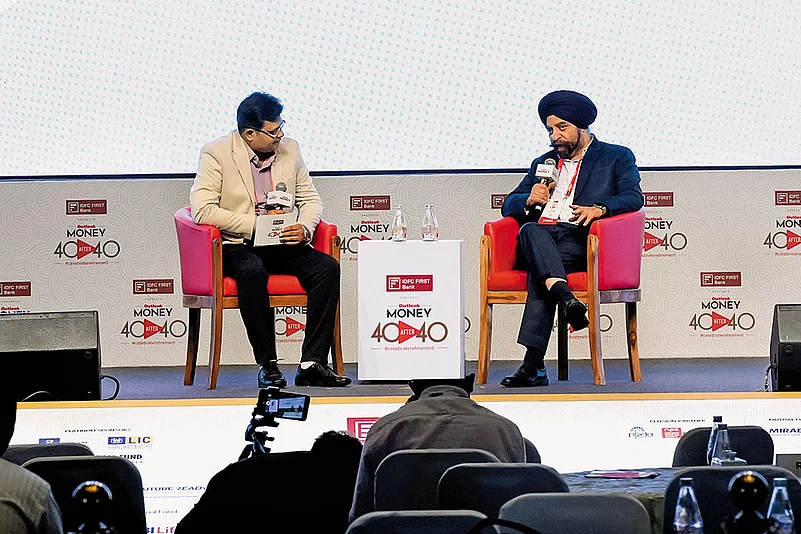
He said the securities market can help in retirement planning in the long run as it offers opportunities to diversify funds that are beyond traditional savings and provides access to professionally managed products which match the individual investor’s goals.
Adding a note of caution, he pointed out the importance of relying only on verified sources and Sebi-registered investment advisors (Sebi RIAs) for advice and avoiding unsolicited offers or the lure of guaranteed returns. Investors must conduct thorough research on their own before making an investment, he said.
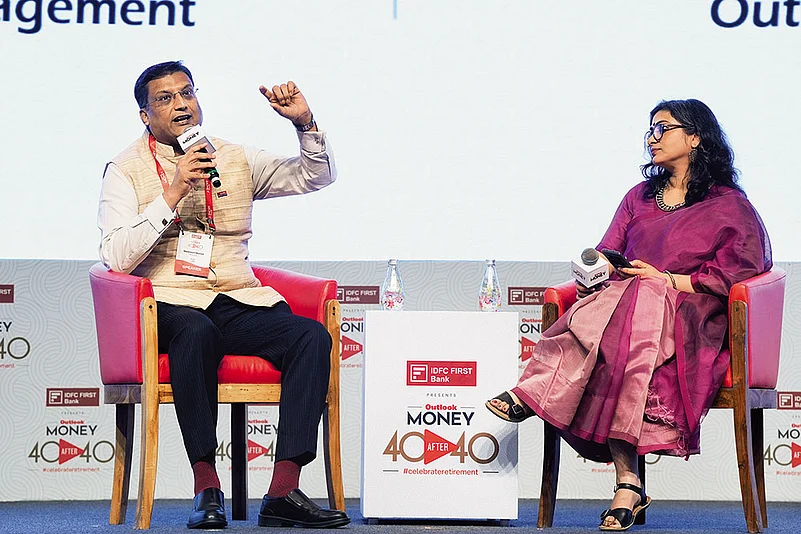
D.P. Singh, DMD and Joint CEO of SBI Mutual Fund, said that investors looking for relatively safer, tax-efficient returns better than fixed-income products can consider specialised investment funds (SIFs), which bridge the gap between mutual funds and portfolio management services.
Sankaran Naren, CIO of ICICI Prudential Asset Management, said that equity valuations today are not exactly cheap and large-caps trade around 20 times median earnings. Equities look relatively inexpensive when compared to gold and silver, he said, talking about value investing. “On a relative basis, Nifty has become cheaper compared to gold and silver. Yet flows have gone into precious metals,” he said, adding that this behaviour is the exact opposite of value investing.
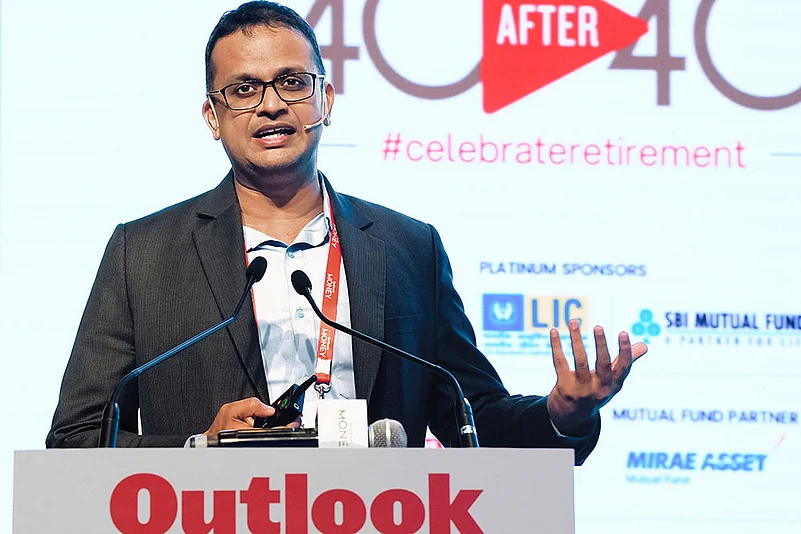
Navneet Munot, MD and CEO of HDFC Asset Management Company, addressed India’s traditional affinity for gold. While acknowledging gold’s role as a hedge, he cautioned against excessive allocation driven by cultural bias. He explained gold does not generate cash flows and may not keep pace with long-term equity returns. Retirement portfolios should prioritise diversified exposure across asset classes and should not be heavily loaded in favour of one class.
Sunil Singhania, Founder of Abakkus Asset Manager, focused on India’s equity and commodity markets. He said: “Indian markets have underperformed massively in the last 15 months compared to global markets. We are flat on Nifty, maybe 10-15 per cent down on small caps, whereas Korea is up 100 per cent, China is up 30–40 per cent. Gold and silver are up; at one point, silver was up 4x, now maybe 2.5–3x, and gold has also doubled.”
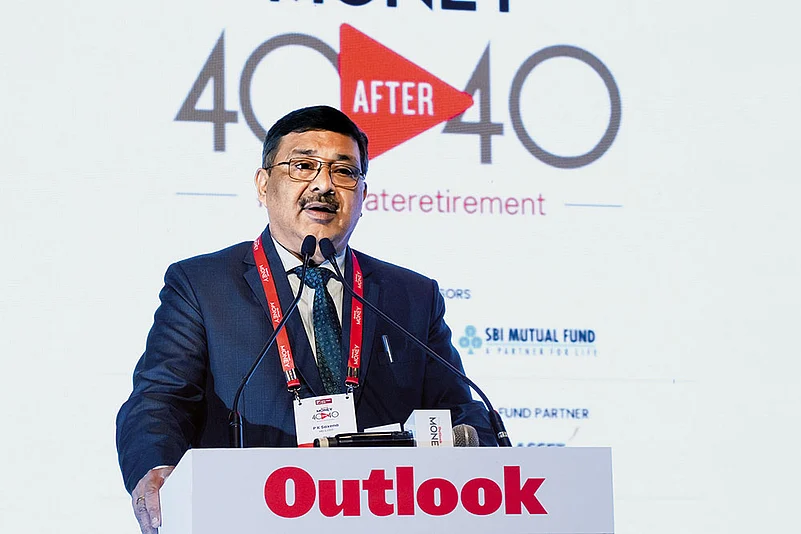
Ganesh Mohan, MD of Bajaj Finserv Mutual Fund, shared insights on how investors can navigate volatile markets, manage emotions, and improve returns by understanding behavioural biases and applying discipline. Avoiding behavioural biases in volatile markets in important, he said.
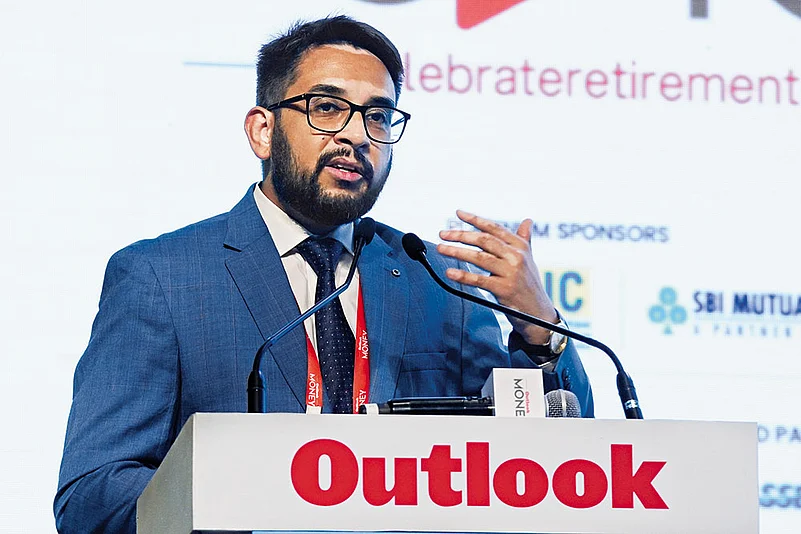
Goal-Based Investing
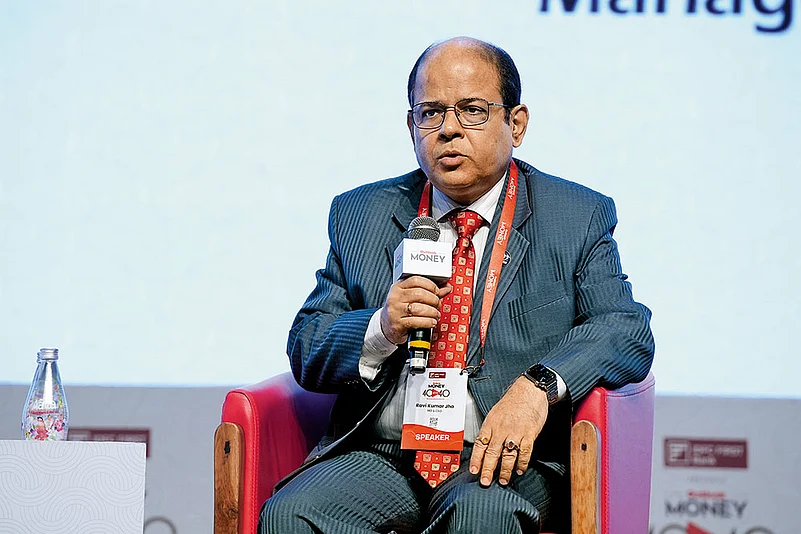
Ravi Kumar Jha, MD and CEO of LIC Mutual Fund, said investing for retirement must be goal-based and investment strategy should be aligned with defined milestones.
Sunil Abhilash Ramanuja, product head – savings, retail liabilities at IDFC FIRST Bank, raised an important question for salaried Indians: Is the money credited to bank accounts every month actually working hard enough for account holders? He said in the face of inflation pressure and rising medical expenses, individuals need to plan better.
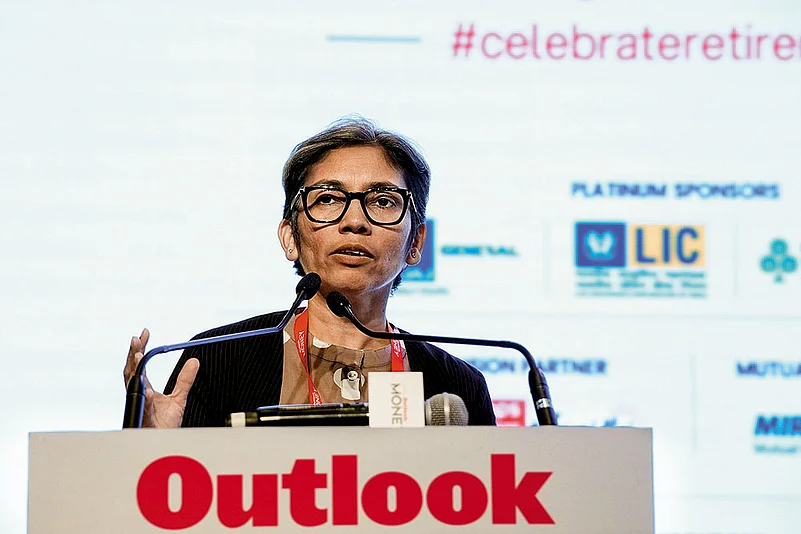
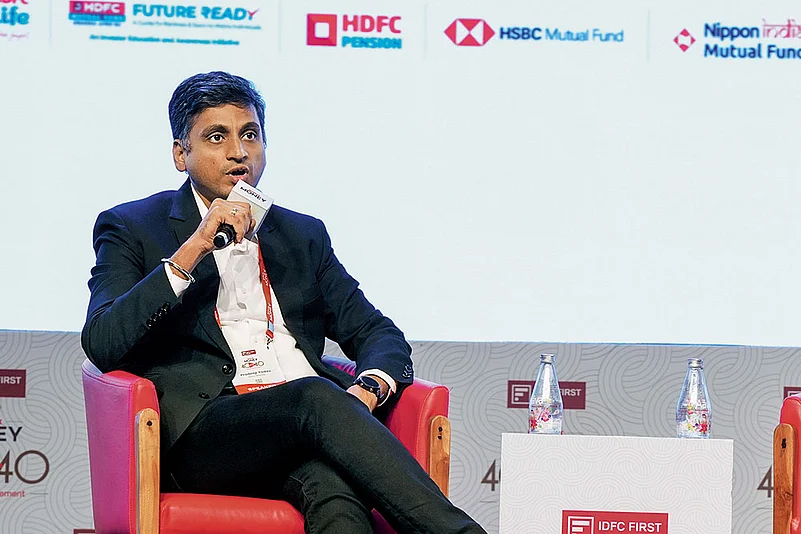
Nikhil Varma, head of bancassurance and wealth management at IDFC FIRST Bank, talked about how to build a second income stream to achieve financial independence. He stressed on the need to allocate income wisely. “About 40 per cent should be directed towards immediate needs, 30 per cent into generating a steady income and the rest for long-term growth,” he said.
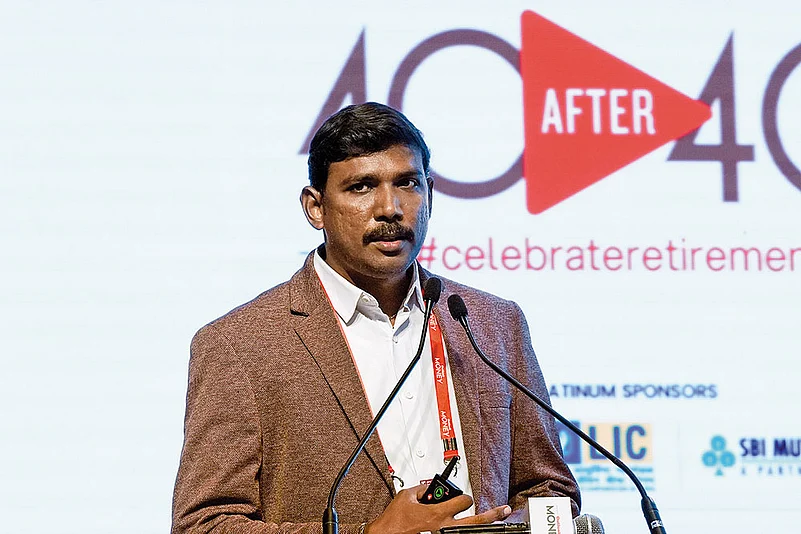
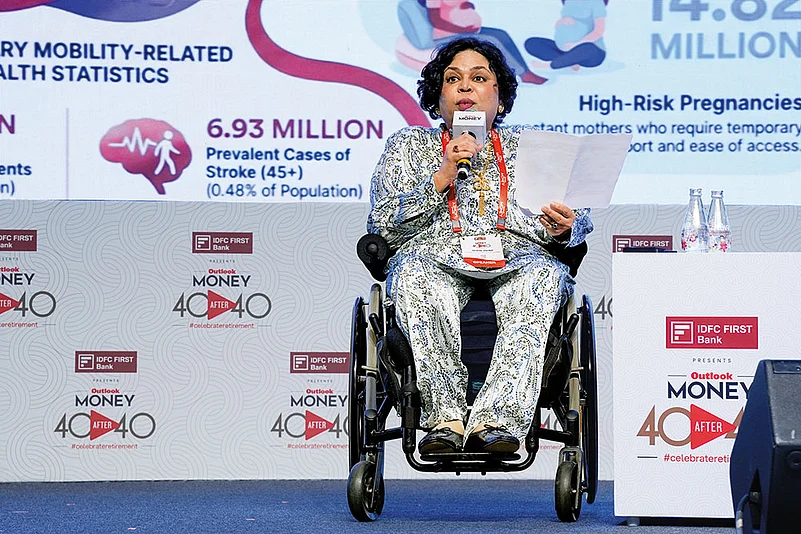
Pradeep Yadav, Senior Director at Policybazaar, advised the audience to start early, embrace equity for its long-term growth potential when young, diversify portfolios based on risk, and integrate guaranteed income products to ensure predictable cashflows in retirement.
Retirement goals have changed, but less than half of India’s population is retirement ready, said K. Rajesh, director at Alice Blue, an online trading platform.
Medical Inflation
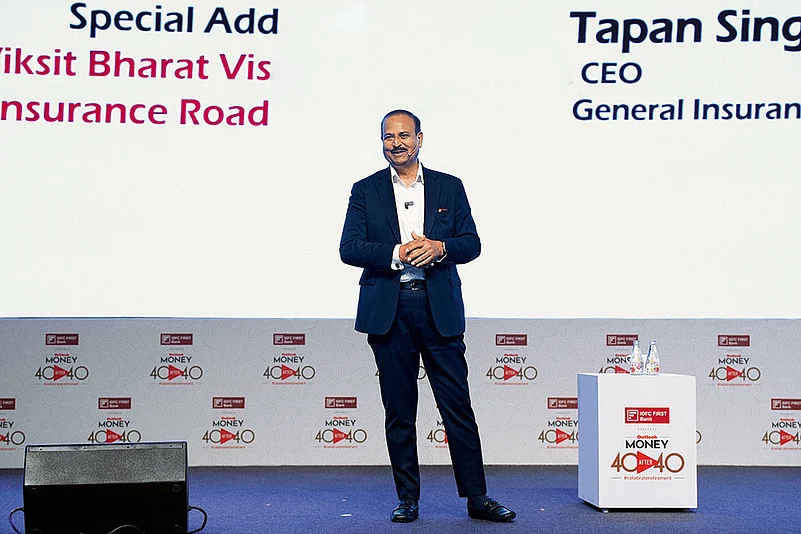
Tapan Singhel, MD and CEO, Bajaj General Insurance highlighted the importance of insurance for India to be a developed country. He said a single natural calamity can destroy everything from agriculture to manufacturing processes at small units and lead to bankruptcy, affecting the economy as well as the population.
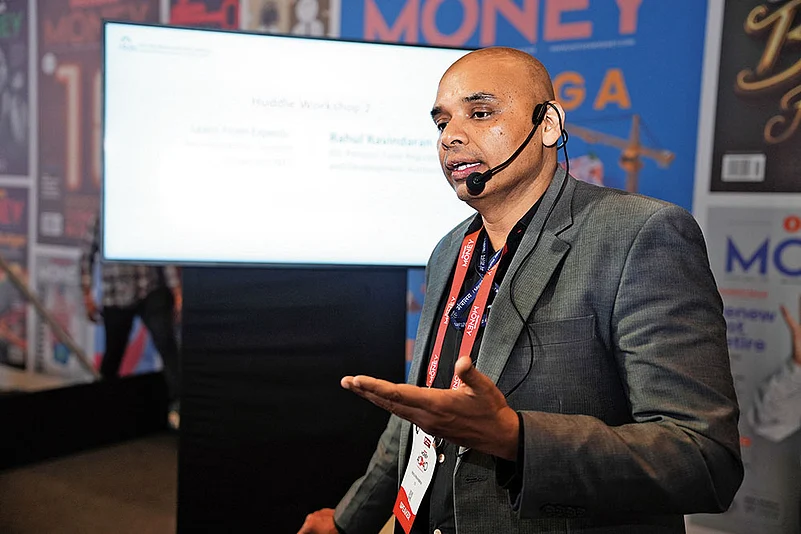
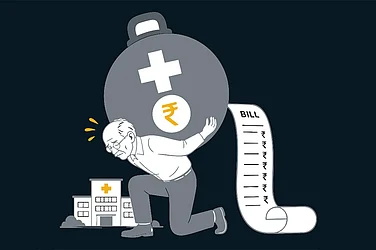
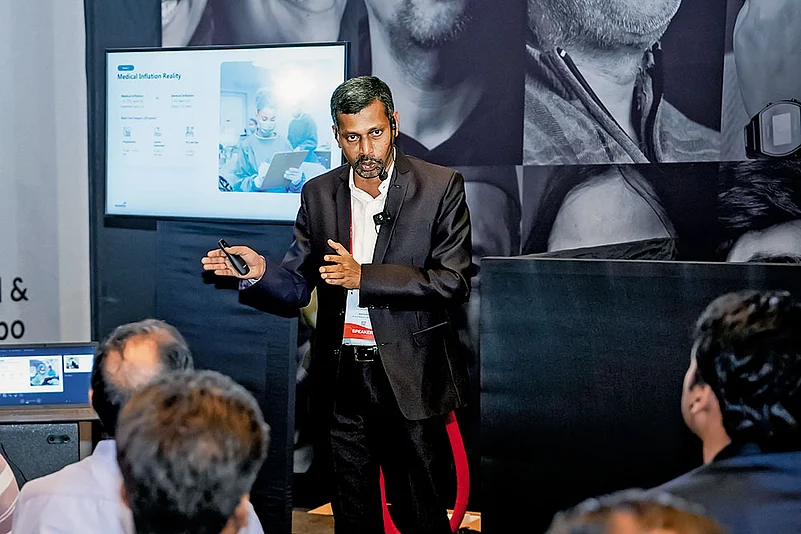
On an individual level, medical inflation is rising at 14-15 per cent, much above the average inflation. “This, coupled with longer lifespans and a rapidly ageing population will create a huge strain on the financial and healthcare systems,” he said.
Gaps In Planning
Devina Mehra, Chairperson and Founder of First Global, highlighted how there is always a gap between the retirement corpus of men vs women, and how many women are underprepared for retirement, despite longevity advantages and economic participation. She called for women to plan intentionally and make independent decisions.
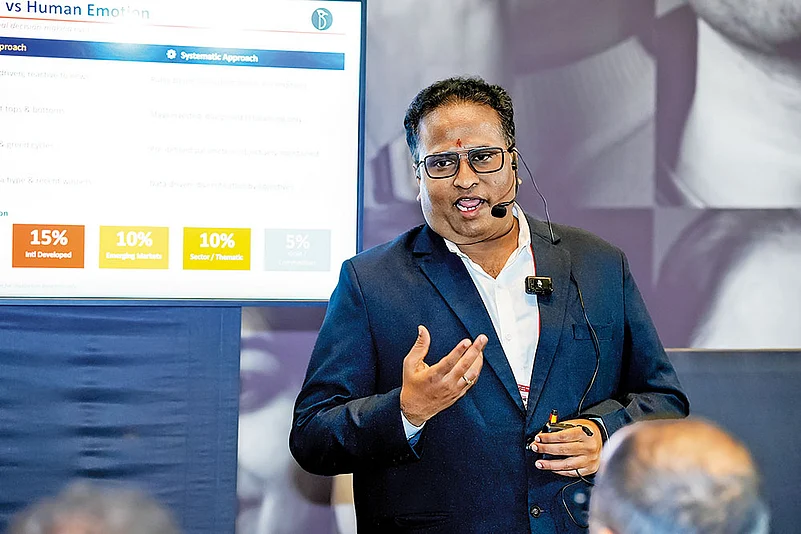
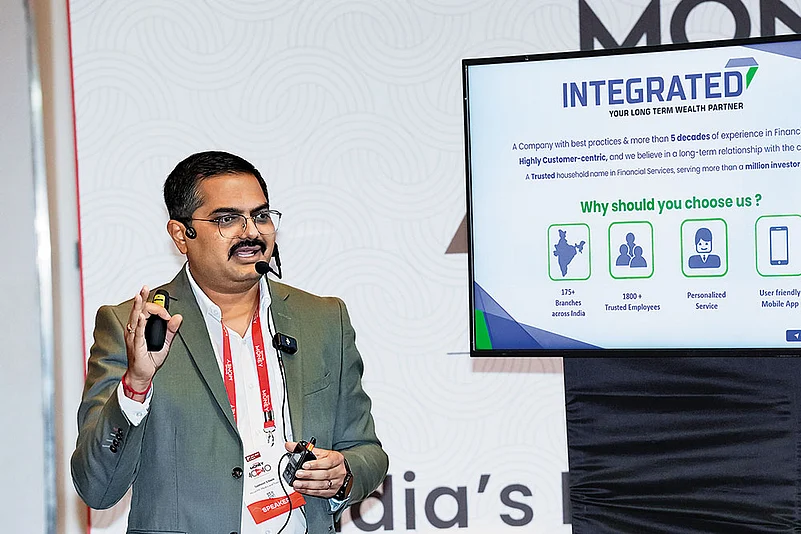
Saurabh Mukherjea, Founder and CIO of Marcellus Investment Managers, said that saving for retirement has become more challenging than it was just two years ago due to reduced jobs, rising living costs, low salary increases, lifestyle inflation, and healthcare outlays, which have squeezed disposable incomes. Besides, people are resorting to loans to fund lifestyle expenses and savings have dipped.
Also, volatile markets can discourage disciplined investing, said Mukherjea. He stressed on the importance of building high-quality portfolios, including investing globally and staying away from recency bias.
Life Lessons
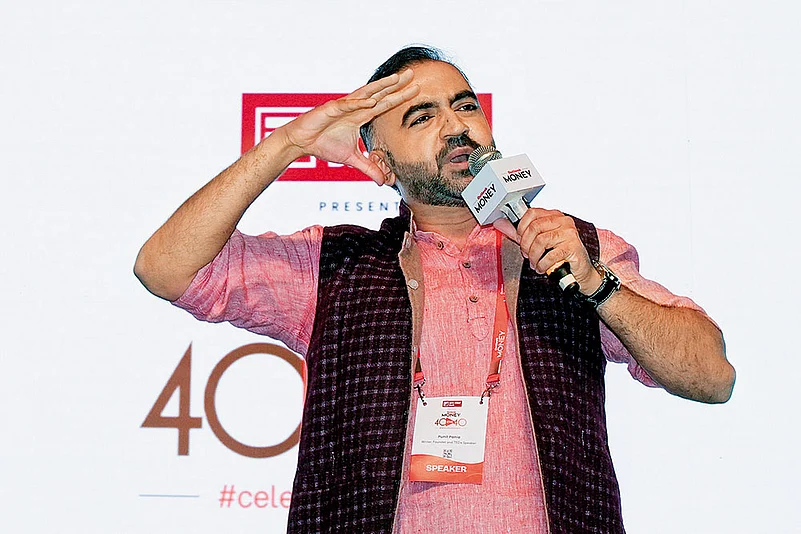
Author and TEDx speaker Punit Pania reflected upon old age and his personal experiences. “Time is linear, but old age is contagious.”
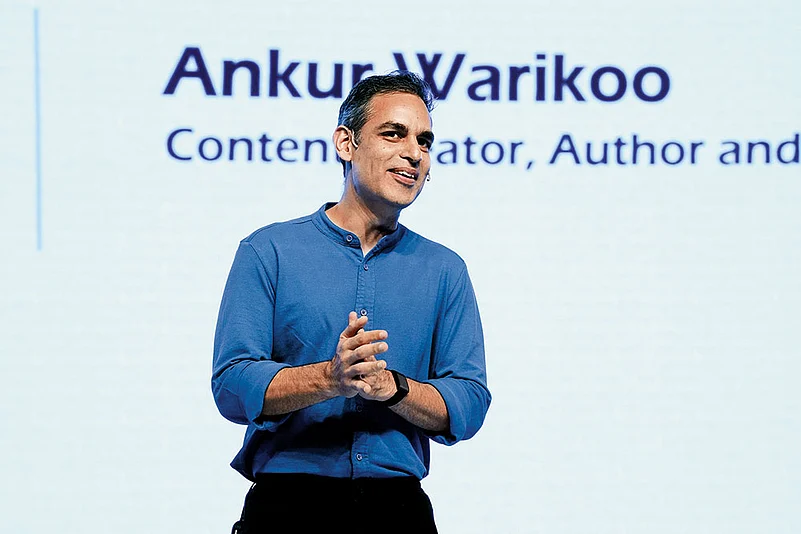
Author and investor Ankur Warikoo talked about psychological and financial shifts that usually happen around the age of 40. “Money’s real purpose is freedom, the choice to work or not. Most people, no matter how wealthy they are, don’t have that choice. They have to work. That’s not freedom,” said Warikoo, drawing from his own experiences.
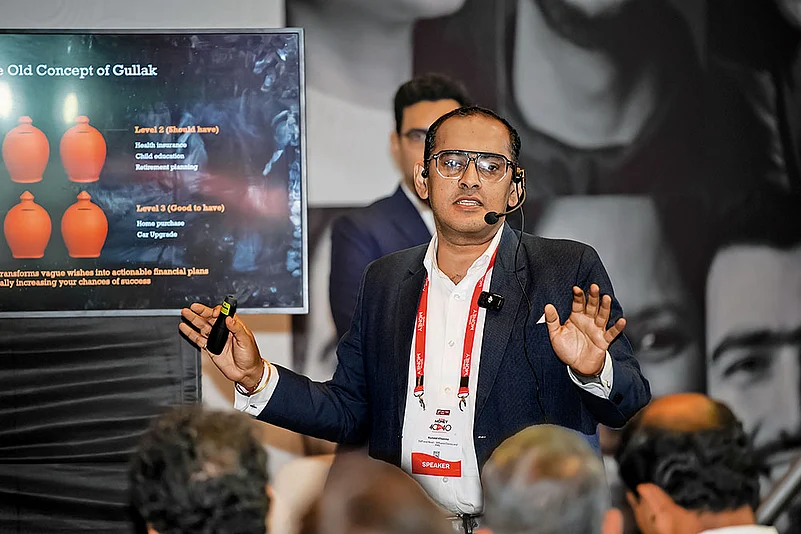
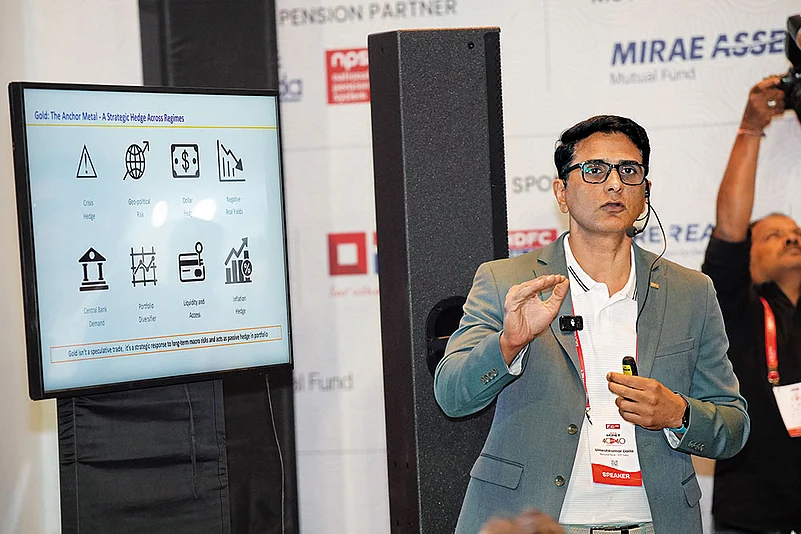
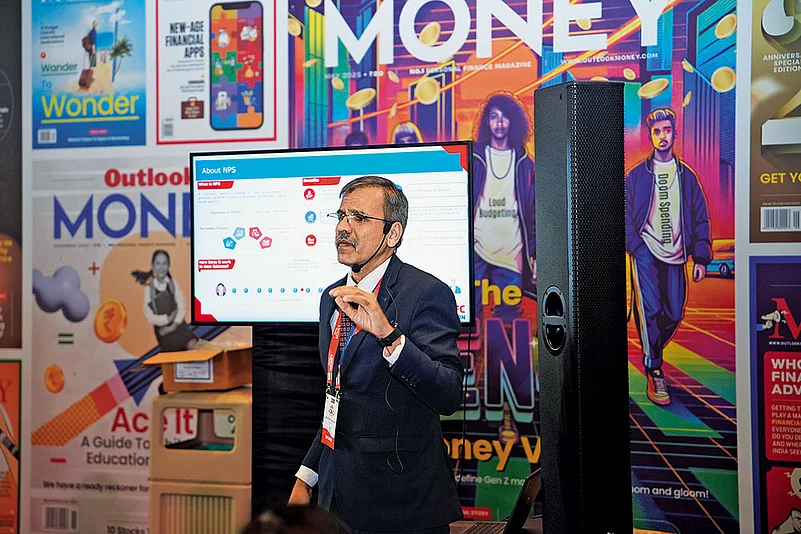
There were a host of workshops conducted by experts on topics ranging from real estate, corporate NPS, SIPs, gold and silver investing, cashless hospitalisation, and investment strategies for sustainable income, among others.
sanchi.varma@outlookindia.com