





Summary of this article
Sebi is planning a joint initiative to build capacity of independent directors
Independent directors often lack unique perspective in boardroom discussions, says Sebi chief
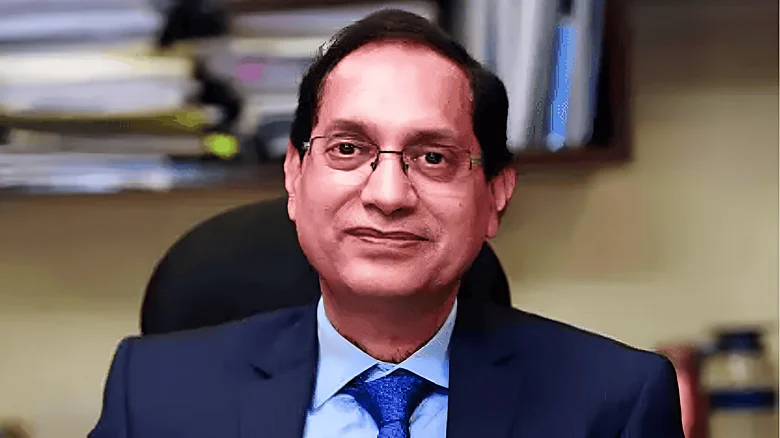
The Securities and Exchange Board of India (Sebi) is planning a joint initiative with corporate entities to upskill independent directors, Sebi chairman Tuhin Kanta Pandey has said. The initiative will be conducted through the collaboration of different stakeholders, such as industry bodies, and academic institutions to build capacity of directors with the objective to strengthen the corporate governance framework in the country, he said.
“Sebi will seek to embark on a joint initiative for capacity building of independent directors at scale with a view to further improve corporate governance,” Pandey said at the CII corporate governance summit on April 6. His comments came in the wake of recent tensions in HDFC Bank’s boardroom which led to the resignation of part-time chairman Atanu Chakraborty.

“It can certainly be encouraged, enabled and supported — through collaboration between regulators, industry bodies, professional bodies and academic/business institutions…And this is where the next phase of evolution lies. If the first phase of governance reform was about building structures, and the second phase was about strengthening processes, then the next phase must be about building capability,” Pandey said.
Pandey said that boardrooms are now dealing with various changes in technology and data governance, cyber risks, complex financial structures, and regulatory developments, and that it would be unrealistic to expect that every director in the company is equipped to handle the different perspectives. He said the understanding for a majority of independent directors is largely shaped by board materials and management narratives.
“What we are increasingly observing is a gap — not in intent, not in regulation — but in translation. Boards are well constituted, but not always equally effective. Information is available, but not always interrogated deeply,” Pandey said.

He added that while independence of directors exists in form, it may not always translate into a unique and individual perspective. Pandey said the effectiveness of governance depends on the quality of questions asked inside boardrooms, and the depth of understanding and acting on them. He said that governance needs to evolve to enable institutions to respond wisely when there is any uncertainty in the management instead of purely existing as a preventive measure.
“Markets, as we know, can absorb business risk. But they respond sharply to governance uncertainty,” Pandey added.





