

Summary of this article
AI travel planning is reshaping holiday decisions for Indian travellers
Travel insurance demand rises amid disruptions and medical risks
International trips need stronger protection against cancellations and emergencies
Smart travel now combines AI tools, budgeting, and insurance cover
The Indian holiday planner has changed. A few years ago, a family vacation usually began with a travel agent, a package tour brochure, or long calls with relatives who had already visited the place. In 2026, that first step is increasingly happening on a screen, often through an AI tool that can build an itinerary in seconds.
But the change is not only about technology. Indians are also travelling with a sharper eye on cost, safety, disruption, medical emergencies, and insurance. The modern traveller wants a good holiday, but also wants fewer surprises when a flight is delayed, a bag goes missing, or someone falls ill abroad.
Indians are using AI more actively to plan holidays, compare options, and customise travel. The report also points to a change in how travellers are looking at insurance, with more people factoring in the cost of things going wrong during a trip, whether in India or abroad, according to a recent India Today report.

3 September 2026
Get the latest issue of Outlook Money

AI Is Becoming The First Stop For Travel Planning
AI is slowly replacing the rough notebook itinerary for many travellers. Instead of searching separately for flights, hotels, local transport, food options, and sightseeing ideas, people are now asking AI tools to put everything together.
A traveller can ask for a five-day budget trip to Vietnam, a slow-paced holiday for parents, a honeymoon plan for Europe, or a short domestic break from Delhi, Mumbai, Bengaluru, or Kolkata. The tool may suggest places to visit, how many days to spend in each city, what to avoid, how to move around, and how much the trip may roughly cost.
This is useful, especially for first-time travellers who may not know where to begin. It also helps families who want to compare multiple destinations before blocking money on tickets and hotels.
However, AI is not replacing judgment. Travellers still need to cross-check flight fares, hotel reviews, visa rules, cancellation terms, and weather conditions before booking. A good AI-generated itinerary may help with ideas, but the financial decision still rests with the traveller.
The bigger point is this: travel planning is becoming more data-driven. People are not just asking where to go. They are asking how much it will cost, whether it fits their leave schedule, whether it is safe, and whether the trip can be protected if something goes wrong.
Travel Insurance Is No Longer An Afterthought
For many Indians, travel insurance used to be bought only when it was compulsory for a visa. That attitude is changing. With flight disruptions, medical emergencies, lost baggage, and sudden cancellations becoming more visible, insurance is slowly entering the main travel checklist.
This is especially important for international travel. A medical emergency in another country can be far more expensive than expected. Even a short hospital visit, emergency consultation, or treatment for an accident can disturb the entire travel budget. A travel insurance policy may not solve the problem completely, but it can soften the blow if the claim falls within the policy terms.
Travel insurance may cover emergency medical expenses, trip cancellation, trip delay, loss of checked-in baggage, passport loss, personal accident, and emergency evacuation. But all policies are not the same. The cheapest policy may offer limited protection, while a slightly better plan may provide higher medical cover and broader benefits.
Senior citizens, students going abroad, families travelling with children, and people taking long international trips should be especially careful while choosing the policy. They should check the medical sum insured, deductible, exclusions, claim process, emergency assistance facility, and whether any pre-existing illness is covered in limited situations.
Why The Fine Print Matters
A common mistake is to buy travel insurance in a hurry after booking tickets. Many travellers do not read what the policy excludes. This can create trouble at the time of the claim.
For instance, adventure sports may not be covered under a regular policy. Claims linked to alcohol use, self-inflicted injury, war-like situations, or travel against medical advice may also be rejected. Pre-existing diseases are usually subject to strict conditions. If a traveller has a known medical condition, it is better to disclose it honestly instead of assuming that every hospital bill will be covered.
Cancellation benefits also need careful reading. A policy may not pay simply because the traveller changed his or her mind. The reason for cancellation usually has to fall within the conditions mentioned in the policy.
Domestic travellers should also not ignore insurance. A short holiday within India may still involve non-refundable hotel bookings, expensive flights, baggage issues, or accidents. For an expensive holiday within India, more so when elderly parents or young children are travelling, it may be sensible to look at insurance before making the bookings.
Smarter Travel Also Means Smarter Money Decisions
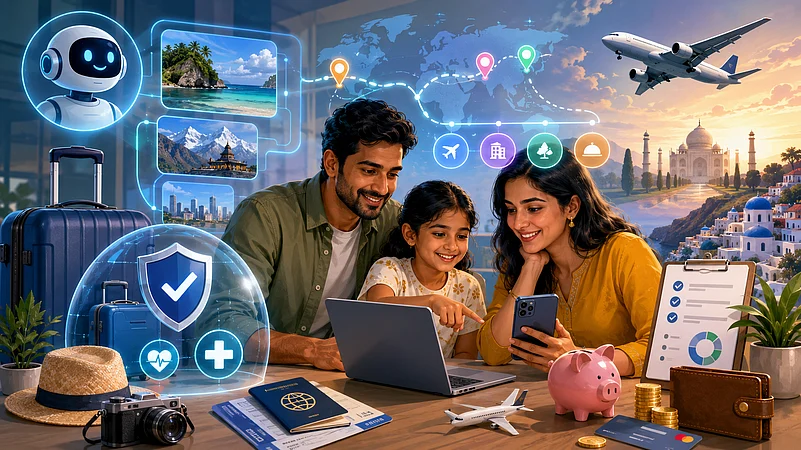
Indian travellers are no longer planning holidays in the old, casual way. In 2026, they want trips that feel tailor-made, but they are also watching the budget, the cancellation rules, and the risks that can spoil the plan. AI may help with the itinerary, but travellers are also realising that one disruption or medical emergency can upset the entire travel math.
This is a sensible change. A holiday should not become a financial setback because of one medical emergency or one missed connection. Before travelling, individuals should compare costs, keep an emergency buffer, check cancellation rules, and buy travel insurance suited to the destination and purpose of the trip.
AI may help Indians plan better holidays. But insurance, budgeting, and careful reading of terms will decide how financially safe those holidays are.