





Summary of this article
Cashback and reward points may get people to sign up for a card, but banks now want customers to use it for much more than that.
As UPI and contactless payments become part of everyday spending, card issuers are looking at ways to keep their cards relevant across different kinds of transactions.
Travel, dining, shopping and flexible credit are becoming part of the card proposition as banks look for ways to retain customers without simply offering more cashback.
For years, the credit card proposition was relatively straightforward: offer cashback, reward points, lounge access or an attractive joining benefit and give consumers a reason to choose one card over another. Those benefits remain relevant, but they are increasingly becoming the entry point rather than the entire proposition.
According to industry experts, the next phase of competition will be about building a broader ecosystem around the customer, connecting payments, rewards, credit, lifestyle benefits and digital experiences around how consumers actually spend.
From Payment Instrument To Engagement Ecosystem
Traditionally, a credit card came into play at the moment of payment. Today, that transaction is only one part of the relationship.
“UPI has transformed everyday payments in India, while contactless cards, tokenisation, mobile wallets and device-led payments are making checkout increasingly frictionless. As payment friction declines, differentiation is shifting from the transaction itself to the value surrounding it,” says Dr Raj P. Narayanam, Founder & Executive Chairman, Zaggle, a financial solutions provider.
For banks and card issuers, the question is therefore no longer simply, ‘How do we get customers to spend more on our card?’ It is increasingly: How do we make our card more relevant across their financial and lifestyle needs?

Cashback Can Attract; Relevance Can Retain
Cashback remains compelling because its value is immediate and easy to understand. But it is also relatively easy for competitors to replicate.
“Long-term engagement requires relevance. A frequent traveller may value lounge access and travel benefits, while another customer may prioritise entertainment, dining or shopping. A digitally native consumer may expect rewards across UPI, online and contactless payments,” informs Narayanam.
The larger point is not any individual benefit. It is that the card proposition itself is becoming more adaptable to the customer's lifestyle.
From Mass Rewards To Contextual Value
The traditional rewards model largely offered predefined benefits. Technology and data are enabling the industry to move towards more contextual propositions based on how customers actually spend.
“AI can accelerate this evolution by helping financial institutions understand spending patterns and make rewards, offers and financial products more relevant. But intelligence must be balanced with responsibility. Personalisation should be consent-led, transparent and genuinely useful,” says Narayanam.
There is a fine line between being helpfully relevant and becoming uncomfortably intrusive. The strongest ecosystems will, therefore, combine intelligence with trust.
UPI And Cards Are Converging
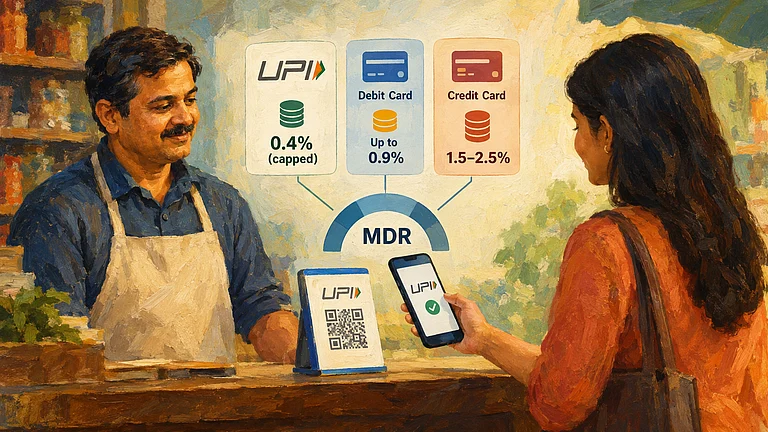
India adds another dimension to this evolution. The future should not be viewed simply as UPI versus credit cards.
UPI has become deeply embedded in everyday payments because of its simplicity and acceptance. Cards continue to provide differentiated value through rewards, credit periods, financing flexibility and lifestyle benefits. Increasingly, however, these worlds are converging.
“RuPay credit cards linked to UPI allow consumers to access credit through the familiar UPI experience. Contactless cards simplify physical payments, while smartphones and wearables are becoming payment interfaces in their own right,” observes Narayanam.
Consumers do not necessarily think in terms of payment rails. They want the most convenient and valuable way to pay at that moment. The opportunity is, therefore, to create ecosystems that allow customers to move naturally across different payment experiences.



Credit Is Becoming More Intentional
The role of credit itself is also evolving. As consumers become more disciplined about repayments, card economics need not depend predominantly on customers' revolving balances month after month.
EMI conversions, loans on cards and contextual financing can provide deliberate credit flexibility when customers need it. At the same time, rewards cannot exist independently of economics. Cashback, lounge access and accelerated rewards ultimately require sustainable revenue pools behind them.
“Banks and their FinTech partners, therefore, need to balance customer value with sustainable economics,” suggests Narayanam.
The Battle Is For Relevance
The next generation of successful credit cards will not necessarily be those offering the highest cashback percentage. They will be those that intelligently connect payments, credit, rewards, merchants, lifestyle experiences and digital engagement, while giving customers greater choice over how they derive value.
“For consumers, this also changes how a card should be evaluated. The question is no longer simply whether the card is lifetime-free or how much cashback it offers. What matters is whether the overall value proposition fits the way the customer actually spends,” says Narayanam.
Credit cards are moving beyond the battle for transactions and even beyond the share of wallet. The larger opportunity is to become relevant across more moments in a customer's financial life.
Cashback can acquire a customer. An ecosystem can give that customer a reason to stay.





