






Summary of this article
Rajpal Yadav surrenders to Tihar Jail in a cheque bounce case.
Delhi High Court rejects extension and ordered him to surrender on February 4, 2026.
Under Section 138 of the Negotiable Instrument Act, if cheque bounces for insufficient funds post-notice, the drawer could be imprisoned for up to two years.
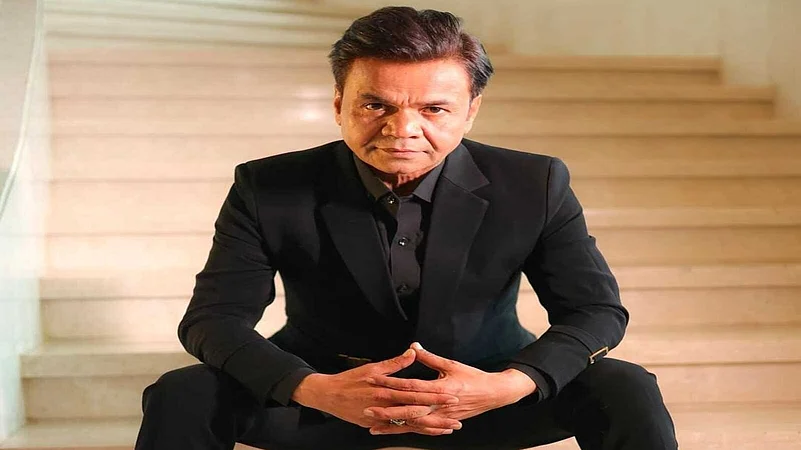
Rajpal Yadav surrendered in Tihar Jail on February 4, 2026, in a cheque-bounce case. The 54-year-old Bollywood actor, known for his impeccable comic timing and remarkable acting, requested an extension of time to surrender, which the Delhi High Court rejected and ordered him to surrender on the same day. His surrender left his fans in great shock. Going to jail in a cheque dishonour case is atypical for a Bollywood celebrity, and thus, it raised the question about what had happened that the actor had left with no other option than to serve the imprisonment.
How Did It Start?
It started in 2010, when Yadav borrowed Rs 5 crore for his directorial debut film “Ata Pata Laapata” from Delhi-based M/s Murali Projects Pvt. Ltd. The film didn’t do as expected and flopped at the box office, per the PTI report. The loss left him in financial distress. Meanwhile, Yadav issued cheques to settle the dues, but the cheques bounced due to insufficient funds. The outstanding amount, along with interest and penalties, continued to increase to approximately Rs 9 crore, and at last, being unable to repay the amount, he was ordered to surrender under the criminal liability case.
As per media reports, the case was filed in 2018 against Yadav and his wife, Radha Yadav. They were given several chances to repay the amount, but they failed to do so. Per the reports, Yadav needed to pay Rs 1.35 crore each in seven cases filed against him. The court noted that two demand drafts of Rs 75 lakh were deposited by Yadav in October 2025, but the outstanding amount was huge, a whopping Rs 9 crore. The court declined to grant any him any further extension and ordered imprisonment.



In What Circumstances Can A ‘Cheque Bounce’ Send Someone To Jail?
A cheque can be dishonoured for several reasons, such as signature mismatch, post-dated cheque, difference in number and words, overwriting, damaged or torn off cheque, insufficient funds, etc.
Notably, if the cheque bounce reason is insufficient funds, the payee can file a criminal offence case under the Negotiable Instruments Act, 1881, and put the payer at risk of imprisonment. This is what has happened in Yadav’s case.
Tushar Agarwal, Founder & Managing Partner, C.L.A.P. JURIS, Advocates & Solicitors, says, “A cheque is not merely a piece of paper; it is a written promise backed by a statutory presumption of liability. Unlike certain digital transfers such as RTGS, which are instantaneous and irrevocable, a cheque carries evidentiary value and creates a paper trail that can serve as strong proof of debt in civil and criminal proceedings. In many commercial dealings, particularly in credit-based transactions, post-dated cheques continue to act as a form of security and assurance.
What Is The Punishment Under The Law If A Cheque Bounces?
Nikhil Varshney, Partner, Cyril Amarchand Mangaldas says, “The punishment for dishonour of cheque could be imprisonment for a term which may be extended to two years, or with fine which may extend to twice the amount of the cheque, or with both. In practice, the Courts generally impose fine which may extend to twice the amount of the cheque and the Court orders imprisonment only if the amount of fine is not paid."
“A cheque bounce can attract criminal liability when it falls within the ambit of Section 138 of the Negotiable Instruments Act, 1881. If a cheque is issued towards the discharge of a legally enforceable debt or liability and is returned unpaid due to insufficiency of funds or because it exceeds the arrangement with the bank, the drawer may face prosecution, provided that, despite receiving a statutory legal notice within 30 days of dishonour, they fail to make payment within 15 days thereafter. It is this failure to cure the default within the prescribed time that triggers criminal consequences, which may extend to imprisonment of up to two years, or a fine up to twice the cheque amount, or both,” Agarwal says.
In The Digital Era, Why Do Cheques Still Hold Value Compared To Modes Like RTGS?
Agarwal says, “Even in the digital era, cheques retain their relevance because they embody both negotiability and legal enforceability, backed by penal consequences in case of default. This dual character (commercial utility coupled with statutory protection) explains why cheques continue to hold value despite the proliferation of electronic payment systems.”
Aarya Bhatt, Advocate, Delhi High Court, says, “Cheques still hold value in the world of digital options because they are not just payment instruments but a legally binding promise. Cheques hold statutory presumptions of liability, are backed by specific criminal remedies in case of dishonour. A bounced cheque can result both in civil recovery and criminal pressure in a way that a failed real Time Gross Settlement (RTGS) or Unified Payment Interface (UPI) transaction cannot, making cheques a preferred instrument when parties want credible way of payment and statutorily enforceable consequences for non-payment."
Rajpal Yadav’s Net Worth
Rajpal Yadav has acted in many hit movies. His acting in movies like Phir Hera Pheri, Bhool Bhulaiyaa, Hungama, Chup Chup Ke, and many more brings an immediate smile to viewers’ faces. Per the News18 report, the actor earns between Rs 1 and Rs 2 crore per project, and his net worth is expected to be between Rs 50 crore and Rs 85 crore. In addition to it, his branch partnership income is also expected to be around Rs 30-35 lakh per annum.
Industry Support
People from the industry are coming to support the veteran actor. Actor Sonu Sood and Gurmeet Choudhary showed their support. Politician Tej Pratap Yadav also offered financial support of Rs 11 lakh to the actor. Sonu Sood posted a message on X stating that he is signing Yadav for his next film and offering the signing amount to the actor. He even asked others to come forward to support Yadav, PTI reported. "Rajpal Yadav is a gifted actor who has given years of unforgettable work to our industry. Sometimes life turns unfair, not because of talent, but because timing can be brutal. He will be part of my film, and I believe this is the moment for all of us... Producers, directors, colleagues to stand together," he posted on X.
Yadav’s case highlights how crucial financial planning is and to what extent it can affect one’s life.





