





Summary of this article
Ahmedabad police inspector lost Rs 5.4 lakh in insurance fraud
Scammers promised Rs 19.5 lakh policy refund and maturity payout
QR code and upfront payment demands are major insurance scam warnings
Policyholders should verify suspicious calls directly with their insurance company
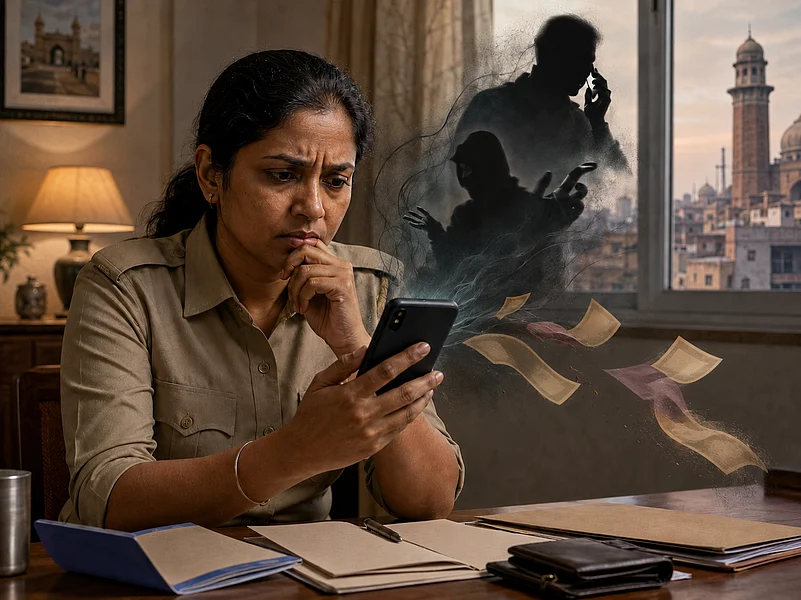
An Ahmedabad police inspector lost about Rs 5.4 lakh after fraudsters posing as insurance company officials convinced her that she was eligible for a large policy refund and maturity payout.
The 45-year-old officer, posted with the Civil Defence Home Guards and living in Memnagar, approached Gujarat University police after realising that repeated demands for money were part of a cyber fraud.
How The Fraud Began
The episode began on August 11, when the woman received a call from an unknown number. The caller claimed to be speaking from the Delhi headquarters of an insurance company and referred to details of two policies held by her, according to a recent report by Times of India.

1 October 2026
Get the latest issue of Outlook Money

According to the police complaint, the caller told her that an agent had allegedly filed a claim for 80 per cent of the policy amount and warned that she could lose a substantial part of her money. He then offered to register a complaint on her behalf and sent her an acknowledgement number by text message.
A day later, another person contacted her, this time claiming to be a manager. She was told that she had paid premiums totalling Rs 10.8 lakh and that interest of Rs 8.7 lakh had accumulated. The caller said she could receive Rs 19.5 lakh if the policies were closed.
The promise, however, came with an upfront payment. She was first asked to pay Rs 99,227 as processing charges. She paid the money in parts, using both a QR code and bank transfers.
More Demands Followed
On August 18, the callers sought another Rs 4.4 lakh from her, saying the money was towards Goods and Services Tax (GST) and would be returned later. The officer transferred Rs 50,000 through a QR code and another Rs 3.9 lakh in two bank transactions on August 19 and 20.
The demands did not stop there. On August 24, another caller told her that the value of the policy had risen to Rs 24.9 lakh and that the money would soon reach her account.
She was then asked to open an insurance e-account and keep Rs 5.1 lakh in it before the payout could be released.
That additional demand raised suspicion. She contacted the cybercrime helpline on August 25 and later filed a police complaint.
What Policyholders Should Watch For
The case shows why access to apparently accurate policy information should not be taken as proof that a caller is genuine. Fraudsters can use such details to gain confidence before seeking money.
Policyholders should independently contact their insurer through verified customer-care channels before acting on calls about refunds, maturity proceeds, bonuses or policy closure. If someone asks you to scan a QR code or send money to an unknown bank account before an insurance payout can be released, that should immediately raise a red flag.
Irdai has cautioned consumers about spurious calls and fictitious offers involving insurance benefits. Victims of online financial fraud should report the transaction quickly through the national cybercrime helpline, 1930, and inform their bank without delay.
FAQs
1. How can policyholders check whether an insurance refund call is genuine?
Contact the insurer directly using the customer-care number or website listed on official policy documents. Do not rely on contact details shared by the caller.
2. Should an insurer ask for money before releasing a maturity or refund amount?
A demand to scan a QR code or transfer money to an unfamiliar account before receiving insurance proceeds is a major warning sign and should be independently verified.
3. What should you do if you have already transferred money to a fraudster?
Immediately inform your bank and report the fraud through the national cybercrime helpline at 1930. Quick reporting can improve the chances of stopping further transfers.





