

Summary of this article
Health insurers must cover AYUSH treatments on par with allopathy
Coverage applies mainly when treatment requires hospitalisation
Treatment must be at government-recognised AYUSH hospitals
Most policies exclude OPD therapies and may impose claim sub-limits
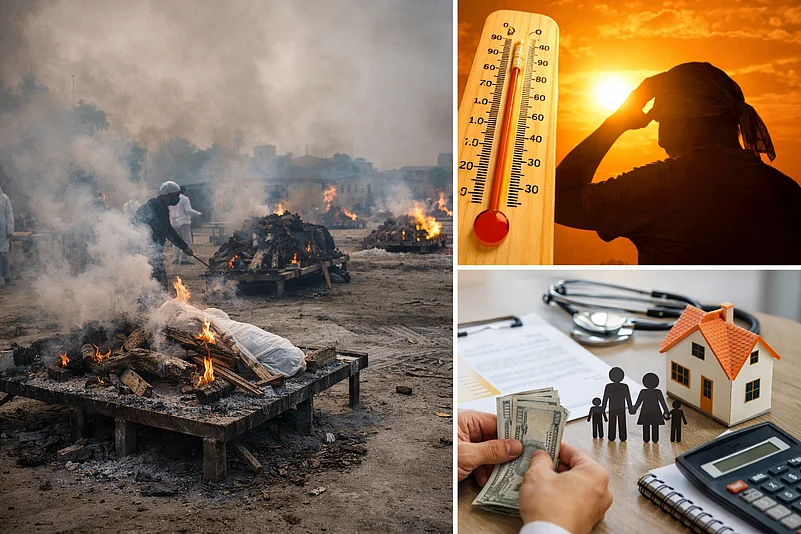
Severe summer heat has started to grip several parts of India. Gujarat, Maharashtra, and the Delhi-National Capital Region (Delhi-NCR) have been among the areas repeatedly hit by heatwaves. This has also brought forth concerns about heatstroke and related illnesses. Every year, when temperatures climb sharply, outdoor workers and vulnerable groups face the highest risk.
In recent instances where heatstroke has led to deaths, a few state governments have announced financial relief for the families of the victims.
Relief For Families After Heatstroke Fatalities
Some states have said they will pay compensation of Rs 4 lakh to families of individuals due to death arising out of heatstroke during officially declared periods of heatwave, according to a report by NewsBytes. Telangana, Andhra Pradesh, and Bihar are among those that have put such relief measures in place.

3 September 2026
Get the latest issue of Outlook Money

Before the money is released, officials typically confirm that the death occurred during a notified heatwave and that heatstroke was the medical cause. This involves verification by health authorities as well as the local administration.
In many states, this assistance is paid out from disaster relief funds that governments keep aside to help families affected by extreme weather or other natural calamities.
For families that depend on one earning member, such support can be vital. Many of the people most vulnerable to extreme heat are outdoor workers. Construction labourers, farm workers, sanitation staff, and street vendors usually remain on the job even when temperatures soar.
If such workers suffer fatal heatstroke, their families can suddenly lose their primary source of income. The compensation offered by the state is meant to ease the immediate financial pressure on the household.
Insurance Experiments Focus On Extreme Heat
Apart from government relief, there have been attempts to design insurance products that respond specifically to periods of extreme heat.
Some of these plans work on what is known as a parametric model. In these plans, payouts begin once temperatures stay above a set level for a fixed number of days. Since the trigger depends on official weather data, the money can be released without going through the usual claims process.
One such effort has been introduced for migrant workers in Delhi-NCR. The scheme provides compensation of up to Rs 3,000 if temperatures remain above a set threshold for several consecutive days.
Another initiative involves around 50,000 women associated with the self-employed women’s association. Many of these women earn their living through small businesses or informal work such as street vending.