





Summary of this article
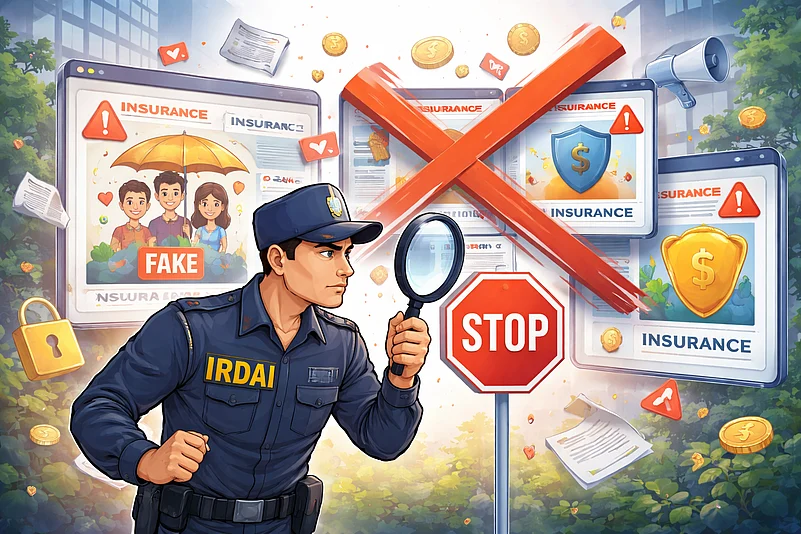
Study flags dark patterns in online insurance buying journeys
Users face hidden charges, hard cancellations, aggressive follow-ups
Irdai asks insurers to review and fix misleading digital designs
Focus shifts to transparent pricing, informed consent, fair choices
Buying insurance online was meant to simplify decisions, compare plans, choose what fits, and complete the purchase in a few steps. But for many users, the experience has become less straightforward than it appears.
According to a recent LocalCircles study on online insurance platforms and dark patterns, a large majority of users say they have encountered design tactics that nudge or confuse them while buying policies. It is this growing unease that has prompted the Insurance Regulatory and Development Authority of India (Irdai) to step in and ask insurers and aggregators to review how their digital platforms are designed.
Where The Buying Journey Starts To Go Wrong
Most people do not notice the problem immediately. It shows up in small ways.

3 September 2026
Get the latest issue of Outlook Money

A button that is easy to click when buying, but harder to find when cancelling. A price that looks attractive at first, but changes as you move ahead. Calls and messages that continue long after you have decided not to proceed.
Individually, these may not seem serious. But taken together, they shape how decisions are made. What feels like a choice can sometimes be a nudge.
Many users say they have struggled to exit policies once purchased. Others speak of repeated follow-ups that do not stop easily. There are also instances where information is asked for in ways that feel excessive or unnecessary.
The issue is not just about inconvenience. It is about whether the person buying the policy fully understands what they are signing up for.
A Pattern That Is Hard To Ignore
What has concerned regulators is not just the nature of these experiences, but how common they appear to be.
Across platforms, users report similar patterns, difficulty in cancelling, lack of clarity in pricing, and a sense of being pushed along a certain path. Charges that appear late in the process, or terms that are not immediately visible, add to the confusion.
Over time, this begins to affect how people view online insurance altogether. Instead of feeling in control, they begin to second-guess what they see on screen.
Trust, once shaken, is not easy to rebuild.
What Irdai Has Asked Companies To Do
Irdai’s instruction is straightforward. Insurance companies and platforms must examine how their digital journeys are structured and remove anything that could mislead or pressure users.
They have been given a limited window to do this. The expectation is not just to identify such elements, but to set out how they will be fixed within a defined timeline.
The emphasis is on clarity. Prices must be what they appear to be. Choices must be real choices, not guided outcomes. And consent must be informed, not assumed.
Why This Matters Beyond Compliance
This is not just about following a rule. It is about how a product as sensitive as insurance is sold.
When people buy insurance, they are not making an impulse purchase. They are making a decision about protection—something that may matter most in moments of crisis. If that decision is shaped by confusion or pressure, the consequences can show up much later.
The shift being pushed now is towards making the process cleaner and easier to understand. For companies, this may mean rethinking how their apps and websites are built. For users, it could mean fewer surprises.
The Bottom Line
The focus is slowly moving from what is being sold to how it is being sold. Irdai’s move suggests that the buying experience itself is now under scrutiny. If implemented properly, it could make online insurance less of a maze and more of what it was meant to be—a straightforward choice.
For consumers, that change cannot come soon enough.





