





Summary of this article
J&K and Ladakh High court says legal heirs may seek correction of anomalous court records.
It noted that naming a dead spouse risks motor accident claim payouts.
The high court stays trial court proceedings until next date.
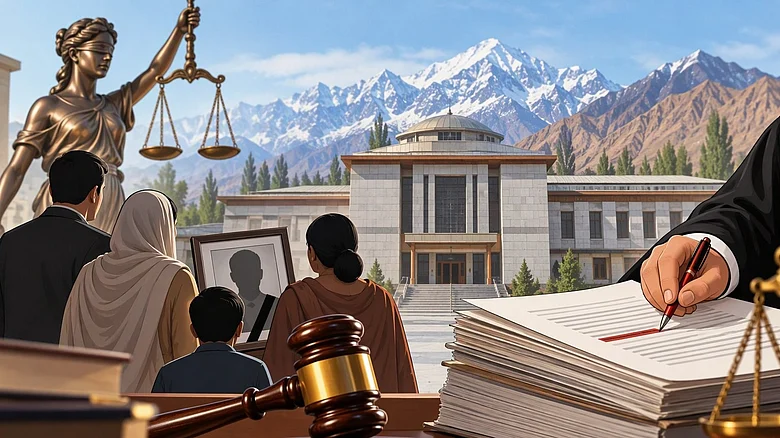
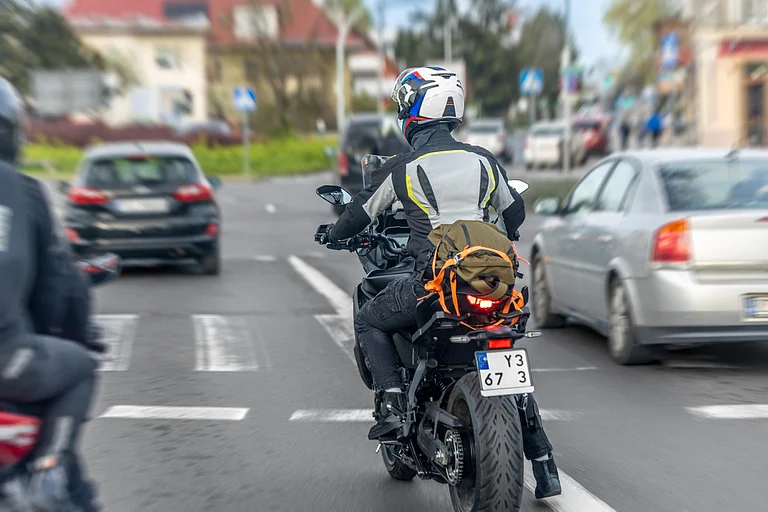
The Jammu & Kashmir and Ladakh High Court at Srinagar has stayed a trial court proceeding in a case where the police have arrayed a deceased motorcyclist as an accused in a final report.
Justice Shahzad Azeem was hearing the petition filed by Arshida Bano, widow of Late Sheikh Muzaffar Ahmad, and sought quashing of the police charges against her husband alongside other prayers. The case relates to a road accident that happened on April 25, 2026, near Sheikhbagh Kangan, located on the National Highway. In that accident, Sheikh Muzaffar Ahmad died on April 30, 2026, at SKIMS Soura, Srinagar.
The Kangan Police Station had registered a case. In its final report, the police filed charges under Section 193 of the Bharatiya Nagarik Suraksha Sanhita, 2023 (BNSS) in which it arrayed the car driver and the deceased motorcyclist (Sheikh Muzaffar Ahmad) as accused for contributory negligence.



As the FIR booked a deceased person, the court clarified the legal invalidity of booking a dead person. It held that criminal liability is personal and abates upon death. The court observed that arraying a deceased individual creates an anomalous public record that legal heirs have a legitimate interest in correcting. It said, “Once the accused is no longer alive, the Court cannot continue the trial, frame the charge or record a conviction or acquittal against him. Proceedings against the deceased person abate.”

The widow sought a writ of certiorari to quash the final report that arrayed her deceased husband. A writ of certiorari is a formal order by a higher court to a lower court or authority asking them to send a complete record related to a case for judicial review by the higher court. The petitioner also requested a mandamus (a court order directing a lower court, police, a government agency, or an authority to perform their legal duty) to direct the police to provide case diaries, witness statements, and other materials the police had relied upon. She requested a direction commanding the respondents to explain why the deceased’s body was transferred from SKIMS Soura to SDH Kangan for autopsy while there was sufficient medical evidence at SKIMS Soura.
The petitioner also prayed for further investigation into two female car passengers who stopped the vehicle for doing photography. The petitioner requested seizure of their photography devices and the data. She further requested an inquiry into the Investigation Officer’s (IO’s) conduct, and to book other involved public officials under Sections 255, 256, 257, 259, and 260 of BNS, 2023.

The court further noted that naming a deceased spouse as an accused could have civil consequences. It said, “Since the petitioner is the legal heir and spouse of the person who has been arrayed as an accused after his death and same is having potential civil consequences in any claim for compensation under the Motor Vehicles Act, where the finding of any negligence can defeat the claim.”
However, observing a prima facie violation of statutory safeguards, the court held that a case for indulgence was made out.
The court issued a notice in the main petition and connected application, returnable within four weeks. The court ordered the respondents to file the requisites for service within one week. It also asked for scanned trial court records and put a stay on the trial court proceedings until the next hearing date, which is scheduled for December 22, 2026. It ordered the investigating officer to remain present before the court on the hearing date in December.





