





Summary of this article
Health insurance may cover eligible hospitalisation expenses for respiratory illnesses, but routine consultations, medicines and follow-up treatment may fall outside standard policies.
You should check OPD benefits, hospitalisation limits, room-rent restrictions and waiting periods for pre-existing conditions such as asthma.
Air purifiers, masks and recurring medical expenses can add to household healthcare costs. You need to budget for these separately rather than rely entirely on health insurance.
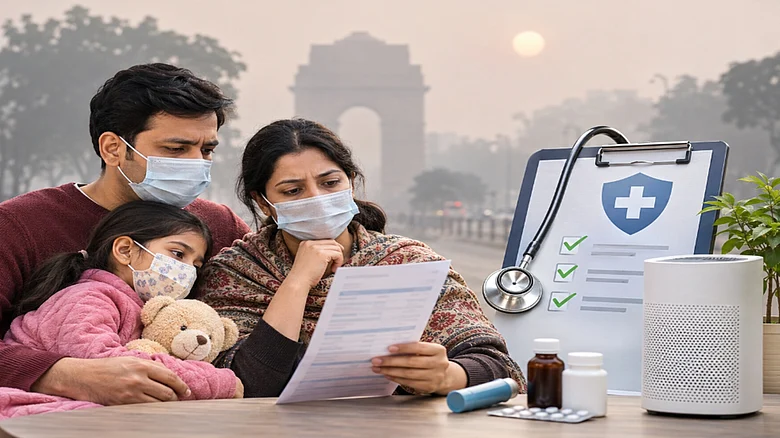
Every November, Neha, 31, checks the air quality app almost as regularly as she checks the weather. Last winter, her four-year-old daughter's persistent cough took a turn for the worse, leading to a three-day hospitalisation in Delhi.
The hospital bill came to Rs 92,000. Fortunately, the family's health insurance floater covered the eligible hospitalisation expenses.
But the costs did not end at discharge. Follow-up consultations, prescribed inhalers, medicines and a nebuliser added to the family's expenses over the following months. Together with an air purifier, the additional spending came to nearly Rs 40,000.
“I always thought our health insurance would take care of medical expenses. I hadn't considered how much we might spend even after coming home from the hospital,” Neha says.
Her experience highlights an important gap in health insurance coverage. While a policy may pay for eligible hospitalisation expenses, families often have to bear the cost of consultations, medicines and other follow-up care themselves.
When Air Quality Becomes a Household Expense
Air pollution is no longer just an environmental concern. For people living in cities that experience prolonged spells of poor air quality, it is also a growing health concern.
A study published in The Lancet Planetary Health, led by researchers from the Indian Council of Medical Research, estimated that air pollution was responsible for 1.67 million deaths in India in 2019. This accounted for 17.8 per cent of all deaths reported that year.
For many families, the problem does not end with a hospital visit. A child with recurring breathing trouble, for instance, may need to see a doctor several times during the winter. There are also bills for tests, inhalers and other medicines. Even when hospitalisation is not required, these expenses can put pressure on the household budget.

What Does Your Health Policy Actually Cover?
If someone in the family is hospitalised for asthma, bronchitis, pneumonia or another respiratory condition, a health insurance policy may cover the eligible expenses. But getting admitted to hospital is not the only situation in which these illnesses lead to medical bills. What the insurer pays for will depend on the policy's coverage, exclusions and waiting periods.
However, routine outpatient consultations, medicines and follow-up visits may not be covered under a standard hospitalisation-focused policy unless it includes an OPD benefit or another applicable provision.
Preventive purchases such as air purifiers and masks are also generally not covered as medical treatment expenses.
“Health insurance is designed to provide financial protection against eligible medical expenses, particularly hospitalisation. However, families should understand that recurring outpatient costs may not be covered under every plan. Knowing these distinctions can help them plan their healthcare expenses more realistically,” says Sanjiv Bajaj, joint chairman and MD at BajajCapital Ltd.
Another point to keep in mind is whether anyone in the family already has a respiratory condition. If the illness existed before the health policy was purchased, the insurer may apply a pre-existing disease waiting period. IRDAI rules cap this waiting period at 36 months of continuous coverage.
Three Things to Check Before Winter Sets In
Before the pollution levels rise, take a closer look at your health insurance policy. Pay particular attention to these three areas:
* Hospitalisation cover: Check whether the sum insured is sufficient to meet a major hospital bill. Also look at room-rent restrictions and any co-payment clause that could increase your share of the expense.
* OPD benefits: Find out if OPD consultations, investigations and drugs are covered on an outpatient basis. What the maximum limit is per annum, and what items may be claimed.
* Waiting periods: For pre-existing diseases such as asthma, find out if these would be covered and subject to a waiting period. All ailments should be disclosed at the time of applying.
Employees should also check their corporate health insurance, as some group policies may include OPD or wellness benefits that are not available under their individual plans.




“Environmental health risks are becoming an important consideration for household healthcare planning. While insurance can help manage eligible hospitalisation expenses, families should also account for routine healthcare costs and preventive measures. Understanding both aspects makes financial preparedness more meaningful,” says Bajaj.
Plan for More Than the Hospital Bill
Neha has since reviewed her family's health insurance benefits and included a separate provision in the household budget for regular consultations and other expenses that may not be covered.
For families, the lesson is simple: review your health policy before the pollution season peaks. Understand what it covers during hospitalisation, check whether outpatient benefits are available and keep some financial room for expenses that fall outside the policy.
A family's healthcare planning should not stop at having insurance for a medical emergency. It should also account for the smaller, recurring expenses that come with keeping everyone healthy.