





Summary of this article
Data shared by ANAROCK Research show that deliveries of new homes will touch an all-time high of 5,40,400 units across the top 7 cities this year.
But with the ongoing war in the Middle East roiling global trade and driving unpredictable swings in commodity prices, builders now face the fresh challenge of timely delivery of projects that are close to completion.
If project execution is done efficiently, 2026 can truly mark a milestone year for residential completions and help cement homebuyer sentiment further.
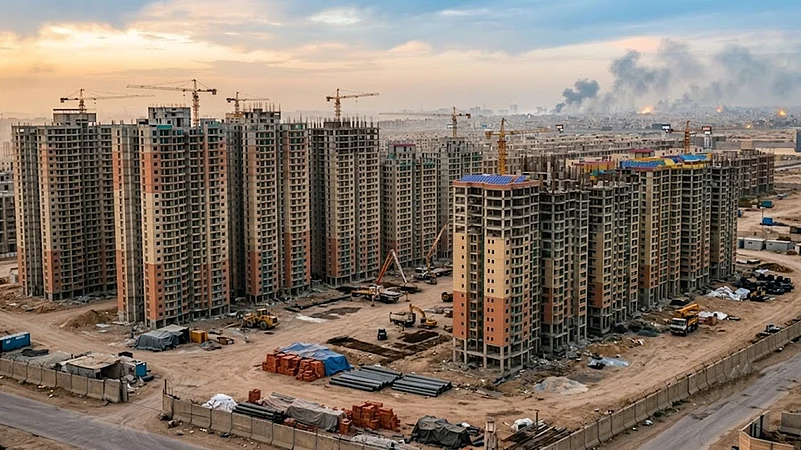
India’s burgeoning residential real estate market is all set for what can be its highest year of delivery ever as over 5.4 lakh units are projected to be completed across seven major cities in 2026. But with the ongoing war in the Middle East roiling global trade and driving unpredictable swings in commodity prices, builders now face the fresh challenge of timely delivery of projects that are close to completion.
Demand for homes is robust and liquidity is healthier than in previous cycles, but escalating logistics expenses and supply-chain disruptions could stretch the delivery capabilities of the industry like never before.
“Data shared by ANAROCK Research show that deliveries of new homes will touch an all-time high of 5,40,400 units across the top 7 cities this year. This is the highest in the last 10 years. The western markets of MMR and Pune together account for nearly 57 per cent of the total homes expected to be delivered during the course of 2026,” says Dr. Prashant Thakur, Executive Director & Head - Research & Advisory, ANAROCK Group.

Around 2,07,300 units are likely to be delivered in MMR this year while Pune has 1,00,300 units delivery likely in 2026.
Bengaluru (69,000), Hyderabad (63,700) and Chennai (35,600) alone have collectively 1,68,300 units delivery likely in the South this year.
North India’ housing market behemoth NCR has only 39,000 units scheduled to be completed.
Kolkata in East has a mere 22,500 units scheduled to be completed in 2026.
“These stretched-out housing supply pipelines have historically been prone to setbacks such as these,” notes Dr. Thakur. “Take the pandemic year of 20 20, for example. ANAROCK Research estimates that around 4.66 lakh units had planned inventory coming up for completion across India’s 7 top cities. But only around 2.14 lakh units - that’s 46% of the promised pipeline - were actually delivered since construction activity was abruptly impacted by nationwide lockdowns, labourer migration and supply-chain issues.”
The delay between planned and final completions indicates that even projects which have secured substantial built-up can come under pressure when faced with systemic shocks of a massive proportion. Today’s environment is materially different from the pandemic – sites aren’t shut, and labour shortages aren’t an issue. But an extended period of geopolitical tension will have consequences for project economics with elevated energy costs, increased logistics expenses and inflation in critical building materials like steel, aluminium, copper, electricals, and building systems.
“Cities with the largest completion pipelines – specifically MMR, Pune and Bengaluru - will be more vulnerable to prolonged input costs inflation. Pressure to keep deliveries ticking while managing margin pressures remains a function of balance sheet strength and tech-enabled project monitoring tools. Tighter regulation with RERA enforceable time-bound delivery is now the norm. Also, the earlier game-plan revolved around a vaccine which had smoother rollout curves compared to what we face now,” said Dr Thakur.
ANAROCK Research reveals that close to 30.5 lakh units have been delivered pan India’s 7 major cities in the period between 2017 and 2025. With the approx. 5,40,400 units expected to be delivered across the top 7 cities this year, 2026 would be the best delivery year in the last decade – if all projects deliver on time.
The colossal number of homes expected to be delivered this year is a true testament to the launch and sales momentum garnered post-pandemic. Residential projects launched during 2021-2023 are now moving towards the completion stage, resulting in a huge never-before seen pipeline of completions spanning across India’s largest housing markets. This pipeline is now very likely to be derailed due to the ongoing war in West Asia.
“Builders across the country had been rejoicing robust sales, pricing-power and revived buyer confidence in the last couple of years. However, the focus has now abruptly shifted from sales to project execution. Hence, 2026’s importance goes beyond the number of homes that will be delivered across the top 7 cities. We are now forced into a new evolutionary phase of India’s residential real estate sector which will test Indian builders like never before,” added Dr. Thakur.
If project execution is done efficiently, 2026 can truly mark a milestone year for residential completions and help cement homebuyer sentiment further. Although 2027 will be known for much more than just launches and sales figures, 2026 will determine the maturity level of our residential real estate sector.





