





Summary of this article
From ownership to optimisation: Wealth creation has shifted from simply owning property to actively measuring returns, tax efficiency, and portfolio performance.
Technology-led investing: Digital platforms, SIPs, and automated tools have made investing accessible, transparent, and adaptable to changing cash flows.
Liquidity matters more than legacy: Financial assets offer faster access to capital, aligning better with millennial preferences for flexibility and financial independence.
For decades, owning property was the ultimate symbol of financial security for India’s middle class. A home wasn’t just a shelter - it was savings, insurance, and retirement rolled into one. But quietly, that equation has begun to change. As millennials redefine what financial security looks like, wealth planning is moving away from a property-centric mindset toward something far more flexible and diversified.
Financial experts say there’s a noticeable shift in how the Indian middle class thinks about wealth today, and the difference becomes clear when you compare millennials with their parents’ generation.
For the older generation, wealth planning revolved almost entirely around real estate. The more property they owned, the more secure they felt. A house wasn’t just a financial asset; it was the centre of their economic life. It offered rental income, long-term stability, and a safety net they could fall back on by selling a portion of it whenever cash was needed.
“That mindset has changed significantly. The millennial middle class no longer sees real estate as the primary pillar of wealth. Instead, they lean toward diversified financial portfolios. This shift isn’t rooted in dislike for real estate. It’s more about recognising that financial assets give them flexibility, liquidity, and clarity—things earlier generations didn’t always prioritise,” says Santosh Joseph, CEO, Germinate Investor Services.

The biggest driver of this shift is technology. With easy access to investment platforms, apps, and digital tools, millennials have more choices and far more control over their money. They can start small, automate their investments, track performance instantly, and adjust their portfolios whenever they choose.
Earlier, wealth creation meant buying an asset upfront and spending years paying it off. Today, people use SIPs or occasional lump-sum contributions to build assets gradually. The behaviour is different, but the goal is the same: grow wealth in a way that suits their lifestyle and cash flows.
Importantly, even millennials who still prefer real estate approach it differently. They see it as one part of the overall strategy, not the whole plan. For many, property is an investment they may or may not live in. It is no longer their only source of security or wealth creation. Financial assets—equity, debt, hybrids, gold funds, and other instruments—play a dominant role, and real estate fits in only as a supporting component.
“Another key part of this transformation is the way returns are understood. Our parents rarely calculated returns using concepts like IRR or cost-to-hold. The focus was mainly on owning an asset, not necessarily evaluating its performance. Millennials, on the other hand, measure returns actively, compare asset classes, and analyse tax efficiency. This makes decision-making sharper and better aligned with long-term goals,” says Joseph.
Liquidity is also a driving force. Real estate is often illiquid and can take months to sell. Financial assets offer quick access to money through redemptions, systematic withdrawal plans (SWPs), or partial withdrawals. This aligns well with the millennial preference for flexibility and financial independence.
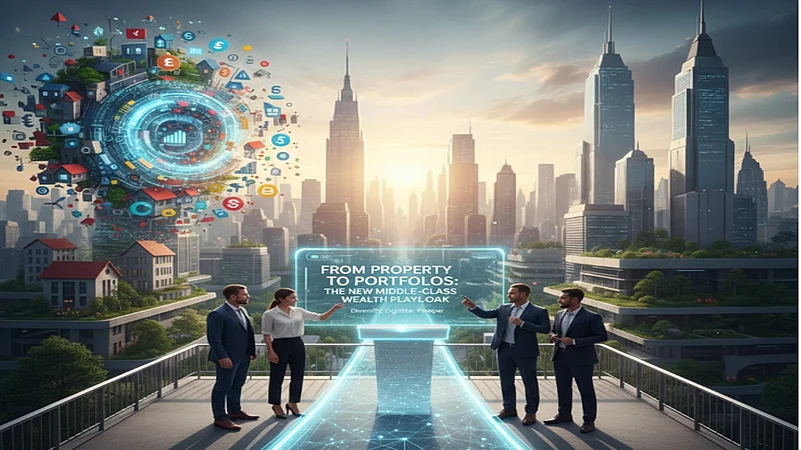
Together, these factors point to a broader transformation. The middle class is no longer building its dreams solely on property ownership. It is building them on diversified, technology-enabled financial portfolios that offer transparency, accessibility, and long-term growth.
Real estate still has a place, but it is no longer the centrepiece. Wealth, for the new middle class, is about balance, liquidity, and smarter financial choices.





