Summary of this article
Infrastructure to drive housing beyond metros.
CER funding boosts Tier II & III cities.
Peripheral housing demand set to rise.
India’s residential real estate market is entering a new phase, which is shaped and boosted by structural transformation. The Union Budget 2026-27, as analysed by the latest Colliers report “Budget 2026-27 Impact Analysis”, shows how the residential real estate is reinforced heavily by infrastructure-led growth. There is a decentralisation of urban development, which has also played a vital role in the real estate growth. While direct policy announcements for real estate were limited, they surely impact how the broader economic and infrastructural growth will be expected.

In the Budget 2026-27, the announcements pushed for more developed Tier II and Tier III cities, with investments of Rs 5,000 crore per City Economic Region (CER) over the next 5 years. A previous Collier’s report, namely, “Infrastructure and Mega Projects Research”, highlights how large-scale connectivity, upcoming industrial corridors, and city-level infrastructure investments are shaping the new roadmap for what the residential real estate market means to the homebuyers.
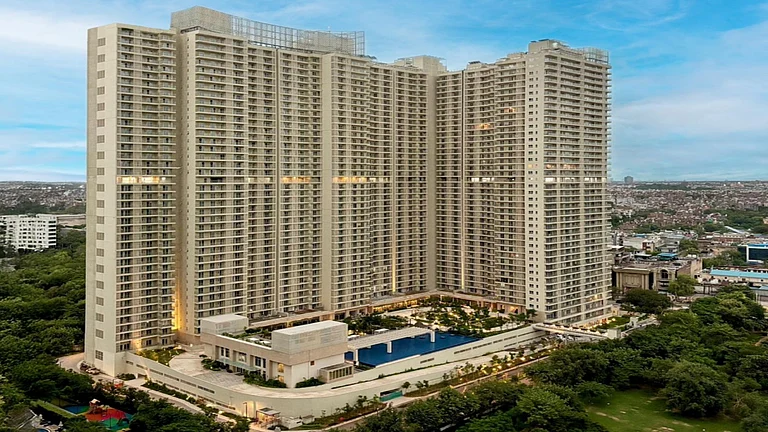
“The Union Budget 2026-27 has reinforced the government’s long-term vision for infrastructure-driven urbanisation by focusing on high-speed rail corridors, dedicated freight corridors, and City Economic Regions, which will enhance connectivity, generate new development opportunities, and spur new housing demand in peripheral areas,” adds Umesh Rathore, vice president, sales and marketing, VVIP Group.
Macro Stability Sets The Tone
The macroeconomic stability is critical for the residential sector, with low volatility in interest rates, improved credit reliance, and a steady expansion in employment sectors. Steady growth and housing affordability are supported mainly. The government’s intent is to use infrastructure as the primary leverage for residential expansion from the core hubs to the peripheral areas. With the upcoming developments, these areas have shown a rise in consolidating a strong residential absorption.
The Real Housing Catalyst
While housing-specific allocations such as the Pradhan Mantri Awas Yojana (Urban) 2.0 provide targeted support. The impact of this lies in infrastructural announcements. Investments in rail corridors, inland waterways, and CERs are altering how and where people choose to live, changing the buyer's sentiment. As per Colliers’ Infrastructure and Mega Projects analysis report, large-scale projects act like a multiplier for residential development and absorption. They improve living conditions, commute times, and decentralise the employment hubs. As the economic activity disperses into the outer regions of the core cities, the housing demand is bound to follow into Tier II and Tier III markets.
Tier II And III Cities Are In Prime Focus
One of the clearest pictures painted by the reports and the Budget is the intentional push towards balancing the regional development. Budget 2026-27 explicitly highlighted how the CER is going to be prioritising Tier II and Tier III towns. This announcement also included the development of the temple towns, tourism-led destinations. This is supported by monetary backing for transport and urban infrastructure investments. Large infrastructure projects are set to be positioned in these cities as integral nodes within national economic networks. The cities located near the industrial or technological corridors are witnessing a rapid residential demand, which is driven by manufacturing units, MSMEs, and allied service industries.
This transition in priorities marks a shift to a more end-user demand-oriented market. Households seeking affordable homeownership, better lifestyle opportunities, and a better quality of life, which are also in close proximity to the prime employment centres.
The Budget 2026-27 highlights India’s expanding pipeline of infrastructure and mega projects, signalling a more decisive residential market in the peripheral market, which is planned through the right investments and policies. For homebuyers, this indicates a strong market available to invest in, which is connected to the main city hubs.