





Summary of this article
Employees view corporate NPS as tax savings, not retirement.
Young professionals face early financial retirement due to EMIs.
Experts recommend default NPS enrollment and vernacular grassroots awareness.
Private sector adoption of the Corporate National Pension System (NPS) is on the rise in India. However, its penetration continues to face certain challenges even as adoption rises.
Speaking at the Retire Smart Coimbatore chapter, organised by the Pension Fund Regulatory and Development Authority (PFRDA) and Outlook Money on October 16, 2026, industry leaders discussed challenges and structural reforms needed to drive long-term retirement planning and increase the adoption of corporate NPS.
The panel brought together perspectives from finance and human resources, featuring Madhan Mohan, CFO of JS Auto Cast Foundry India, Binu Paulose, CFO of Rasi Seeds and Pon Annadurai, CHRO of SIMTA Group of Companies.


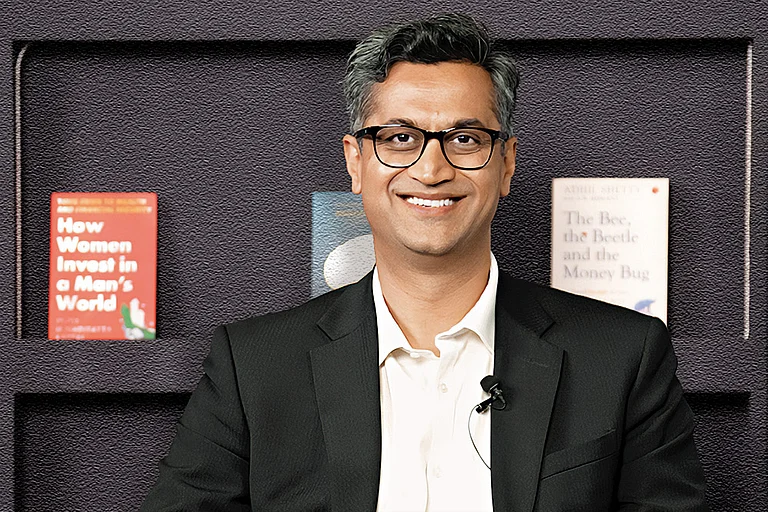
Members of the panel highlighted that there is a reluctance among private sector workers to plan for life after 60. Paulose pointed out that while Rasi Seeds introduced Corporate NPS a few months ago, engagement has been skewed by misconceptions, as many employees saw it more as a tax-saving measure as opposed to a retirement planning tool. He also noted that private sector workers rarely think about the financial realities that follow post-55 or 60.
"Right now, many employees feel that it is only a tax-saving measure. Nobody considers it a retirement benefit scheme, and that is one of the major reasons it is not penetrating the private sector employees," Paulose said.
Paulose also highlighted structural challenges on the employer’s end; he mentioned that Corporate NPS is not a mandatory statutory compliance, thus many companies hesitate to adopt it. However, he emphasised that NPS presents an optimal avenue for employees, particularly in the post-COVID era where stock market interest has surged. He added that by pairing tax benefits with professionally managed equity and debt allocations, NPS provides market upside alongside institutional security without requiring workers to track market movements on a daily basis.
Low Participation and the Case for Default Enrollment
Mohan mentioned that at JS Auto Cast Foundry India, Corporate NPS adoption sits just below 5 per cent, with participation almost entirely limited to employees in higher tax brackets who actively seek deduction avenues.
Madhan Mohan emphasised that investing must become an automated habit rather than an ongoing debate.
Comparing personal health commitments to financial wellness, Mohan remarked that people often postpone morning walks but never miss a scheduled 4 AM business flight. To overcome behavioural inertia among younger demographics, including Gen Z and Gen Alpha, he recommended shifting from voluntary sign-ups to automatic enrollment.
"Just like how your Provident Fund is mandatory, can we do it for each employee whenever they get to join the organisation? Make it mandatory by default, and the employee can opt out of that NPS," Mohan said.
He estimated that at least 80 out of 100 employees would stay enrolled in a mandatory model, significantly accelerating long-term compounding.
Mohan also noted that India's pension assets stand at approximately 14 per cent of the GDP, contrasting sharply with markets like the UK, where pension assets reach roughly 78 per cent of GDP.
To bridge this gap, he called for stronger vernacular outreach, stressing that lower-income plant operators who do not fall into high tax brackets must be shown how NPS builds generational security rather than just tax relief.
Furthermore, he suggested providing employees with a consolidated single-page view illustrating how NPS complements their Employees' Provident Fund (EPF) and mutual fund Systematic Investment Plans (SIPs).
Addressing the socio-economic conditions facing young professionals, Annadurai observed that modern lifestyle pressures have severely altered employee longevity and financial peace.
While previous generations practised steady, tangible savings through traditional household methods such as kitchen spice boxes, modern employees entering the workforce at 25 are immediately saddled with home loans, vehicle loans, and credit card dues.
"Only when a person gets tired can they retire. Today's youth, burdened by EMIs and pressure, become financially retired long before their actual age of retirement," Annadurai said.
With rising workplace stress and health concerns, including India's growing burden of diabetes and lifestyle illnesses, financial wellness has become inseparable from physical and mental wellness.

To demystify market-linked retirement products for the workforce, Annadurai presented a medical comparison, equating the core asset classes of NPS (Equity, Corporate Bonds, and Government Securities) to an ECG monitor.
"In medical terms, if an ECG is a flat line, it means the person is dead. Only when the line goes up and down does it mean the person is alive. That is exactly why your bonds, shares, and securities must go up and down," Annadurai said.
He also reassured employees that volatility is an inherent and healthy sign of an active, growing investment.
Annadurai cited the ancient wisdom of Tamil philosopher Thiruvalluvar, who wrote that a modest income poses no danger as long as expenditures do not outpace it.
He urged organisations to spread investment awareness far beyond corporate head offices, expanding outreach to small enterprises, private school educators, and ground-level operators to ensure financial self-sufficiency across all strata of society.