
Sponsored Content
Wealth transfer is often discussed in terms of numbers—how much to leave behind, how to structure it, and how to minimize friction among the next generation. But wealth transfer or leaving a legacy is not just about numbers, but also about leaving behind investing and financial discipline that can keep the wealth intact over the years and decades. It is about transfer of right values, habits and perspectives around money.
Let me put it in small story, Raj is hero of our story. Raj had to catch a train and was running just little late to the train station. He arrived just 2-3 minutes late to see the train leaving the platform. He was late—not by much, just 2-3 minutes. But that small delay now meant waiting 24 hours for the next train. The station wasn’t his goal; his destination was. Those lost five minutes wasn’t small anymore.
As it is hard to let the old habits go, he sat on a bench and started recalling old incidents which cost him dear. Once he arrived ten minutes late for a job interview. “It’s just 10 minutes,” He thought. But the job went to someone else, and Raj spent six months struggling before another opportunity came along. Those ten minutes had cost him half a year.

3 September 2026
Get the latest issue of Outlook Money

A year back, he had been 15 minutes late to a see a relative during his last breaths. Everyone else was too polite to say much, but Raj confessed later that he would regret missing that moment of closure for the rest of his life. 15 minutes had left a permanent gap in his heart.
Reflecting on these stories, Raj realized how he underestimated the impact of small delays. Five minutes here, ten minutes there—what seemed minor could ripple into months or even a lifetime of consequences. It wasn’t about the minutes themselves; it was about the opportunities and memories lost in those moments due to indiscipline.
A Systematic Investment Plan (SIP) started at a right time for child can play an important role in showing the next generation how saving and investing can build meaningful wealth over time. It serves as a living example of financial discipline and continuity—something that can be observed, understood, and eventually carried forward by the next generation.
Discipline is SIPs become power of routine and habits. Money is set aside at regular intervals, regardless of market conditions. Over time, this consistency becomes more important than the amounts invested. For children growing up in households where SIPs are part of the family conversations, investing stops being an abstract concept and gets normalized. They see that wealth is built gradually, step by step, and not overnight. They learn the rewards of persistence.
Sometimes family heads are late in certain life decisions. Early on spending and Late in saving. Early in EMI and Late in SIP. Early in withdrawing and Late in investing. Introducing children to the idea of SIPs early—whether through conversations, simple explanations, or even small investments in their names—is like cultural shift for them. It teaches them that saving and investing are planned actions tied to long-term goals which the family heads missed in their peak of earning life.
Our saving and investing cycle is erratic. In many cases, a lot of time is taken away in planning but execution remains missing. Every day is missed opportunity. While procrastinating by few months seems harmless, but the lost time mean a significantly smaller corpus. The SIP calculator on Edelweiss Mutual Fund’s website can be used to demonstrate how power of small, regular investments over time can build significant wealth.
From a wealth transfer perspective, SIPs also bring transparency. They create a visible trail of how money has been accumulated over time. This can make it easier for the next generation to understand not just what they inherit, but also how it was built.
A SIP-led approach also ensures that the next generation values the wealth. Instead of wealth appearing suddenly through inheritance, children grow up knowing that the corpus was built through years of steadfast investing approach. This awareness often leads to greater respect for the capital and a lower tendency toward impulsive use.
As children grow older, SIPs can become a shared learning tool. Over the years, responsibilities can be gradually handed over and divided among the next generation — starting with tracking performance, managing asset allocation, and eventually managing SIP contributions.
In the context of family legacy, SIPs are less about maximizing returns and more about building continuity. They reinforce the idea that wealth is a process, not a one-time event. When the same habits pass from one generation to the next, the likelihood of wealth being preserved and grown increases.
When the next generation participates and sees the process of wealth creation through SIPs, they understand the importance of long-term thinking in ensuring continuity of the family legacy, which can be passed from one generation to the next.
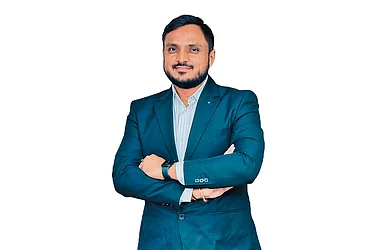
Disclaimer: Author of the article Nishit Shah is Partner at Shalibhadra Mutual Fund Distributors LLPand the views expressed above are his own.
MUTUAL FUND INVESTMENTS ARE SUBJECT TO MARKET RISKS, READ ALL SCHEME RELATED DOCUMENTS CAREFULLY