Sponsored Content
Come festive season, and Indian streets become a shopping galore, and can be considered an authentic economic event. Urban households are projected to spend ₹2.19 lakh crore this festive season, an 18% jump from ₹1.85 lakh crore in 2024. On the trade side, the industry body Confederation of All India Traders (CAIT) reported sales of ₹5.40 lakh crore in goods and ₹65,000 crore in services during the 2025 festive period, the country’s highest-ever Diwali season turnover.
Big-ticket spending is rising too, and 37% of families now plan to spend more than ₹20,000, up from 26% in 2024, and six out of ten expect to cross ₹5,000.
All this is inherently good news as festivals carry real emotional and social value such as gifting, home upgrades, and celebration. In fact, festivals are about celebrating with family and creating memories. The challenge is ensuring that today’s celebration does not come at the expense of tomorrow’s financial security.

1 October 2026
Get the latest issue of Outlook Money

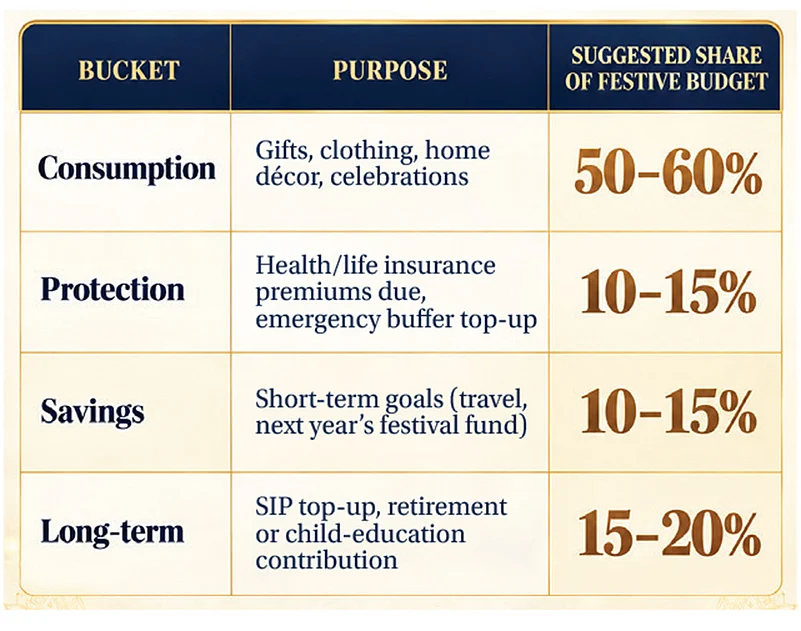
The risk isn’t in the spending, but it’s the kind of spending which crowds out everything else on the balance sheet. If you want to apply the right discipline, then think of festive money in four buckets rather than one.
Consumption
This is where most households already spend, such as electronics, home makeovers, white goods, and gourmet groceries. The habit worth building is to cap this bucket in advance and decide the number before shopping, not after. This will give you a realistic picture of where your money gets spent.
Additionally, it helps steer clear of common mistakes, such as buying many small items that, while seemingly inexpensive on their own, can add up to a substantial financial burden.

Protection
One thing to remember, financial security shouldn’t be sacrificed for festive spending. Make sure that necessary obligations are met before allocating funds for discretionary spending. This covers regular investments, school or other planned expenses, insurance premiums, and loan repayments.
With 91% percent of shoppers using digital payments, EMIs are flagged as a growing risk of overspending. This works as a reminder that “no-cost EMI” still adds a fixed monthly outflow next year, whether or not this year’s income holds steady.
It’s important to stay away from your emergency fund and not get tempted to use it for arbitrary expenses.
Saving and Long-Term Expenses
The buckets that are easiest to postpone are long-term contributions and savings: “I’ll top up my SIP after Diwali.” In reality, once the month’s excess money has been depleted by unplanned expenses, that top-up rarely occurs. Your budget for your long-term goals shouldn’t compete with festive expenses. A single skipped investment may not appear significant, but repeatedly interrupting your savings habit can affect long-term wealth creation.
Conclusion
A simple test before any festive purchase: does this fall within the consumption cap I set, and have this month’s insurance and SIP commitments already gone out? If yes to both, spend freely, that’s what the season is for. If either answer is no, the purchase can usually wait a week without diminishing the celebration.
Balance, not restraint, is the actual goal: festive spending and financial discipline aren’t opposites; they’re two line items in the same budget.
Reference
https://cait.in/record-breaking-diwali-sales-of-%E2%82%B95-40-lakh-crore-in-goods-65-thousand-crores-in-services-reflect-indias-economic-strength-and-swadeshi-spirit/
https://www.outlookmoney.com/amp/story/personal-finance/shopping-sentiment-gets-festive-season-gst-bonanza-boost-reveals-survey-spend-with-financial-prudence
Disclaimer: An Investor education and Awareness initiative of Aditya Birla Sun Life Mutual Fund
All investors have to go through a one-time KYC (Know Your Customer) process. Investors to invest only with SEBI registered Mutual Funds. For further information on KYC, list of SEBI registered Mutual Funds and redressal of complaints including details about SEBI SCORES portal, visit link: https://mutualfund.adityabirlacapital.com/Investor-Education/education/kyc-and-redressal for further details. Mutual Fund investments are subject to market risks, read all scheme related documents carefully