
Sponsored Content
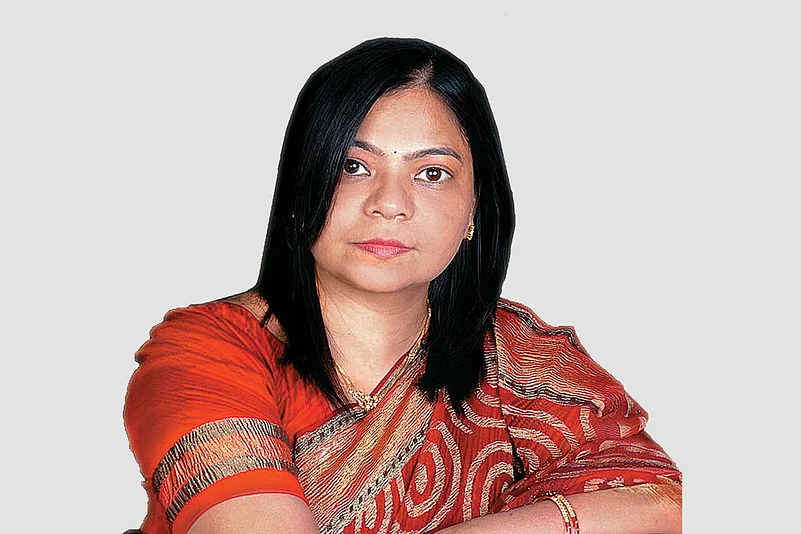
As India’s capital markets look ahead to 2026 with renewed optimism around IPOs and long-term growth prospects, one name stands out for the speed, substance, and strategy behind its public market ambition—Keertana Finserv Limited, led by its Founder and Managing Director, Padmaja Reddy.
For Padmaja Reddy, the IPO journey is not new. Her first venture, Spandana Sphoorty Financial Limited, was listed in 2019—21 years after its inception—and only after navigating one of the most turbulent decades any financial services business in India has witnessed. Keertana, her second venture, is now preparing for a public listing within its fifth year of operations, targeting the second half of FY26. The contrast between the two journeys tells a powerful story of learning, evolution, and leadership.
Microfinance, the sector where Spandana was built, was born in India in the late 1990s with an ambitious social mission: extending collateral-free credit to low-income households. The early years were spent inventing the model itself—building efficiency, productivity, profitability, and scale in a country as diverse as India, where language and culture change every few hundred kilometres. What began as a local, relationship-driven business slowly proved that it could scale nationally.

3 September 2026
Get the latest issue of Outlook Money

Keertana’s IPO aims to fund scale, reduce fundraising churn, and keep execution and controls tight.
However, success brought complexity. Over time, microfinance became vulnerable to political intervention, bureaucratic resistance, and policy disruptions. Loan waivers announced during elections, the Andhra Pradesh crisis, demonetisation, and repeated cycles of stress every few years led to sharp portfolio deterioration, stalled growth, and significant write-offs. Few industries have faced such persistent external shocks. Spandana, like the sector itself, had to be rebuilt multiple times—requiring extraordinary grit, perseverance, and conviction. Its eventual IPO, post CDR exit, was not merely a financial milestone but a testament to resilience.
Keertana represents the next chapter—faster, sharper, and structurally stronger.
Drawing on over two decades of experience in building benchmarks for efficiency and productivity, Padmaja Reddy chose gold loans as the core of her second venture—an asset-backed, scalable product with significantly lower external volatility. From inception, Keertana was designed as a new-age financial institution, powered by technology, real-time monitoring, and uncompromising customer centricity.
In just over three years, Keertana has achieved what took other gold loan companies decades. It is growing at over 100 percent year-on-year, delivers 5–6 percent ROA and 22–24 percent ROE, and serves a wide spectrum of customers—from daily wage earners and small traders to farmers, contractors, and salaried employees. It is also among the few players to assess gold purity using carat meters, enabling faster, more transparent appraisal and even the aSuch rapid growth demands continuous capital infusion. Repeated private fund-raising, however, can divert leadership focus from customers, technology upgrades, and operational excellence. With strong profitability, governance, and diversified products firmly in place, Keertana has therefore chosen to access the public markets early.
Planned for calendar year 2026, Keertana’s IPO is positioned to be a market favourite—not driven by hype, but by fundamentals. It reflects a journey from endurance to acceleration, and a leadership philosophy that believes profitability is a by-product of doing the basics right.
Disclaimer: The Views are Personal and not a part of the Outlook Money Editorial Feature