





Summary of this article
From a policy perspective, the emphasis has clearly shifted towards simplification, standardization, and enhanced transparency.
The consolidation of forms, introduction of the “tax year” concept, and rationalization of provisions are expected to make the law more navigable, particularly for individual taxpayers.
Overall the changes effective from 1 April are inclined towards increasing efficiencies and simplifying tax laws instead of providing tax relief to taxpayers, including senior citizens.
The newly-enacted Income-tax Act, 2025 is set to take effect from 01 April 2026. Accordingly, all tax compliances - such as TDS, advance tax, filing of return, reporting, etc. - shall have to be done under the new law.
From 1 April 2026, taxpayers must use new forms, formats and terminology, follow requisite disclosure requirements, and adapt to revised perquisite valuation and reporting rules.
From a policy perspective, the emphasis has clearly shifted towards simplification, standardization, and enhanced transparency. The consolidation of forms, introduction of the “tax year” concept, and rationalization of provisions are expected to make the law more navigable, particularly for individual taxpayers and businesses.
“Measures such as inclusion of major cities for HRA benefit, structured reporting of digital assets, expanding the limit of children education and hostel allowance and revised perquisite valuation norms for motor cars, concessional loans and gifts from employer are implemented in the final rules. While most of draft proposals have been retained with minor refinements for clarity, the final rules prescribe detailed formats, instructions, and structured data fields for the new forms (such as Forms 130, 124, and 141), going beyond the relatively high-level framework set out in the draft rules,” says Sudhakar Sethuraman, Partner, Deloitte India.
Overall, the taxpayers and employers would need to proactively review their compliance frameworks to ensure a smooth transition from April 2026 onwards.

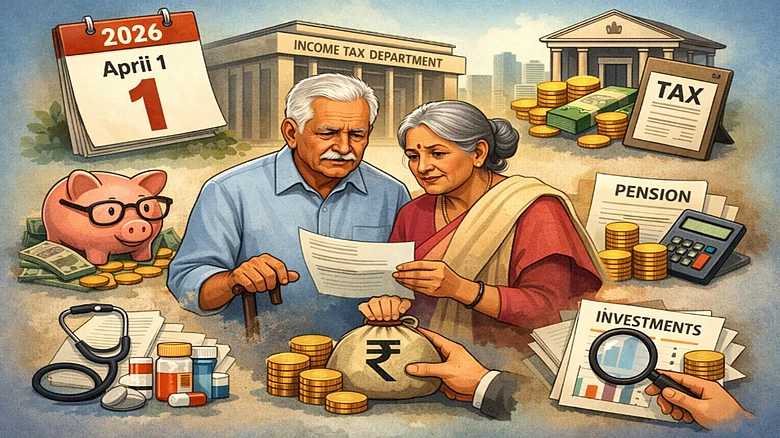
How Senior Citizens Will Get Impacted
Effective April 1, nothing particularly improves or worsens from a tax perspective for senior citizens, though it should be quite obvious that this change is structural and a question of choices. Taxpayers, including senior citizens, will continue to fall in the same tax slabs as before and therefore continue to pay roughly the same amount of tax as before under both regimes. There is no bonanza or sudden incentive for senior citizens.
The biggest change is now that of the law itself. Gone is the archaic Income-tax Act,1961, now replaced with the Income-tax Act,2025, and a significant effort towards simplification has also been made with the reduction of the number of rules from 511 to just 333. This will make a difference for taxpayers, including senior citizens. The language used is simpler to understand, complying with tax obligations is clearer and there will be lesser ambiguity about certain sections and provisions when it comes to filing of return.
The new tax regime also continues to remain attractive with effective tax liability going down to zero if your total income is up to Rs 12 lakh (approximately Rs 12.75 lakh if you consider the standard deduction). Since this applies to the overall income, retired persons and senior citizens with pension and some little additional income will benefit.
Compliance requirements have become stricter with not as many reporting requirements but those that remain being detailed in nature. As far as senior citizens go, if they have multiple sources of income (along with pension), investments and possibly even capital gains they generate, they will have to be a tad more cautious to ensure everything is reported accurately when they file their returns.
As always, the choice of regime will depend on what suits the taxpayer best. Senior citizens who claim large deductions for example medical expenses or investments will do better on the old regime while those who prefer less tax rates and have less on their minds will prefer the new regime.
Tax experts say effective April 1, 2026, most of the changes in the new income tax regime are due to the removal of multiple exemptions, deductions and cesses rather than additional tax relief being provided to senior citizens. The tax slabs will remain the same as well. Here is how things stand:
“Most of the notable changes in the structure and drafting of income tax laws will result in ease of compliance for taxpayers including pensioners and those dependent on interest income, such as simplification of provisions, decrease in number of rules/forms, better drafting etc,” says Aditya Bhattacharya, Partner, King Stubb & Kasiva, Advocates and Attorneys.
Nil income-tax return filing requirement for very senior citizens (i.e. citizens of age 75 years and above) subject to specified conditions shall continue to provide substantial relief to them in compliance requirements.
“Overall the changes w.e.f. 1 April are inclined towards increasing efficiencies and simplifying tax laws instead of providing tax relief to taxpayers, including senior citizens. The benefit for senior citizens would be more on account of lower compliance hassle,” says Bhattacharya.





