

Summary of this article
Unexplained cash found during tax searches can attract a nearly 84 per cent combined levy.
Large annual cash withdrawals trigger reporting, TDS, and tighter tax department scrutiny.
Cash receipts above Rs 2 lakh or undocumented loans risk heavy penalty exposure.
Households must maintain clear records, as cash holdings face stricter compliance rules.
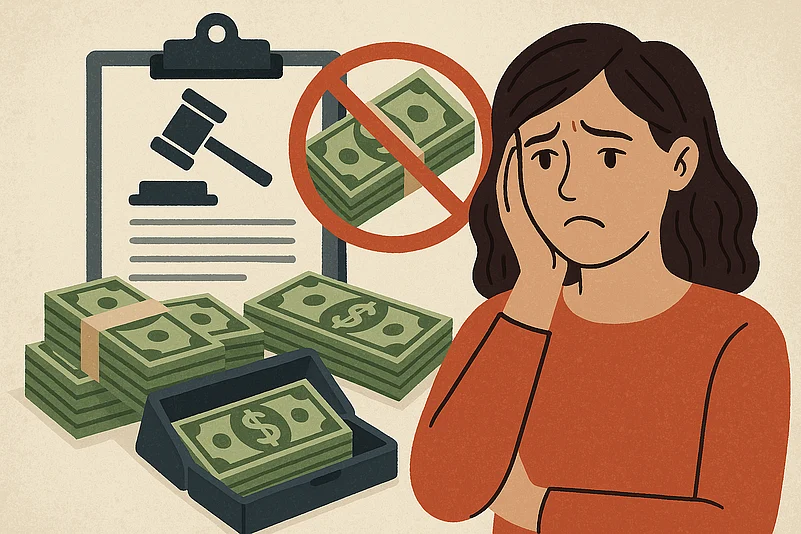
A fresh warning has been circulating among taxpayers: keeping large amounts of cash at home may no longer be as harmless as many assume. If the tax department comes across unexplained cash during a search, the amount can attract taxes and penalties that together swallow almost 84 per cent of the money, according to a recent report by NDTV. For households that still rely on physical currency for emergencies or day-to-day comfort, this marks a major shift in how such savings are viewed.
A Tougher Climate For Cash
The report draws on insights shared by investment banker Sarthak Ahuja, who points out that scrutiny around cash has tightened sharply in recent months. The underlying laws have not dramatically changed, but the way they are being enforced certainly has. Banks now pass on far more information to the tax authorities, and the systems that analyse these transactions have become smarter and faster. This means that large withdrawals or unusual cash patterns rarely go unnoticed.
To understand the shift, consider a few routine cases. Any person withdrawing more than Rs 10 lakh in a financial year will now have that activity reported automatically. If total withdrawals cross Rs 20 lakh, tax deducted at source (TDS) may be deducted. Even if the cash comes from legitimate income, frequent or inconsistent activity can prompt questions simply because it does not match the person’s typical behaviour.
The more serious consequences arise when the tax department conducts a search. If cash is found at home and the owner cannot clearly prove where it came from, the money is treated as unexplained income. In such cases, the applicable tax rate, surcharge, and penalty together eat up almost the entire amount. What was thought of as a quiet financial cushion can turn into a costly liability overnight.
When Cash Turns Into A Penalty
The crackdown does not stop at withdrawals. Several everyday cash practices, the sort people rarely think twice about, now come with steep consequences. Accepting more than Rs 2 lakh in cash from one person in a single day can result in a penalty equal to the amount received. Small cash loans between friends or relatives, unless supported by records, carry risks for both sides. And in real-estate dealings, taking more than Rs 20,000 in cash is treated as a red flag.
In some situations, the penalty alone can be 100 per cent of the amount in question. This means even smaller sums can double in cost if the paperwork does not hold up. What makes this particularly important is that the tighter rules now apply across the board, not only to high-net-worth taxpayers, but also to families, small traders, freelancers and anyone else who handles physical currency.
Rethinking How You Use And Store Cash
The government’s larger objective is to discourage unaccounted income and bring more transactions into the formal economy. For ordinary taxpayers, the core message is straightforward: keeping proper records is no longer something you can afford to overlook. Bank statements, income proofs, old bills, even small receipts, all of these now act as a safety net if questions ever arise.
More people are leaning on digital payments simply because they leave a clear trail. And for those who still like to keep a bit of cash aside at home, the rule of thumb has changed; you should be able to explain where that money came from.
What is becoming increasingly evident is that cash can no longer sit unnoticed in a drawer without inviting risk. With stricter checks and heavier penalties, the burden of proving legitimacy has grown. Anyone who keeps sizeable cash reserves needs to rethink how they store and document it, otherwise a sum meant for security could end up shrinking under unexpected penalties.