





Summary of this article
Tax saving is a legitimate part of financial planning, but it should never replace thoughtful investing.
Instead of starting with tax deductions, investors should begin with goals like retirement, children’s education, home purchase or financial independence.
Each goal has a timeline and risk profile. Only after identifying those goals should investments be chosen.
Every March, the same pattern repeats across India. Investors rush to buy anything that helps them claim deductions under Section 80C of the Income Tax Act, 1961. Tax-saving fixed deposits (FDs), insurance policies, ELSS (Equity Linked Savings Scheme) funds chosen at the last minute. The objective becomes simple: reduce this year’s tax bill.
But in the process, many investors end up solving the wrong problem.
Priya used to follow the same routine. Each March she invested Rs 1.5 lakh before the tax deadline, often based on quick suggestions from her bank or agent. Over seven years she invested Rs 10.5 lakh in various tax-saving instruments. Her tax savings were certainly eye-catching. If she was in the 30 per cent tax bracket, she'd saved about Rs 3.15 lakh.
However, a recent look at her investments revealed a different story. The wealth she'd accumulated was, frankly, underwhelming when compared to what the same sum might have earned in growth-focused investments.
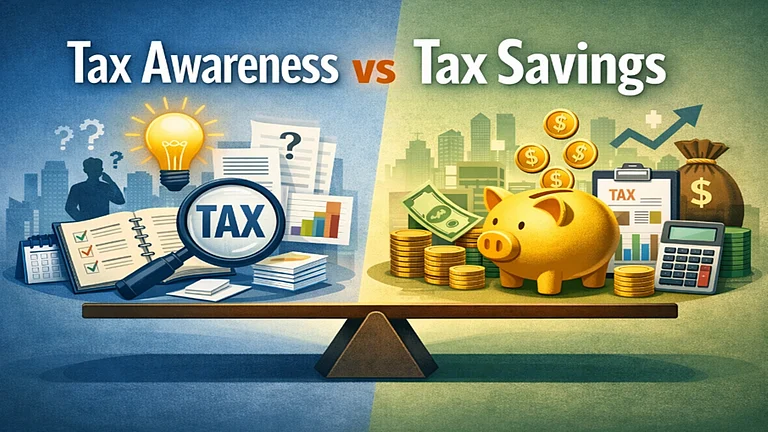
The March Investment Trap
Financial planners often see a surge of rushed investment decisions in the last weeks of the financial year. The question investors usually ask is: What can I buy to save tax? But the better question is: Which investment actually helps me reach my financial goals and also provides tax benefits?
That distinction matters. “Tax efficiency is important, but it should not become the primary reason for investing,” says Sanjiv Bajaj, Joint Chairman and MD at BajajCapital Ltd. “The foundation of any financial plan should be long-term wealth creation aligned with goals. Tax benefits should ideally be an added advantage, not the starting point.”
When Tax Saving Dominates Decision-Making
Section 80C allows deductions up to Rs 1.5 lakh annually across several instruments such as life insurance premiums, Public Provident Fund (PPF), ELSS, tax-saving FDs, and others. Because the deduction provides immediate visible benefit, investors often choose the instrument purely for the tax advantage. But the long-term outcome of that Rs 1.5 lakh investment depends entirely on where the money goes.
Consider PPF, which currently provides government-backed returns of 7.1 per cent (as of March 2026), and also offers stability and predictability. Conversely, ELSS invests in equity markets and has historically generated returns of approximately 12-15 per cent or more over extended periods. Over long periods, that difference in return potential can significantly change the final wealth outcome. While the tax saving is identical today, the wealth created can be worlds apart. Furthermore, investors should note that for ELSS, Long-Term Capital Gains (LTCG) above Rs 1.25 lakh are now taxed at 12.5 per cent, a small price to pay for significantly higher growth
The Bigger Shift In India’s Tax Landscape
There is another reason this distinction matters today. With the new tax regime gaining wider adoption, many deductions including those under Section 80C do not apply unless taxpayers specifically choose the old regime. This means investors who automatically rush to tax-saving products each March may not even benefit from those deductions anymore.
“The new tax regime is forcing investors to rethink their approach,” Bajaj notes. “When deductions disappear, the real question becomes: are your investments fundamentally strong enough to build wealth over time?”
The Goal-First Approach
Financial planning works best when the sequence is reversed. Instead of starting with tax deductions, investors should begin with goals like retirement, children’s education, home purchase or financial independence. Each goal has a timeline and risk profile. Only after identifying those goals should investments be chosen.
If some of those suitable investments also provide tax benefits such as ELSS funds or contributions to retirement schemes, then the investor benefits twice.




But the investment decision remains driven by suitability, not tax deduction.
The Takeaway
Tax saving is a legitimate part of financial planning, but it should never replace thoughtful investing. A Rs 1 saved in tax today feels good. But if the investment behind it fails to grow meaningfully over time, the opportunity cost can be far higher. Bajaj says, “Good financial planning ensures your investments work even if tax benefits change tomorrow.” Because ultimately, the goal of investing isn’t just paying less tax this year.
It’s building enough wealth to secure the years ahead.





