





Summary of this article
Tax savings without awareness can backfire: Deductions alone don’t guarantee lower tax if income reporting or compliance is incorrect.
Technology has changed taxation: AIS, 26AS, and automated data matching make accurate reporting non-negotiable.
Right regime selection matters: Awareness helps taxpayers choose between old and new regimes based on facts, not assumptions.
Compliance protects long-term finances: Avoiding penalties, interest, and loss of benefits often matters more than last-minute deductions.
Every year, as the tax season approaches, familiar questions resurface: “How can I save more tax?” and “Which investment offers the maximum deduction?” For many taxpayers, tax planning is largely reduced to chasing deductions under Section 80C, buying health insurance under Section 80D, or making last-minute investments before March 31.
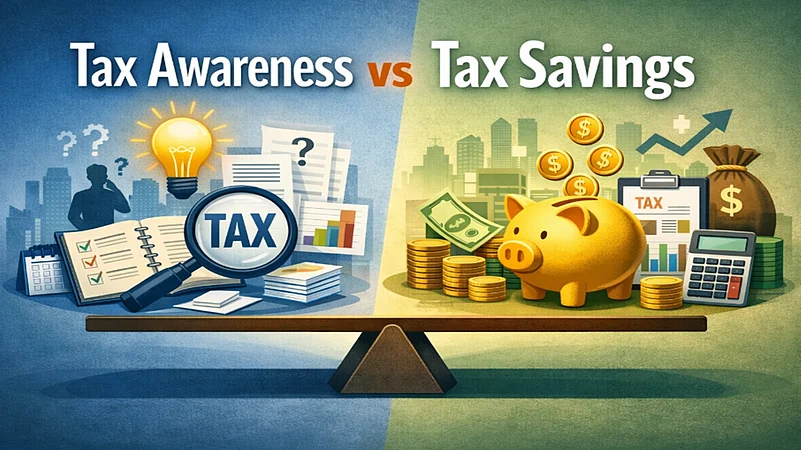
While tax savings matter, they are only one part of the story. In today’s fast-changing tax environment, tax awareness is equally - if not more - important than tax-saving strategies. An aware taxpayer can avoid penalties, ensure better compliance, plan smarter, and build long-term financial discipline.

Tax Saving Is A Tool, Tax Awareness Is A Skill
Tax saving is usually product-driven. It focuses on what to invest in to reduce taxable income - like ELSS funds, PPF, NPS, home loan interest, or donations.
Tax awareness, on the other hand, is a skill. It means understanding:
What income is taxable and how it is classified
Which regime (old vs new) suits you best
How TDS works and why it may not mean “tax fully paid”
What disclosures are mandatory in the ITR
How to avoid mismatches and unwanted notices
“The difference matters. Without awareness, a taxpayer may invest for deductions but still end up paying extra due to compliance errors or overlooked income,” says Sudhir Kaushik, Co-founder & CEO, Taxspanner, a Zaggle company.
Many People Save Tax… and Still Pay More Later
A common misconception is that if TDS (tax deducted at source) is deducted, everything is settled. But the reality is: TDS is only a tax collection mechanism, not the final tax liability.
For example:
Freelancers may have 10 per cent TDS deducted, but their actual slab may require higher tax payment.
Senior citizens earning interest income may see TDS deductions, but still need to file returns for refunds or proper reporting.
Employees who switch jobs mid-year may face incorrect TDS because earlier salary details were not shared with the new employer.
In such cases, taxpayers realise the issue only when they receive a tax demand - or face interest and penalties.
Data-Driven Taxation Makes Awareness Non-Negotiable
India’s tax system has become highly technology-driven. Financial details from multiple sources are now reported and linked - such as:
Form 26AS
AIS (Annual Information Statement) and TIS
Bank interest and FD data
Mutual fund transactions
High-value transactions across accounts
“This means the Income Tax Department often has a strong view of a taxpayer’s financial activity. Tax awareness helps ensure your reported income matches what the system already reflects. Even small mismatches can trigger automated communication,” says Kaushik.
Old vs New Regime: Awareness Prevents Wrong Choices
With two tax regimes in place, many taxpayers choose based on assumptions rather than calculations.
Tax awareness means understanding:
Under the new tax regime, most deductions and exemptions are not available
Under the old regime, tax benefits can be significant if planned properly
Salaried employees often need to choose the regime in advance for TDS planning
Professionals and business owners have different rules and decision factors
Without awareness, taxpayers may choose a regime impulsively and lose legitimate savings.
Compliance Errors Can Cost More Than Missing a Deduction
A taxpayer might save Rs 25,000 through deductions, but one compliance miss can wipe out the benefit due to:
Interest for delay or short payment
Late filing fees
Penalties for incorrect reporting
Loss of carry-forward of capital losses
Delayed refunds
Tax awareness ensures tax planning is not just about reducing tax, but also about accuracy, timing, and proper reporting.
Tax Awareness Improves Financial Discipline
One hidden benefit of tax awareness is that it builds healthier money habits. Aware taxpayers tend to:
Maintain records of salary slips and Form 16
Track interest across multiple accounts
Understand capital gains on investments
Keep proof of deductions and exemptions
Plan for advance tax instead of last-minute stress
Instead of scrambling in March, they plan through the year and stay compliant with confidence.
Conclusion: Save Tax, But First Understand Tax
Tax-saving investments are valuable, but they should not be made blindly. The smartest taxpayers are not those who rush for deductions, but those who understand the tax system and use it responsibly.
“In today’s world of automated reporting and increasing transparency, tax awareness is essential. It protects you from errors, improves your financial discipline, and ensures your tax-saving efforts truly deliver value,” says Kaushik.
While tax savings reduce your tax bill, tax awareness protects your financial future.





