






Summary of this article
Don’t compare gold loans on interest rates alone—processing fees, penalties and auction charges can sharply raise costs.
Stick to the RBI-mandated 75 per cent LTV and borrow only what you genuinely need to avoid repayment stress.
Read auction timelines and grace periods carefully; missed payments can lead to faster gold auctions than expected.
Choose regulated, reputable lenders with transparent custody and repayment policies to safeguard your jewellery.
Gold loans have emerged as one of the fastest-growing credit segments in India. According to data from the Reserve Bank of India (RBI), outstanding gold loans surged 125 per cent year-on-year (y-o-y) as of November-end 2025—more than 10 times the 11.5 per cent growth recorded in overall bank credit. This follows a sharp 77 per cent rise in the previous year, driven largely by the rally in gold prices and borrowers’ preference for quick, collateral-backed liquidity.
But while gold loans are often seen as a convenient and relatively low-risk borrowing option, they come with their own set of risks. Before pledging household gold, borrowers should be aware of a few critical factors that can significantly impact costs, repayment pressure and the safety of their jewellery.
Key Factors To Consider When Selecting A Lender
While choosing a lender for a gold loan, borrowers should evaluate several critical aspects beyond just interest rates. Key factors include the lender's credibility, safety of gold custody, loan-to-value (LTV) ratio, disbursal time, repayment flexibility, and hidden charges.
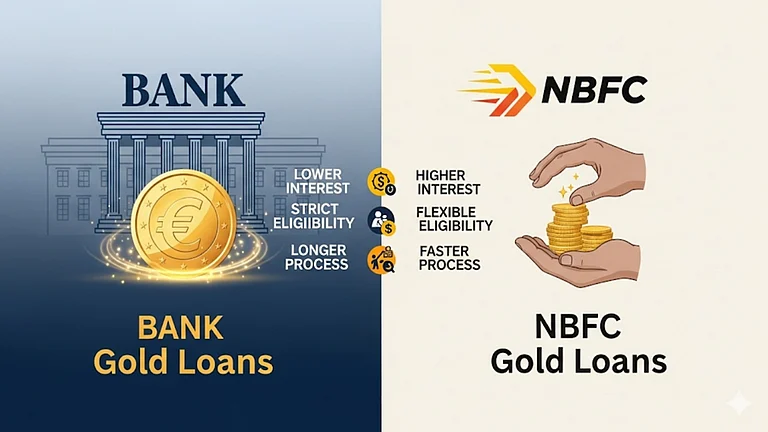
Reputed financial institutions offer better safety protocols and transparency, whereas non-banking financial companies (NBFCs) and gold loan companies provide quicker processing and more relaxed credit checks. Borrowers should also assess branch accessibility, especially if frequent visits are needed for repayments or top-ups.
Interest Rates, Processing Fees And The Fine Print Borrowers Often Miss
Gold loan interest rates typically range from 9-12 per cent per annum, while NBFCs and gold loan companies may charge rates between 12 per cent and 18 per cent, depending on the borrower's profile and loan amount.
Processing fees also differ: banks often levy 0.25-1 per cent of the loan amount, whereas NBFCs may charge a little higher. Additional costs like documentation charges, renewal fees, auction charges, and penal interest for late payments can add to the overall cost of borrowing. Borrowers should calculate the effective annualised cost before finalising a lender.
Typical LTV Ratio For Gold Loans
The RBI currently allows a maximum LTV ratio of up to 75 per cent for gold loans, meaning lenders can disburse a loan amount equivalent to 75 per cent of the current market value of the gold pledged. Banks generally adhere strictly to this 75 per cent cap. NBFCs, however, may offer slightly higher valuations or additional incentives, though still within regulatory limits, especially for high-value customers or rural borrowers. During times of rising gold prices, as witnessed recently, lenders may reassess pledged gold more frequently to manage their risk exposure.
Loan Tenure And Repayment Options
Banks usually offer gold loan tenures ranging from 3-24 months, with some extending up to 36 months. Repayment options include equated monthly instalment (EMI)-based, bullet repayment (lump-sum at the end), or overdraft-style loans.
NBFCs and gold loan companies often provide more flexible repayment structures, including interest-only EMIs and easy top-up facilities. However, they may be stricter with overdue accounts and can initiate auctions of pledged gold earlier than banks if repayments are delayed.
Common Mistakes
A major mistake borrowers make while taking gold loans is focusing solely on the interest rate without considering other charges, repayment terms, or the credibility of the lender. Many also underestimate the importance of reading the fine print regarding auction timelines and penal charges.
Some borrowers pledge more gold than needed or take multiple gold loans simultaneously, which increases their risk of default. Others fail to compare multiple lenders or fall prey to loan scams, especially from unregulated players.




How Not To Over-Borrow Or Risk Losing Gold Assets
To avoid over-borrowing, one should borrow only what is absolutely necessary and ensure the repayment fits within their financial capacity. Maintaining a repayment plan and setting up alerts for due dates can help manage the loan better.
It’s also advisable to periodically monitor gold prices and loan statements. Borrowers should avoid rolling over loans multiple times or use gold loans for non-productive purposes.
Choosing a lender with transparent policies on gold custody, auction timelines, and repayment grace periods is crucial to safeguarding one's gold assets. This should help borrowers make informed decisions as gold loan demand continues to surge alongside rising gold prices.





