



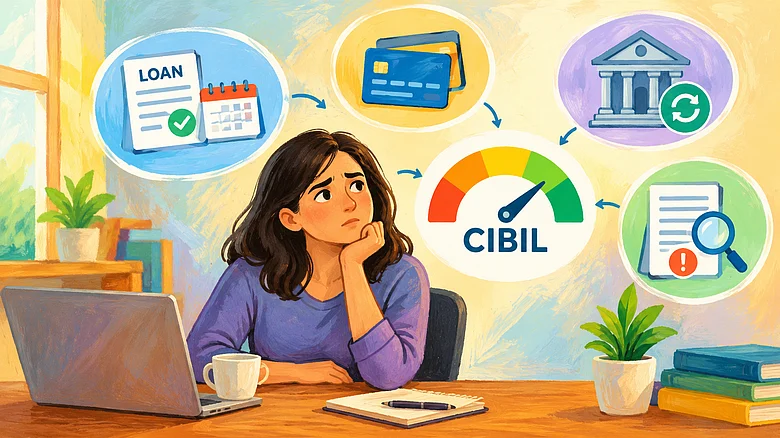


Summary of this article
Old repayment records can impact your CIBIL score after loan closure.
Credit card balances and lender updates may change your score.
Check credit reports for incorrect entries, balances and unfamiliar enquiries.
Imagine you just paid off your last loan. You are now relaxed and free from any loan liability; no equated monthly instalment (EMI) will be debited from your account just after your salary is credited. You check your CIBIL score a few weeks later, expecting it to be unchanged, but the number has changed. It can be confusing, especially when you do not have an active loan or have applied for a credit card.
Your credit score does not depend only on the money you currently owe. Your repayment behaviour, any missed EMI, the way you use your credit, and the information shared by your lender with the credit bureaus - all play a part in this.

Your Past Loans Still Count
Paying off a loan does not erase your loan repayment history from your credit report. If you have paid your EMIs on time, then that record would help lenders understand how you handle your credit. Likewise, late payments and delinquencies may appear in your record even after you have paid off the loan.
Suppose, you may have cleared a personal loan last year but missed two EMIs during the repayment period. Those delays may still appear in your report. Paying off the loan settles your dues, but it does not automatically remove the record of earlier payments.
Do You Still Use A Credit Card?
You may not have a personal loan or a home loan, but a credit card can still impact your CIBIL score. The amount you owe on the card compared with your total credit limit is one factor that can influence your score.
Take a card with a Rs 1 lakh limit. If your outstanding bill reaches Rs 70,000, you are using 70 per cent of that limit. A high credit utilisation ratio (CUR) may affect your score, even if you pay your bills on time. Your reported balance can also change from month to month as your spending changes.
Lenders Updating Old Information
Banks and other lenders share details of borrowers’ accounts with credit bureaus. Sometimes, a lender updates an account status or corrects information after a loan has been closed. When that update reaches CIBIL, you might see a change in the score.
Old Defaults Can Impact Your Score
If you have settled a loan for less than the full amount due, your credit report may reflect it differently from a loan which was repaid in full. A past default or delayed payment may also potentially impact your credit profile.
Check whether your closed loans are marked correctly and whether the report shows any amount still due. If you believe an entry is incorrect, contact the lender and raise a dispute through CIBIL’s official website.
An Error Could Be Behind The Change
Sometimes, the problem is not with your repayment behaviour at all. Your report may show an unfamiliar loan, an incorrect balance or a credit enquiry you do not recognise. Such entries deserve attention, particularly if your score has dropped sharply.
Download your latest CIBIL report and compare it with an earlier version, if available. Look for changes in account details, payment records, and credit enquiries. Checking your own credit score does not lower it. So, you can review your report without worrying about that.