






Summary of this article
RBI proposes temporary debit holds for suspected money mule transactions.
Customers get 20 days to explain flagged transactions.
Temporary debit holds can last up to 60 days.
Banks may soon follow a uniform process when their monitoring systems flag an account or transaction as potentially linked to cyber-enabled financial fraud.
Under the Reserve Bank of India’s (RBI's) proposed KYC amendments, a bank can place a temporary debit hold on a suspected money mule transaction or, in certain cases, the entire account.
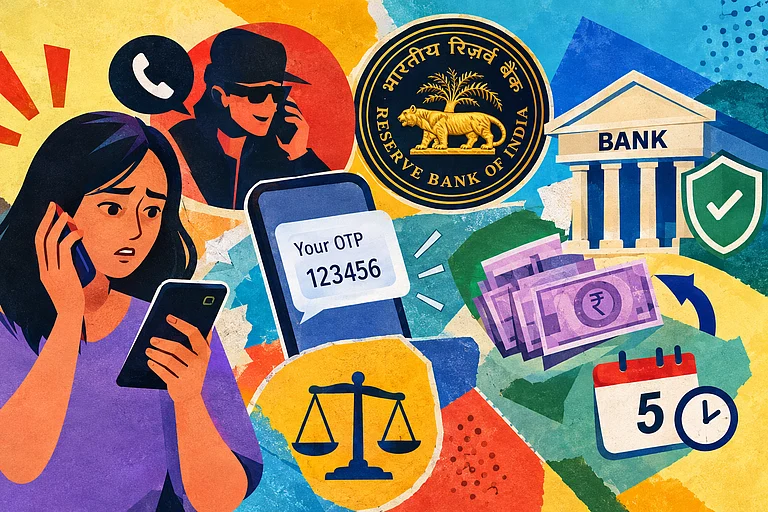
When Can A Bank Place A Debit Hold
A bank can place a temporary debit hold as soon as its transaction-monitoring system identifies a suspected money mule transaction or account. The proposed rules also cover transactions flagged through AI or machine learning-based monitoring tools.
A suspected money mule transaction is defined as a transaction of Rs 1,000 or more that appears unusual or disproportionate to the account holder’s declared profile, or is linked to an account already reported as fraudulent or a money mule account.
If the bank places a hold, it must notify the customer about the reason, the process for getting the hold removed and the contact details of the concerned officer.
Customers Get 20 Days To Explain
After a temporary debit hold is placed, the bank must seek an explanation or justification from the account holder regarding the genuineness of the transaction or account.
The customer will get 20 days from the date of the hold to submit the explanation. After receiving it, the bank will have 10 days to examine the response and make a decision. If the bank is satisfied with the explanation, it must lift the debit hold immediately and inform the customer.
What If You Miss The 20-Day Window
If the customer does not submit an explanation within 20 days, the bank can conduct its own due diligence. It must make a decision within 30 days from the date the temporary debit hold was placed.
If concerns persist, the bank can refer the matter to the jurisdictional police authority through the National Cybercrime Reporting Portal’s Citizen Financial Cyber Fraud Reporting and Management System.
The bank must also notify the customer about whether the hold has been removed or retained.
How Long Can The Hold Last
The proposed SOP sets a maximum duration of 60 days for a temporary debit hold when there is no instruction from a law enforcement agency or competent authority requiring further action.
If the police or another competent authority directs the bank to retain the hold within the prescribed period, the bank must follow that direction.
The RBI’s proposed amendments are scheduled to take effect from April 1, 2027, although banks can implement the SOP earlier.





