





Summary of this article
The homebuying decision has become more detailed than it was a few years ago. Buyers want to know not just the carpet area and price, but also how the project will function once they move in.
Buyers increasingly want to understand how a project’s amenities, design, green spaces, security systems and community infrastructure can enhance their everyday quality of life.
The shift towards value addition, however, does not suggest that buyers are becoming indifferent to prices. For most households, the ticket size and monthly EMI remain critical.
For homebuyers, the question is no longer simply, “How much does this house cost?” Increasingly, it is also, “What am I getting for that money?”
India’s housing market is seeing buyers look beyond the basic combination of price, location and size. They are paying closer attention to the quality of construction, the layout of the apartment, amenities, green spaces, security, connectivity and even how well the project is likely to hold its value over time.
This does not mean buyers have stopped looking for affordable homes. But many are prepared to increase their budgets when they believe the additional money will translate into a better home and a more comfortable lifestyle.
Real estate consultants and developers say this is particularly visible among buyers who have become more aware of what different projects offer. Instead of choosing a home only because it fits within a certain price bracket, they are comparing the overall package before making a decision.
Price Still Matters, But So Does What Comes With It
The homebuying decision has become more detailed than it was a few years ago. Buyers want to know not just the carpet area and price, but also how the project will function once they move in.
Questions around future roads and metro connectivity, construction quality, materials used, maintenance, open spaces and the range of amenities are increasingly becoming part of the conversation.
Geetanjali Khanna, MD & Founder, ReaRCo Pvt Ltd, said rising prices have also changed the way buyers look at their budgets.
“Many homebuyers are now looking for larger and better-planned apartments and have increased their affordability thresholds to accommodate these requirements. Developers, meanwhile, are focusing on efficient cost management to integrate features that address both current lifestyle expectations and future needs, helping sustain demand for quality housing,” she said.
In other words, some buyers may be willing to pay more, but they expect a clear reason for doing so.
Himanshu Garg, Director, RG Group, said price is no longer the only consideration. “Consumers are increasingly evaluating the quality of life a project can provide, along with the potential for long-term asset appreciation. This growing emphasis on lifestyle, quality and future value is supporting demand for projects that offer a stronger overall proposition, even at relatively higher prices.”
Amenities Are Becoming Part Of The Purchase Decision
A swimming pool and a clubhouse may once have been enough to make a project stand out. Buyers today are looking at a much wider range of facilities - and, importantly, whether they are actually useful.
Additional lifts, landscaped areas, spaces for children and senior citizens, indoor and outdoor sports facilities, cafés, restaurants, salons, meeting rooms, private theatres and community spaces are increasingly finding their way into residential projects.
But buyers are also becoming more discerning. The presence of a long list of amenities does not automatically make a project attractive. What matters is whether these facilities are well planned, maintained and relevant to the people who will live there.
Suresh Garg, CMD, Nirala World, said buyers are looking beyond the basic proposition of a home and its location.
“Buyers increasingly want to understand how a project’s amenities, design, green spaces, security systems and community infrastructure can enhance their everyday quality of life. As a result, many consumers are willing to make a slightly higher investment if the overall proposition delivers greater comfort, convenience and long-term value,” he said.
Lt. Col. Ashwani Nagpal (R), COO, Diligent Builders, said buyers are also taking more time to assess a project before committing their money.
“Homebuyers are no longer making decisions in haste. They are taking a more calculated and long-term approach, evaluating whether a project can meet both their present requirements and future needs,” he said.
Why Are Buyers Willing To Stretch?
One reason is that the profile of the urban homebuyer is changing. The expansion of IT and technology companies, Global Capability Centres (GCCs), financial services, manufacturing and other organised sectors has created jobs and, in many cases, greater visibility of future income.
The rise of dual-income households has also improved the ability of some families to take on a larger home loan or consider a better-quality home.
At the same time, homebuyers have become more familiar with the market. They have access to more information on developers, projects, prices, infrastructure and financing options than before. This has made comparison easier - and has raised expectations.
Shailendra Sharma, Chairman, Renox Group, said the increase in property prices should not be viewed in isolation.

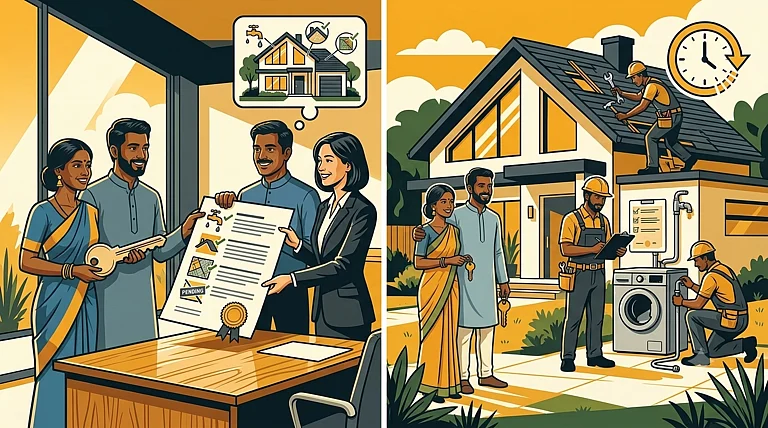
“Although residential prices have increased significantly over the past few years, the impact on actual affordability is not necessarily as pronounced as headline price movements suggest. With greater market awareness and experience, today’s homebuyers have broader expectations and are increasingly willing to pay a premium for additional features that enhance their living experience and the long-term value of the property,” he said.
The New Meaning Of Affordability
The shift towards value addition does not suggest that buyers are becoming indifferent to prices. For most households, the ticket size and monthly EMI remain critical.
What is changing is the way buyers judge whether a property is worth the price.
A home that costs a little more but offers better planning, construction quality, usable amenities, open spaces and stronger connectivity may be considered better value than a cheaper property that involves compromises.
This too is now creating pressure for developers. Merely adding more amenities may not be enough. Buyers will increasingly question whether these features truly enhance value or simply increase the maintenance bill. So, the challenge for developers is how to provide something meaningful, yet keep the price within the buyers' budgets.
As the market matures, the competition may increasingly come down to whomever can strike that balance - not necessarily providing the lowest-priced home but providing buyers a home that they feel is worth the price they're paying.





