





Summary of this article
Budgeting is the first step before applying for a home loan.
A healthy credit behaviour can improve loan eligibility and borrowing terms.
Buyers should plan for down payments, EMIs and emergency savings before purchasing a home.
For many first-time homebuyers in the economically weaker section (EWS) and lower income group (LIG) segments, owning a home is a dream built over years of saving and sacrifice. However, well before they begin comparing properties or applying for a loan, they need to prepare for financial assurance that could last for decades. As housing aspirations continue to rise, financial preparedness is becoming just as important as finding the right home.
Incidentally, first-time homebuyers often tend to believe that a home loan can be taken out only by well-paid salaried individuals with flawless credit records. This misconception stops many worthy applicants from even thinking of buying a house.
“The biggest obstacle that we come across is not about money, it is about psychology. People think they cannot get a home loan because they are not salaried or do not belong to the organised sector. But now-a-days, the financial institutions take into account the repayment capacity of the customer,” says Rishi Anand, managing director and CEO, Aadhar Housing Finance.
In addition, government efforts have made homeownership more accessible nowadays. As of February 2026, over 1.36 million homes have been sanctioned under the Pradhan Mantri Awas Yojana-Urban 2.0 (PMAY-U 2.0) scheme. Beneficiaries with household annual income of up to Rs 9 lakh can get interest subsidy of 4 per cent on the first Rs 8 lakh under the interest subsidy scheme (ISS). Experts say that while policy support helps reduce the financial burden, lasting homeownership is built on careful financial planning and disciplined repayment behaviour.

The Significance of Financial Planning Prior to Applying for a Home Loan
A home loan is often the largest financial commitment a family will ever make. Many households think that if they qualify for a particular loan amount, they can easily afford it. But financial experts say that eligibility is no guarantee for that. The calculation needs to take into account household expenditures, children’s education, healthcare expenditures, emergency requirements, and future financial goals.
“Homeownership is a significant milestone for all families, especially for the EWS and LIG segments, as they might be buying their only home in their lifetime. Hence, it needs to be supported by cautious financial planning and understanding the structure of the loan. Before applying for a home loan, buyers should assess their repayment capacity, build adequate savings, and ensure that their monthly obligations remain manageable over the long term,” says Anand.
Is Loan Eligibility the Same as Affordability?
One of the most common mistakes first-time homebuyers make is opting for the highest loan amount they are eligible for.
Experts generally recommend that total equated monthly instalment (EMI) obligations should ideally remain within 30-40 per cent of household income. This assists families to keep meeting their essential expenses, while preserving a decent quality of life.
Income volatility, unexpected health costs, or family emergencies can severely impact the monthly expenditures. Family emergencies or unforeseen health costs could then lead to additional borrowing beyond means which in turn could lead to stressful repayment cycle, thereby impacting long-term financial health.
Building Downpayment Requires Early Planning
Planning for a downpayment is also part of financial readiness. Buyers are expected to pay a portion of the total value of the property, as lenders lend only a part of it. For most first-time homebuyers, especially those belonging to the EWS and LIG categories, this would take years to achieve through savings. The downpayment corpus, when built early, can reduce the home loan burden and improve financial capability to own a home in the long run.
Downpayments make a huge difference, and savings help reduce the burden of having to take personal loans or informal loans. A downpayment corpus substantially reduces the value of the loans taken, the monthly EMI obligations, and total interest during the loan tenure. This makes owning a home financially viable.
Why Credit Behaviour Can Influence Homeownership
Good repayment history enhances your chances of approval for a home loan from banks, home finance organisations, and fintech lenders, too. They analyse your repayment history, current debt obligations, credit behaviour, and credit utilisation, among others.
Today affordable housing finance has evolved to serve customers whose incomes may not always fit traditional banking models. A vegetable vendor may earn daily cash income. A driver may have seasonal variations in earnings. A small shop owner may not receive a monthly salary slip. Yet each of them may have a stable livelihood and the discipline required to repay a home loan.
Financial discipline often begins before a loan application is submitted. For first-time homebuyers, savings, timely payments of bills, borrowing money with the intent to repay, depositing earnings into a bank account and documenting cash flows help lenders estimate the repayment capacity. On top of determining loan qualification, these healthy financial habits can help ensure financial stability years down the line by ensuring borrowers can fulfil their monthly repayment commitment.
The Importance Of An Emergency Fund
Saving for a home downpayment may top discussions about buying a home, but one should remember to save for emergencies, too.
Additional financial responsibilities come with owning a home. Losing a job, a sudden medical emergency, or a temporary loss of income can affect one’s ability to pay the mortgage. Therefore, it is advisable to have an emergency fund that would cover 3-6 months of your family’s expenses and also cover your EMI payments towards the home loan.
“Preparedness for financial emergencies is more important than saving for a downpayment. To help ensure that emergency situations do not affect one’s ability to maintain a home, families should establish an emergency fund and practice financial discipline. A well-planned approach helps borrowers manage their obligations with greater confidence,” says Anand.
What Else Should First-Time Buyers Budget For?
The downpayment on a home is a small piece of the overall cost of homeownership. Families also need to budget for the cost of registering the home, stamp duty and legal fees, home insurance, expenses for furnishing the home, and other costs. All of these can quickly add up to the cost of homeownership.


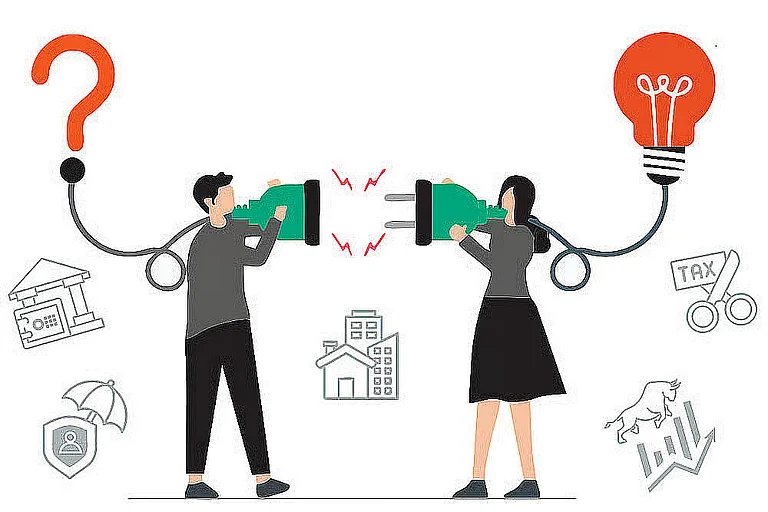

According to financial experts, families should practice financial discipline and budgeting to account for not only the one-time costs of homeownership, but also all costs associated with maintaining the home during the ownership period to avoid financial strain arising from buying a home.
With many families in Tier II and Tier III cities making their maiden home purchases, having the financial means to purchase a home is just as important as making the decision to purchase the property. The financial preparedness to stabilise personal finances and establish an emergency fund will give first-time homebuyers the confidence they need to purchase a home.





