

Summary of this article
Sebi proposes ending public disclosure of individual salaries of top AMC executives
AMCs would instead disclose compensation in an aggregated format
Industry has cited privacy and talent retention concerns
Fund manager pay may be disclosed only on request to investors
For nearly a decade, mutual fund investors in India have been able to see exactly how much top executives and fund managers at asset management companies (AMCs) earn. That transparency may soon change.
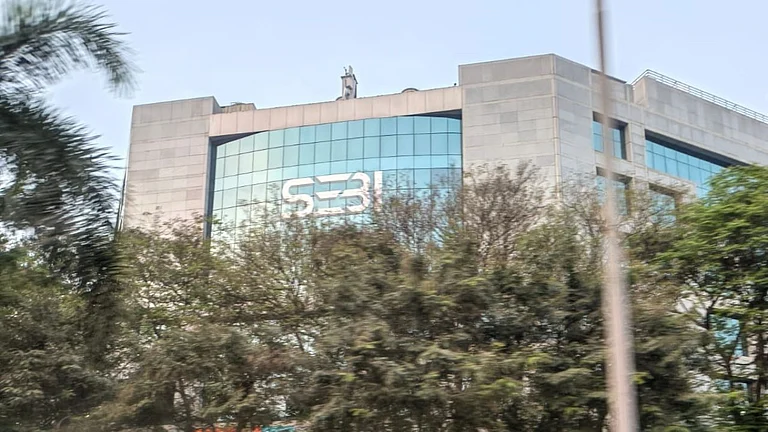
The Securities and Exchange Board of India (Sebi) has proposed a major overhaul of the executive remuneration disclosure framework for AMCs. If the proposal goes through, fund houses will no longer have to publicly disclose the names and salaries of their highest-paid executives and fund managers. Instead, they will disclose compensation figures in an aggregated format.
The proposal, issued through a consultation paper on June 10, seeks to balance transparency with privacy concerns raised by the industry. At the same time, Sebi has suggested a separate mechanism that would allow investors to seek remuneration information relating to fund managers of schemes they are invested in.
Why Is Sebi Reviewing The Existing Framework?
The executive remuneration disclosures were introduced in 2016 as a governance measure. As per the existing norms, AMCs must disclose the names, designations and remuneration of their CEO, CIO, COO or equivalent officials. They must also disclose the top 10 highest-paid employees and all employees earning above a specified threshold.
However, Sebi's review found that the current framework covers only a small section of employees. The regulator found that employees covered under the current disclosure framework account for roughly 2-10 per cent of the employee base in 36 out of 51 AMCs examined.
Sebi has therefore questioned whether the current level of granularity is proportionate, especially when disclosures are made on a name-wise basis.
Why Should You Know Your Fund Manager’s Salary
When investors choose a mutual fund, they typically compare returns, expense ratios, ratings and portfolio holdings. Few spend time looking at how the person managing the fund is compensated.
Sebi itself has described remuneration disclosures as "an important pillar for sound corporate governance", saying they help stakeholders assess whether compensation is aligned with performance, risk management and investor interests. The regulator also notes that such disclosures enable stakeholders to question remuneration practices that may be inconsistent with industry norms.
For investors, remuneration disclosures can act as an additional governance indicator. They can provide clues about whether compensation is linked to long-term performance, prudent risk-taking or other factors.
Remuneration disclosures can also help investors understand how a fund house values its investment talent.
So What Exactly Is Sebi Proposing?
If Sebi's proposals are implemented, mutual fund companies will no longer have to publicly disclose the remuneration of individual senior executives such as the CEO, CIO, COO, or other highly paid employees.
Instead, AMCs will disclose the number of employees covered under each disclosure category and the total remuneration paid to them collectively. This means investors will still get a sense of how much a fund house spends on its senior management team, but they will no longer be able to see how much a particular executive or fund manager earns.
For example, instead of disclosing that a specific fund manager earned Rs 4 crore during the year, an AMC may simply report that a group of senior executives received a combined remuneration of Rs 50 crore.
Explaining the rationale behind the proposal, Sebi said aggregate disclosures would provide a "holistic and structured view of senior management compensation, enabling unitholders to assess the overall quantum of remuneration at the senior management level, while aligning the level of disclosure with considerations of materiality and proportionality."
What Are AMCs Arguing?
In the consultation paper, the regulator also detailed the concerns raised by the mutual fund industry players and the Association of Mutual Funds in India (Amfi).
According to the feedback cited by Sebi, "The public disclosure of named individual remuneration may expose employees to risks relating to misuse of personal information."
Industry participants also argued that mutual funds compete for talent with portfolio management services (PMS) and alternative investment funds (AIFs), where similar disclosure requirements do not exist. The consultation paper notes that "this asymmetry may place AMCs at a competitive disadvantage and could have implications for talent retention."
The industry has further argued that multiple governance safeguards already exist, including oversight by trustees, boards, independent directors, nomination and remuneration committees, auditors and regulations governing scheme expenses.
According to the feedback received by Sebi, "Individual-level remuneration disclosures may not materially influence such decisions or improve investor outcomes."

Scheme-Level Consolidated Remuneration Of Fund Managers
While Sebi has proposed reducing the granularity of executive remuneration disclosures, it has separately proposed greater visibility around fund manager compensation.
The regulator noted that fund managers occupy a central role in investment decision-making, yet their remuneration is not separately disclosed under the current framework unless they happen to be among the highest-paid employees.
"Considering that investment decision-making for each scheme rests primarily with the respective Fund Manager(s), there may be merit in providing visibility into their remuneration," Sebi said.
Accordingly, the regulator has proposed that scheme-level consolidated remuneration of fund managers be made available to investors upon request. The disclosure would include the number of fund managers managing the scheme and the aggregate remuneration paid to them.
However, this information would not be publicly available. It would be shared only with investors invested in the scheme concerned.https://www.outlookmoney.com/topic/hdfc-amc
What Kind Of Information Is Public Today?
The current framework allows investors to access the compensation levels within India's mutual fund industry. For example, at PPFAS Mutual Fund, chief investment officer (CIO) Rajeev Navinkumar Thakkar earned Rs 11.24 crore in FY25, higher than what CEO Neil Parag Parikh received, Rs 7.88 crore.
Among fund managers, Raunak Kamalkar Onkar, fund manager and head of research at PPFAS Mutual Fund, earned Rs 3.61 crore, while executive vice president and fund manager (equity) Raj Kiritkumar Mehta earned over Rs 2.63 crore.
Disclosures from HDFC AMC show a similar pattern. In FY26, HDFC AMC managing director and CEO Navneet Munot received remuneration of Rs 9.26 crore. Among investment professionals, head of equities Chirag Setalvad earned Rs 6.62 crore, while senior equity fund managers Amit Bhupendar Ganatra, Gopal Laxminarayan Agrawal and Roshi Jain earned Rs 3.99 crore, Rs 3.92 crore and Rs 3.87 crore, respectively. Fixed income heads Shobhit Mehrotra and Anil Bamboli received Rs 3.51 crore and Rs 3.42 crore.
Such disclosures allow investors to identify who the highest-paid investment professionals are and compare compensation across fund houses. Under the proposed framework, these individual figures would no longer be publicly available.
What’s In It For Investors?
Sebi argues that aggregate disclosures could still provide visibility into compensation levels without exposing individual employees. For example, investors may be able to see the total remuneration paid to senior management or fund managers associated with a scheme, potentially offering a broader view of compensation practices.
The regulator also appears to recognise that remuneration disclosures should not be viewed in isolation but alongside governance mechanisms already operating within AMCs.
However, it is also likely that aggregate figures reveal less about how compensation is distributed among the individuals making investment decisions. For instance, investors may know that a group of fund managers collectively earned Rs 20 crore, but they would no longer know whether one fund manager earned Rs 2 crore and another earned Rs 8 crore.
Sebi has asked for public feedback on the proposals until June 30, after which it will decide whether to retain, modify or replace one of the mutual fund industry's most visible disclosure requirements.