




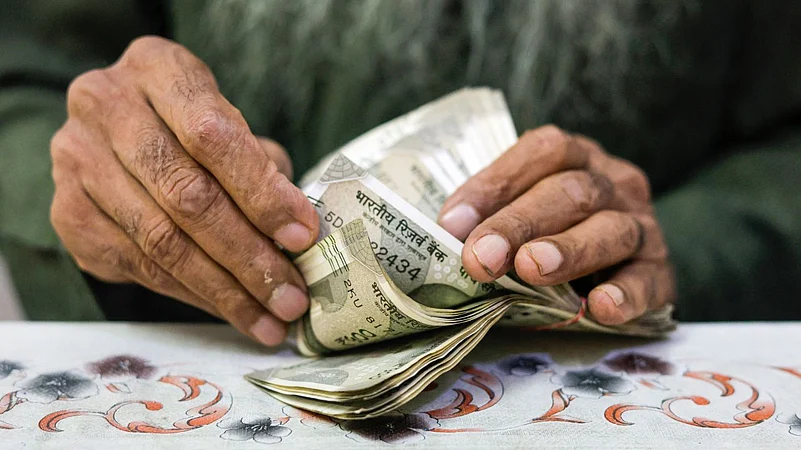

The Indian rupee slipped to a fresh all-time low of 90.38 against the US dollar on December 3, extending its decline for a third straight session and marking its sharpest fall since 2022. The rupee has slipped over 5 per cent against the US dollar so far this year, making it one of Asia’s weakest currencies in 2025.
Anindya Banerjee, head of currency and commodity research at Kotak Securities, attributed the decline to “growing uncertainty around the India–US trade deal,” which has strengthened the dollar and weighed on emerging market currencies.
A wave of stop-losses being triggered above the 90 level, especially from leveraged traders and option sellers who were defending that zone also pulled the currency lower, said Banerjee.
Further, steady importer demand, particularly from sectors like oil, metals, and electronics, which continues to absorb available dollar liquidity, also added to the pressure, he added.
Manasvi Garg, a Securities and Exchange Board of India-registered investment advisor (Sebi RIA), CFA, and founder and CEO of Moneyvesta also attributed the fall to the punitive US tariffs, some reaching as high as 50 per cent on Indian goods. These tariffs have crimped exports and weighed on equity inflows.
At the same time, strong dollar demand from importers, especially oil and gold importers, have widened India’s trade deficit to record highs in late 2025, Garg added.

Rupee Falls: Key Sectors Likely To Be Negatively Impacted
Analysts, further said the declining rupee is also likely to trickle down to the equity market, affecting some import-heavy sectors. "A weakening Indian Rupee pressures import-dependent sectors by driving up raw material, energy, and freight costs at a time when companies often struggle to pass on the full increase to consumers," explained Pranay Aggarwal, Director and CEO of Stoxkart.
Here are the key sectors, Garg pointed out that are likely to feel the pressure:
Oil & Gas and Energy: India relies heavily on imported crude and edible oils, so a weaker rupee quickly inflates the cost of these essentials. For refiners and downstream fuel marketers, this means higher dollar-denominated input costs and immediate pressure on margins, especially in periods when they’re unable to fully pass on the increase to consumers.
Aviation: Airlines and aviation services pay for jet fuel in dollars. A weaker rupee raises jet-fuel bills and airport fees that further pressurises on their profitability.
Automobiles and Capital Goods: Automakers and capital-equipment manufacturers depend heavily on imported components such as chips and engines, machinery, and more. When the rupee weakens, it raises import bills for these imported components, squeezing the margins.
Chemicals, Fertilizers and Petrochemicals: These industries are heavily dependent on imported crude oil, petrochemicals and natural gas, so any weakness in rupee lifts input costs for commodity chemicals and fertilizers, eating into margins and weighing on overall profitability.
Consumer Durables & Electronics: Consumer-electronics and appliance makers import many parts. Laptops, smartphones and home appliances become more expensive when rupee falls, which hurt both manufacturers’ margins and consumer demand. For FMCG companies too, costs rise when imported raw materials such as titanium dioxide used in paints and packaging become more expensive in dollar terms.
Pharmaceuticals (Mixed Impact): Drug makers earn much of their revenue abroad, which tends to rise in rupee terms. However, many also import active pharmaceutical ingredients (APIs) from China. The net effect can be mixed as some pharma companies could benefit from a softer rupee on sales but still face higher raw-material costs.
What Should Equity Investors Do Amid A Depreciating Rupee
As the rupee breaches fresh lows, investors are understandably anxious about its impact on equity portfolios. However, experts suggest that the focus should remain on disciplined investing, selective sector positioning and avoiding knee-jerk reactions.
Pranay Aggarwal, Director and CEO of Stoxkart, advises equity investors to remain invested while rebalancing defensively. He recommends continuing systematic investment plans (SIPs) in large-cap and flexi-cap funds to average costs, while gradually increasing allocation to export-oriented sectors such as IT, pharma, textiles and select auto exporters that benefit from higher rupee realisations. At the same time, he advises investors to “meaningfully reduce exposure to import-heavy segments like oil & gas marketing, metals, paints, and cement until currency stability returns.”
Aggarwal added that strong domestic mutual fund flows and India’s growth trajectory make the current phase a staggered accumulation opportunity rather than a reason to exit the market. According to him, “quality stocks bought gradually at these levels are well positioned to deliver healthy returns once global and currency headwinds subside.”
Manasvi Garg also urged investors to avoid reacting impulsively to currency volatility. “It is advisable not to panic-sell import-exposed stocks solely on one-day currency moves,” he said, adding that retail investors need not alter their asset allocation unless the rupee’s fall becomes “steep and persistent.”




Garg suggests hedging currency risk indirectly through international mutual funds or exchange traded funds (ETFs), or by favouring funds with higher exposure to export-oriented sectors. He also believes it is crucial to track RBI's actions, global central bank signals, foreign flows, trade negotiations and commodity prices, as these factors will influence both equity markets and bond yields. Strong company commentary on managing cost pressures such as forward-buying or price hikes will also be important, he added.





