






Summary of this article
Why prices fell: Gold and silver crashed on global risk-off sentiment, US policy uncertainty, a stronger dollar, and forced liquidation of leveraged positions
What to watch next: US Fed rate trajectory, US-Iran nuclear talks, global geopolitical developments, and movement in the dollar index
What analysts suggest: Stay cautious in the near term amid volatility; long-term investors can accumulate on dips through staggered buying
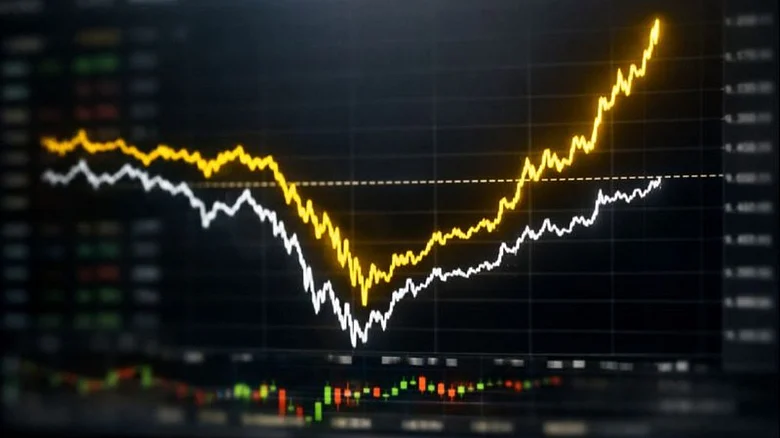
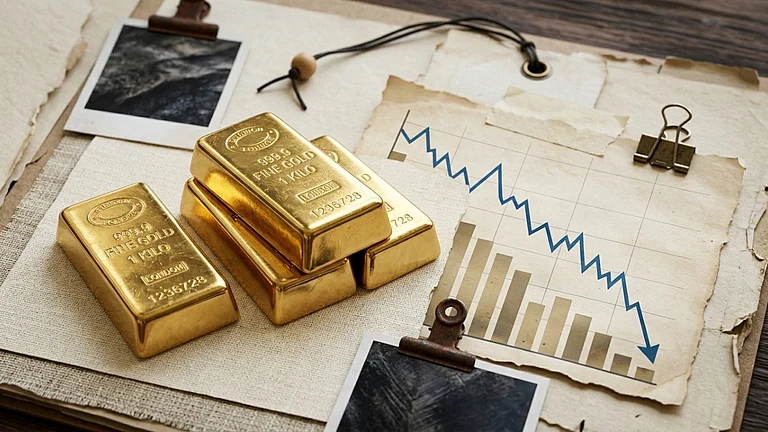
Precious metals woke up to a brutal sell-off on February 5, with silver futures contacts in domestic derivatives market plunging as much as 11 per cent in early trade. However, the safe-haven metals recovered partially later during the session as buyers bought into the dip.
On the Multi Commodity Exchange (MCX), the March silver futures plunged up to 11 per cent to hit an intraday low of Rs 2,39,000 per kg. From its lifetime high of Rs 4,20,048 per kg, the contract is trading lower by over 43 per cent.
April gold futures on MCX also tumbled as much as 3 per cent to Rs 1,48,455 per 10 grams. From its lifetime high of Rs 1,93,096 per 10 grams, the contract has declined over 23 per cent.
However, as of the time of writing, at 2:17 PM, the silver futures contract recovered some losses, trading at Rs 2,52,647 per kg, down 6.03 per cent from previous close. The gold futures contract, however, recovered was quickly bought into and traded in the green territory at Rs 1,53,410 per 10 grams, up by nearly 0.25 per cent from previous close.
What Triggered Fall in Gold, Silver Prices?
Analysts attributed the early sell-off to a mix of global risk-off cues, policy uncertainty in the US, and forced liquidation in leveraged positions.
According to Kaynat Chainwala, assistant vice president – commodity research at Kotak Securities, the precious metals were pressured by broader weakness in global markets and uncertainty around the future trajectory of US monetary policy. She said that gold and silver were weighed down by a tech-led sell-off and mixed signals from the US Federal Reserve.
Markets are currently evaluating the policy stance of Kevin Warsh following his nomination as Fed Chair, even as US President Donald Trump has made comments hinting at imminent rate cuts. At the same time, Fed Governor Lisa Cook has flagged upside inflation risks, tempering expectations of near-term easing. Chainwala said that metal prices have remained highly volatile in recent sessions due to “Trump’s nomination of inflation hawk Kevin Warsh, CME margin hikes, and heavy leveraged positioning.”

Echoing similar views, Prathamesh Mallya, deputy vice president – research (non-agri commodities) at Angel One, said the crash was largely led by forced unwinding of long positions. He explained that investors rushed to cut exposure amid a barrage of global developments, including the possible appointment of Kevin Warsh as Fed Chair, a strengthening US dollar, and optimism around major trade agreements such as the India-European Union trade deal, India-US trade agreement, and host of other factors.
Gold is traded internationally in US dollars. When the dollar strengthens, gold becomes more expensive for buyers holding other currencies. This tends to weaken global demand, putting pressure on the precious metal's prices.
The US Dollar Index, which measures the greenback against world's six major currencies, strengthened nearly 1.70 per cent to 97.79 over the last week.
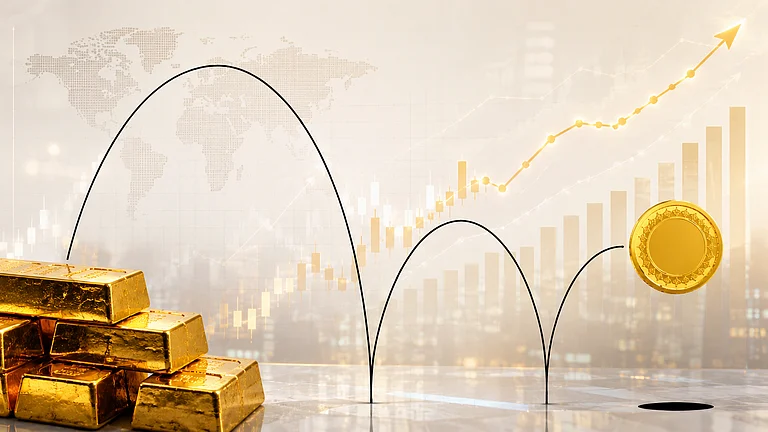
However, despite the crash, bargain hunting at lower levels helped limit further downside, especially in gold, which continues to find support as a safe-haven asset amid policy uncertainty. Analysts said bargain hunting at lower levels helped arrest the fall in precious metals, allowing gold to recover fully, while silver managed only a partial rebound due to its higher volatility and industrial exposure.
Key Triggers to Watch
Looking ahead, analysts said gold investors should closely track a set of global macro and geopolitical developments that could influence the prices. These include the US Federal Reserve’s interest rate trajectory, progress on US-Iran nuclear negotiations, broader geopolitical tensions, and movements in the US dollar index.
According to Mallya, “Interest rate trajectory by the US Fed, developments in US-Iran nuclear talks, geo-political situation globally and movements in the dollar index are triggers gold investors should keep a track on going ahead.”
Should You Buy the Dip or Wait?
On the near-term outlook, Chainwala cautioned that volatility is likely to persist. She said precious metals may remain range-bound amid weakness across commodities and ahead of key US macro data, particularly the upcoming jobs report.
“Near-term price action is likely to remain choppy amid broad commodity weakness and caution ahead of the US jobs data,” Chainwala said, adding that investors should stay cautious and wait for clearer signals before taking aggressive positions.
The jobs report, which was earlier scheduled for release this Friday, February 6, will now be published next Wednesday, February 11, according to the updated calendar on the Bureau of Labor Statistics website.
Mallya, advised investors to adopt a disciplined approach rather than attempting to time the market. He said investors who missed the earlier rally could consider gradual accumulation to benefit from value averaging.

“For those who missed the rally in precious metals, one should accumulate the dips to get the benefit of the value average,” Mallya said, adding that “one cannot time these markets and hence, steady accumulation is the best strategy” in volatile conditions.
He further noted that underlying fundamentals for gold remain supportive and believes the metal could regain momentum once uncertainty settles. “Yes, investors should buy the dips as fundamental factors remain intact and gold might rally once again and see fresh new highs,” he said.





