






Summary of this article
Experts say India’s cultural and savings-driven demand for gold is unlikely to fall sharply
Rising gold prices and higher import duties may temporarily slow buying activity
Gold is still seen as an important long-term diversification and hedge asset
Rising tensions in West Asia are once again making crude oil expensive, and India could soon start feeling the impact. The country has so far avoided the full impact of the elevated global crude oil prices, but concerns are now growing over higher inflation, pressure on the rupee, and a bigger import bill.
Higher crude oil prices typically put pressure on inflation, strain government finances, and increase demand for foreign exchange. For India, the risks are significant, as the country imports nearly 85 per cent of its crude oil demand.
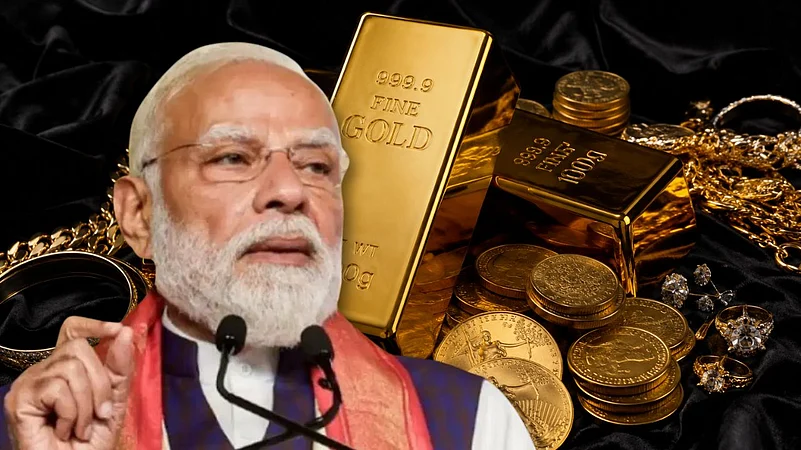
Amid these concerns, Prime Minister Narendra Modi last week urged people to reduce fuel consumption and avoid spending on “non-essential” gold purchases for a year.
“I would appeal to people not to buy gold for weddings for one year,” the Prime Minister said while addressing a rally in Secunderabad, Telangana, on May 10.
India imports most of its oil and gold, and both are paid for in US dollars. So, when crude oil prices rise, the country needs more dollars for imports. If gold imports also remain high, pressure on India’s foreign exchange reserves increases further.
Gold is India’s second-largest import item after crude oil, with imports worth nearly $72 billion in FY26, according to Commerce Ministry data.
That is why governments become cautious about high gold imports during global uncertainty, as they drain foreign exchange reserves.
Adding to the pressure, the government has also raised import duty on gold, silver and platinum to curb imports and reduce pressure on India’s foreign exchange. Import duty on gold and silver has been increased from 6 per cent to 15 per cent, while duty on platinum has gone up from 6.40 per cent to 15.40 per cent. The revised rates also apply to products such as dore bars, coins and findings.
But do investors really need the Prime Minister’s advice when gold prices are already at elevated levels? Gold futures on the Multi-Commodity Exchange (MCX) currently trade around Rs 1,62,100 per 10 grams, as on May 14, up nearly 75 per cent over the past year.
Can Government Appeals Really Reduce Gold Buying
Experts say history suggests that moral appeals alone rarely change India’s relationship with gold.
Arpit Jain, CA and joint MD at Arihant Capital Markets, said government measures and appeals aimed at reducing gold imports have historically had “limited long-term impact” on overall gold buying in India.
“Gold demand in India is closely linked to savings behaviour, cultural preferences, and long-term wealth preservation, making it difficult to curb demand entirely through policy measures or appeals alone,” he said.
Amit Modak, CEO of PN Gadgil & Sons, is also of the opinion that the recent increase in import duty is likely to weaken consumer sentiment in the short term because higher duties directly raise jewellery prices.
“The sector was already facing a tentative mood following recent public appeals on delaying jewellery purchases, and this extra duty hike has further increased doubt amongst consumers,” Modak said.
According to him, some consumers may postpone purchases as they expect gold prices to move even higher from current levels.
However, both experts believe the slowdown may only be temporary.
“Gold jewellery demand in India has historically remained resilient because it is deeply connected to weddings, festivals, traditions, and long-term savings,” Modak said, adding that a complete halt in jewellery purchases is “unlikely in practical terms”.
Jain similarly noted that while consumers may reduce quantities purchased or defer buying at current prices, “the underlying demand for gold is likely to remain strong due to long-standing savings habits and cultural traditions”.
High Prices May Do What Appeals Cannot
Interestingly, experts suggest that soaring prices themselves may prove more effective in slowing demand than government messaging.
With gold prices having surged nearly 75 per cent over the past year, affordability has already become a concern for many households. Industry executives say consumers are becoming more cautious and selective with purchases, particularly in discretionary segments.
“There could be a temporary lack of momentum in the business in the following months and more cautious behaviour by consumers,” Modak said.
Higher Import Duties Could Create Unintended Consequences
At the same time, higher import duties could create unintended consequences.
Jain also pointed out that whenever import duties on gold have been increased substantially in the past, unofficial channels and smuggling activities have also picked up.
“There are also bigger industry fears that substantial hikes in import tax could encourage unorganised commerce and criminal activity usually linked with higher tariff structures,” he added.
Should Long-Term Investors Change Their Gold Allocation
Wealth managers say PM Modi’s appeal should not be interpreted as a signal to completely avoid gold as an asset class.
Prasanna Pathak, deputy CEO at The Wealth Company Mutual Fund, said government appeals on gold consumption have historically created awareness, but their impact is usually “gradual rather than immediate”.
“In India, gold is not just an investment asset; it is deeply linked to culture, household savings, and financial security. Because of this, demand tends to remain resilient even during periods of policy discouragement,” Pathak said.
He added that investor behaviour has nevertheless evolved significantly over the past decade, with rising participation in mutual funds, SIPs, retirement products and other financial assets, especially among younger investors.
“This indicates that Indians are increasingly adopting a more diversified approach to wealth creation while continuing to maintain an allocation to gold,” he said.
According to Pathak, the Prime Minister’s remarks should be seen more as a macroeconomic message tied to forex management and rupee stability. “This is more to do with preserving forex reserves and arresting rupee depreciation,” he said.
Jain also believes the Prime Minister’s appeal may influence short-term sentiment but is unlikely to change how investors view gold in their long-term portfolios.. “Gold remains a strategic asset and a store of value, particularly during periods of uncertainty,” he said.
So, Should You Stop Buying Gold
For most retail investors, experts say there is a difference between avoiding impulsive buying at very high prices and completely exiting gold.
India imports large amounts of both crude oil and gold. So, during periods of global uncertainty, the government becomes more cautious about high imports because they put pressure on the country’s foreign exchange reserves. That is one of the reasons behind PM Modi’s appeal and the recent increase in import duties on gold.
However, from an investment perspective, experts believe gold still remains an important part of a diversified portfolio and acts as a hedge during uncertain times. What could change is the timing and quantity of purchases, not gold’s long-term role in household savings and investments.
Frequently Asked Questions
Why did PM Modi ask people not to buy gold?
PM Modi urged people to avoid non-essential gold purchases to help reduce pressure on India’s foreign exchange reserves, especially at a time when rising crude oil prices are increasing the country’s import bill.
Will gold prices fall after PM Modi’s appeal?
Experts say the appeal may affect short-term sentiment, but gold prices are more likely to be influenced by global factors such as geopolitical tensions, inflation, interest rates, and international demand.
Should investors stop investing in gold now?
Most experts do not recommend completely avoiding gold. They believe gold still plays an important role as a diversification and hedge asset in long-term investment portfolios, though investors may avoid aggressive buying at elevated prices.





