






Summary of this article
Higher STT taxes failed to deter risky retail trading.
Traders shifted from futures to volatile weekly options.
Regulatory tax hikes inadvertently increased overall market risk.
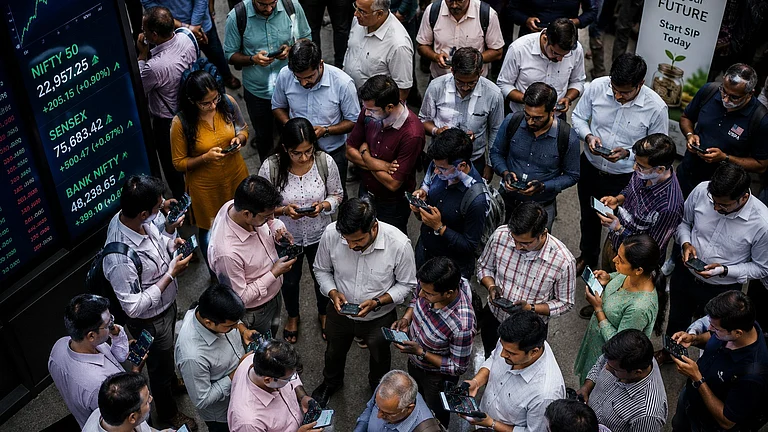
India's futures and options (F&O) space has seen strong retail participation in the last few years. Even as participation in the F&O space has increased, market regulators and policymakers are concerned as studies released by the Securities and Exchange Board of India (Sebi) show that a majority of individual traders consistently lose money in derivatives trading.
Thus, in a bid to curb speculative trading and protect small investors from losses, the government implemented measures like increasing the Securities Transaction Tax (STT). The underlying intention was to make derivative trading more expensive, thereby discouraging inexperienced retail participants. However, Zerodha co-founder Nithin Kamath pointed out in a recent social media post that taxes on derivatives trading have dwarfed actual trading fees.
"At Zerodha, the STT we collect and pass on to the government is higher than the brokerage we earn," Kamath wrote.


Why Higher Taxes Fail to Deter Speculation
Elaborating on his point, Kamath cited Zerodha’s internal data regarding profitability across different segments. Kamath indicated that there is a performance divide, wherein individual trader profitability stands at roughly 50 per cent for futures and 40 per cent for option sellers, but plunges to only around 10 per cent for option buyers.

He further noted that larger contract sizes have made trading futures and selling options significantly more expensive in terms of required margins, leaving retail participants with buying options as a cheaper alternative requiring only the premium.
Kamath explained that the current tax structure fails to achieve its intended goal, as the tax burden affects relatively safer derivative instruments like futures, which are comparatively less volatile compared to options.
"Because the impact falls mostly on futures, while options are far more speculative than futures," Kamath said.
Predicting the behavioural shift of market participants, he warned that the recent tax tweak is expected to accelerate the transition into highly volatile market segments.
"The 25 per cent increase in F&O STT will further move volumes from futures to options," Kamath said.
Highlighting another structural reason behind his warning, he pointed out that the proliferation of weekly expiries has effectively transformed contracts into zero-day options, encouraging traders to think in days rather than weeks and bet on price movements over increasingly compressed horizons.
Notably, despite the STT hike, retail traders remain heavily entrenched in the segment. According to the NSE Market Pulse released in October 2026, individual investors accounted for a massive 39.6 per cent of the premium turnover in equity options by the second quarter of the 2027 financial year.

What Kamath’s Warning Means For Investors
The paradox between higher STT and rising participation exists because traders are highly sensitive to transaction costs. Thus, whenever taxes increase, traders migrate toward cheaper but highly leveraged instruments to maintain their margins.
For the average investor, this dynamic presents a dangerous scenario as STT hikes eat into their gains; thus, traders find it increasingly difficult to remain profitable using traditional futures or conservative hedging strategies.
To compensate for the heavier tax burden, many retail investors end up shifting to deep out-of-the-money options or contracts nearing expiry. While these instruments require less upfront capital, they carry a significantly higher probability of expiring completely worthless, meaning the regulatory measures designed to act as a protective barrier can end up indirectly increasing retail exposure to extreme market volatility.





