






Summary of this article
Apply for education loans well before visa processing.
Calculate education and living costs realistically.
Strong financial planning improves visa approval chances.
For Indian students who wish to study abroad, securing admission in an overseas university is only half of the journey. The next crucial and tedious hurdle is obtaining the student visa. One’s financial preparedness often becomes the testing point here. While academic credentials and admission offers are generous, visa officers also assess whether applicants have sufficient, genuine, and verifiable funds to embark on their educational journey without any hurdles. Visa rejections are linked to poor planning, inconsistent documentation or even last-minute decisions. Here are some of the most common financial mistakes that Indian students make, and here’s how one can avoid them.

Last-Minute Education Loans
One of the mistakes students make is waiting until the visa appointment is scheduled before they apply for an education loan. Loan processing can take from days to several weeks. Approval depends on the lender, collateral requirements, and even co-applicant verification. Delays in this process can cost one their tuition payment deadlines ot appearing underprepared during the visa process.
One should apply for education loans right after they receive their admission letter. This provides enough time for them to secure sanction letters, arrange disbursements and address any issues before they go for the visa interview. A sanctioned education loan also serves as proof that funding has been arranged through a regulated financial body.
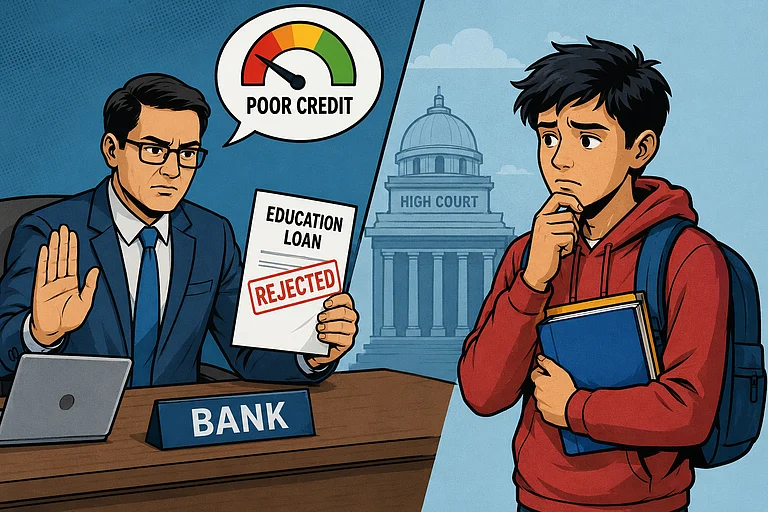
Choosing the Wrong Loan Amount
Another one of the most common mistakes students make is choosing the wrong loan amount. Some make the assumption that they will work part-time and earn through that and choose a lesser loan amount; however, doing this lands the student in a sticky situation where they have no wiggle room left for funds and are not able to meet their living requirements. On the other hand, some students choose a much higher loan amount, which ends up becoming something that burdens them in the future. They might secure their education and live comfortably, but by the time they have to repay it, it becomes too huge with the premium and the rate of interest added to it. Students should mindfully calculate the following:
The entire tuition fees, along with costs for books and study materials
Expenses for accommodation
Basic living expenses
Health insurance
Visa, travel and miscellaneous costs
The education loan one opts for should cover the above-mentioned expenses easily.
Ignoring Living Expenses
Many applicants end up just focusing on the tuition fees while ignoring the living costs. Countries like Canada, Australia, Germany, Ireland and the United Kingdom require their students to demonstrate that they are financially equipped to support their living costs during their stay. Visa authorities often specify the minimum maintenance. If the financial documents show that the loan only covers the tuition, without the accommodation and daily expenses, visa officers can question the applicant and even reject the application. Hence, families should prepare a foolproof financial plan that includes emergency expenditure.
Does Taking A Loan Weaken The Visa Application?
As opposed to a common misconception, taking an education loan does not weaken the application and the profile of the student’s visa application. In fact, a sanctioned loan from a recognised bank often strengthens the application as it shows that the student can fund their education on their own. Visa officers are usually more concerned about whether these funds are legitimate and sufficient for the student’s tenure abroad.
“An education loan from a recognised financial institution could actually strengthen a visa application rather than weakening it. This is because visa officers might view it as legitimate and verified proof of funds that shows the student's capability to cover tuition and living expenses. However, for that to happen, the loan must cover the full required amount and should be sourced from an accredited bank or financial institution rather than an unverified private source,” adds Abhishek Kumar, SEBI RIA and Founder at SahajMoney.
When Should Families Begin Planning?
For families of such aspirational students, financial planning should begin 12 to 18 months before the intake is expected. Early preparation gives families sufficient time to build their financial reserves, while also improving their credit profiles if loans are required. Even comparing education loan offers from different lenders matters a lot. “Families planning to send their kids for foreign education should ideally plan years in advance and then begin to source the funds required for it at least 12 to 18 months before the intended academic intake. That allows them sufficient time to build required bank balances by liquidating their investments and establishing a clean financial trail without sudden, unexplained deposits. It also provides them an opportunity to get formal loan sanctions, evaluate interest rates, and manage foreign exchange risks,” adds Kumar. Starting early also reduces the likelihood of decisions being made in a hurry, which can also affect the visa application.
A visa application for students is not just an assessment of academic merit; it is also an evaluation of their financial preparedness. Applying for loans early on, estimating the cost of education and living there, and keeping financial records clear and maintained improves the chances of visa approvals.





