






Summary of this article
US inflation stayed at 3.4 per cent in August, keeping rate hike bets alive
Higher US yields could pressure Indian bonds, equities and the rupee
Expensive crude and a weaker rupee could add further pressure on markets
US inflation remained stubbornly above the Federal Reserve's 2 per cent target in August, keeping pressure on the central bank to raise interest rates at its September 15-16 meeting.
The Consumer Price Index (CPI) rose 0.4 per cent in August from the previous month and was up 3.4 per cent from a year earlier, according to the US Bureau of Labor Statistics. Annual inflation was unchanged from July. The August reading was broadly in line with market expectations, but it still leaves inflation well above the Fed's target.
The latest inflation data comes at a difficult time for the US central bank. Oil prices have surged amid the war with Iran, raising concerns that higher energy costs could feed into broader inflation. At the same time, the US labour market has remained stronger than expected, giving policymakers less room to ease monetary policy.
The Fed's rate-setting panel is scheduled to meet on September 15 and 16. Markets are currently pricing in a high probability of a 25-basis-point rate hike, which would take the federal funds target range to 3.75-4.00 per cent.
The core Personal Consumption Expenditures (PCE) price index, released August-end, which excludes food and energy and is closely watched by the Federal Reserve, rose 3.3 per cent year-on-year in July. The August PCE data will be released only later this month.
What It Means For Indian Markets
A higher-for-longer US rate environment could put pressure on Indian equities, bonds and the rupee as global investors reassess the relative attractiveness of US assets.
"After the higher-than-expected US inflation, markets may expect the Fed to remain hawkish for longer. This could push US yields and the dollar higher, putting pressure on gold prices in dollar terms. However, a stronger dollar could weaken the rupee, which may provide some support to gold prices in India and limit the downside," says Satish Dondapati, fund manager ETF, Kotak Mutual Fund.
The immediate risk for Indian markets is not just a possible Fed rate hike. It is the combination of higher US yields, a stronger dollar and elevated crude oil prices.
The 10-year US Treasury yield nearing 5 per cent makes US government bonds more competitive with riskier assets. It also raises pressure on emerging markets such as India.
The benchmark 10-year US Treasury yield surged to 4.98 per cent on September 11, its highest level since late 2023, before easing later in the session.
If yields stay elevated, foreign investors could become more selective about emerging markets, including India. Higher global rates can also raise the return investors demand from Indian equities and bonds.

How Higher US Bond Yields Impact Indian Bond Markets
Higher US Treasury yields can narrow the yield advantage offered by Indian government securities to foreign portfolio investors (FPIs).
"Higher US yields narrow the spread between Indian G-Secs and US Treasuries, reducing the attractiveness of Indian bonds for FPIs and often triggering FPI outflows from the debt market," says Santosh Meena, head of research at Swastika Investmart.
"This puts upward pressure on Indian bond yields, raises government and corporate borrowing costs, and can weaken the rupee as capital shifts towards dollar assets," he adds.
Meena, however, says domestic factors such as Reserve Bank of India’s (RBI) monetary policy, inflation and liquidity will continue to be the primary drivers of Indian bond yields. Sustained high US yields could nevertheless limit the scope for a sharp fall in Indian yields and keep long-duration bonds under pressure.
What Should Investors Do
For gold investors, a correction caused by higher US yields may not necessarily change the long-term investment case.
Dondapati recommends keeping around 10-15 per cent of a portfolio in gold and adding gradually rather than investing a large amount at one go.
"Even at higher levels, investors can continue with staggered buying and keep a long-term view," he says.
He expects the long-term outlook for gold to remain supported by central bank buying, high global debt, geopolitical uncertainty and greater allocation to gold globally.
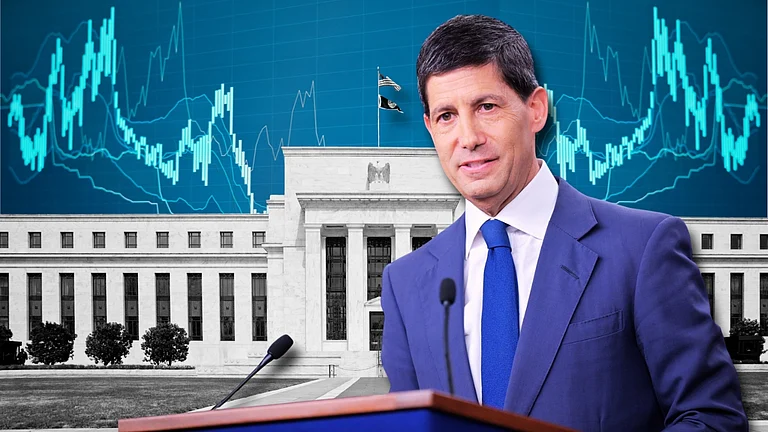


For equity investors, the impact of higher US yields is likely to be uneven across sectors.
"Real estate and housing-related stocks face higher borrowing costs and weaker demand, while non-banking financial companies (NBFCs) and highly leveraged financials see rising funding costs that squeeze margins," says Meena.
Utilities and infrastructure companies could also feel the pressure because higher yields increase the cost of refinancing long-term debt. High-valuation growth stocks and mid- and small-caps can face valuation compression if global risk appetite weakens and foreign investor selling intensifies.
Large private banks with strong deposit franchises may be relatively better placed, while export-oriented sectors such as IT and pharma could get some support from a weaker rupee, Meena says.
The Fed's decision is only part of the story. What matters more for Indian markets is how long US bond yields stay high and whether expensive crude keeps inflation under pressure. If US yields remain high, crude stays expensive and the rupee weakens, Indian markets could face more pressure than they would from a one-time Fed rate hike.





