






Summary of this article
Sensex plunged 1,045 points, while Nifty fell 371 points on October 8
Rising crude oil and US bond yields weighed heavily on investor sentiment
Heavy FPI selling and a weaker rupee added to the market pressure
The Indian stock market had one of its worst sessions in recent weeks on Thursday, October 8, 2026, with the Sensex plunging more than 1,000 points and the Nifty 50 falling below the 22,300 mark. Selling was widespread, hitting large-cap, mid-cap and small-cap stocks alike, as investors turned increasingly cautious through the session.
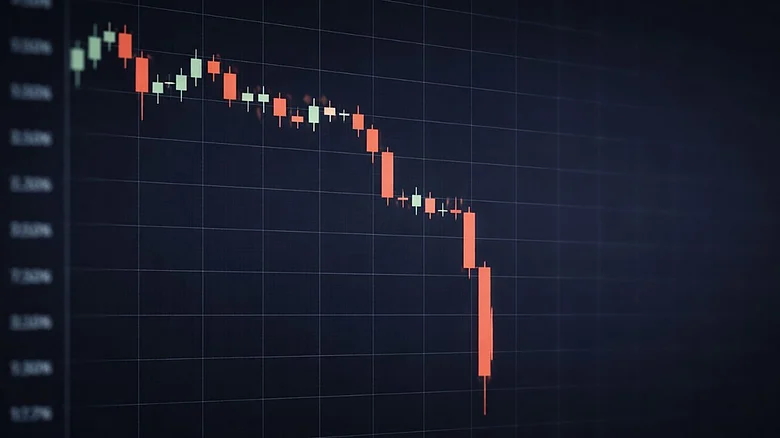
The BSE Sensex fell 1.44 per cent, or 1,045 points, to close at 71,593, while the Nifty 50 declined 371 points, or 1.64 per cent, to 22,231. More than Rs 8 lakh crore of investor wealth was wiped out. The India VIX, also known as the fear gauge, jumped around 10 per cent.
Mid-Caps And Small-Caps Also Take A Hit
The sell-off was not restricted to heavyweight stocks. Both Nifty Midcap and Smallcap indices fell more than 2 per cent. Nifty Metal and Nifty Realty fell more than 3 per cent each, while Nifty Oil & Gas declined more than 2.5 per cent.
Adani Enterprises, JSW Steel, Max Healthcare, ITC and InterGlobe Aviation were among the biggest Nifty losers, while Infosys, Axis Bank and HCL Technologies were among the few stocks that gained.
IT stocks were relatively resilient, with TCS and HCL Technologies trading higher ahead of the second-quarter earnings season.
Vinod Nair, Head of Research, Geojit Investments, said mid- and small-cap stocks were hit by margin concerns and tactical profit booking.
Why the Stock Market Fell Today
Here are the key triggers that dragged the already-weakened stock market lower today
1. Crude Oil Shoots Above $105
Brent crude oil futures surged 5.09 per cent to $105.30 a barrel, while US West Texas Intermediate (WTI) rose 5.04 per cent to $92.73, as of 4:30 PM.
Oil prices jumped as uncertainty around the US-Iran conflict continued to unsettle markets. Reports that the US administration has asked the Pentagon to prepare options for possible military action against Iran have raised concerns over disruption to energy supplies.
For India, a sustained rise in crude prices can increase the import bill, worsen inflation and put pressure on the rupee.


2. Rising US Bond Yields
The US 10-year Treasury yield crossed 5.35 per cent during the day, its highest intraday level since April-May 2002. It had corrected slightly in the previous session.
The move came after minutes from the US Federal Reserve's latest meeting showed that policymakers believed another rate hike could be needed before the end of the year to bring inflation under control.
Higher US Treasury yields make dollar-denominated assets more attractive. For global investors, this can reduce the appeal of taking additional risk in emerging-market equities such as India.
CME’s FedWatch tool shows traders are now pricing in a 71.2 per cent probability of a 25-basis-point rate hike in December, up from 66.3 per cent a day earlier. For the October meeting, markets are largely pricing in a status quo.

3. Rupee Weakens Past 97
The rupee traded at 97.13 against the US dollar, as of 4:30 PM.
A weakening rupee can hurt foreign investors even when their Indian investments hold up in local-currency terms. When they convert their returns back into dollars, currency depreciation reduces their gains.
This becomes a bigger concern when US yields are rising.
"If the Fed's commentary turns more hawkish — lifting the terminal rate or pushing out 2027 cuts — the US yield and dollar story strengthens, and that pressures the rupee," said Nikunj Saraf, CEO, Choice Wealth.
"That currency drag, more than the policy rate itself, is what erodes dollar-adjusted returns and sustains outflows," he added.

4. FPI Selling Picks Up
Foreign portfolio investor (FPI) selling has intensified sharply in October. FPIs have sold Rs 31,282 crore from Indian markets in just the first eight days of October, including primary and secondary markets. That is nearly as much as the Rs 35,861 crore they sold in the entire month of September.
The pace of selling has therefore accelerated significantly. In September, FPIs sold Rs 19,855 crore between September 28 and 30 alone, including Rs 10,743 crore on September 30, their biggest single-day outflow of the month.
FPI selling can put further pressure on the rupee. When foreign investors sell Indian assets, they convert the proceeds into dollars, pushing up demand for the US currency. A weaker rupee then eats into their dollar returns, giving them another reason to pull money out. This creates a vicious cycle where FPI outflows weaken the rupee, and a weaker rupee makes Indian assets less attractive to foreign investors.
5. RBI Rate Hike Adds To Investor Worries
The Reserve Bank of India's (RBI) decision to raise the repo rate by 25 basis points to 5.50 per cent and shift its stance towards “calibrated tightening” has added to concerns about domestic financial conditions.
Higher rates can weigh on borrowing, demand and corporate earnings. Rate-sensitive sectors bore the brunt in today’s session, with Nifty Realty falling more than 3 per cent.
"The RBI's recent rate hike was largely expected. What the market is adjusting to is the shift in stance of the central bank, along with higher crude prices, a softer rupee and sustained foreign selling," said Bijon Pani, chief investment officer, Alternatives, Godrej Asset Management.





