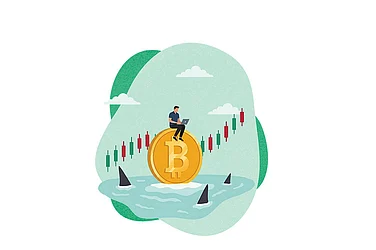
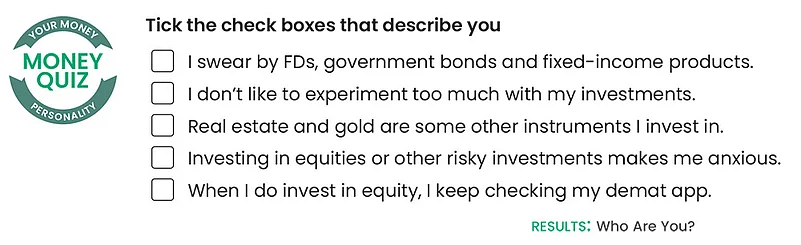
If you still carry a printout of all your tickets, your money is locked up in fixed deposits (FDs) and recurring deposits (RDs), and bulls and bears are just animals to you, it is likely that you are a safety seeker. You may prefer guarantee and peace of mind over lower returns, you do not like to experiment too much with your finances, and your investment decisions are usually driven by caution.
A typical safety seeker stays away from the stockmarket and equity investments, viewing volatility as a persistent threat rather than an opportunity. The psychological pain of losing a rupee far outweighs the temporary joy of making money. However, focusing only on stability and guarantees can rob you of lucrative opportunities.
What Works

1 October 2026
Get the latest issue of Outlook Money

Safety seekers or conservative investors are indeed safe, at least from the market and social media noise. Since they do not make impulsive, emotion-driven investment decisions, they remain immune to big swings in the market or the latest trends that everyone flocks to. That way, they steer clear of recency bias, herd mentality and other behavioural errors. Their ability to remain unaffected is a massive advantage, as they do not waver from their financial goals.
Also, they do not face the risk of losing their entire capital, a danger that hangs on the head of risk takers who may not diversify.
Safety seekers usually build a portfolio that can protect them against any eventuality. For that, they need to have the discipline of investing regularly, especially because they steer clear of risk and can only expect modest returns. This unwavering discipline also ensures they always have immediate access to their funds, providing a deep sense of psychological peace that very few other investors manage to achieve.
What Doesn’t
Despite the comfort safety provides, too much caution, paradoxically, comes with its own set of dangers.
Avoiding risk is a risk in itself: the risk of not being able to keep pace with inflation and missing out growth opportunities. As the value of money decreases over the years and the cost of living increases, the returns from low-risk instruments may not be enough to fund your financial goals.
“If inflation is at 6 per cent and a fixed-income instrument yields 7 per cent, the real rate of return is effectively nil or negative (if you include taxes as well),” says Harshit Patel, a certified financial planner (CFP) and founder of Invest Wissen.
For the younger generation, this could also mean compromising on lifestyle costs in the present. “Investors avoiding equity entirely end up paying a heavy ‘safety tax’ over the course of their lives. Without the compounding power of equity, they must save a significantly higher percentage of their current income to reach the same financial target, severely restricting their present lifestyle,” Patel adds.
For instance, suppose you are 30 years old, have current monthly expenses of Rs 50,000, and wish to retire at the age of 60, assuming 6 per cent inflation, you would need to build a retirement corpus of approximately Rs 6.26 crore. To build this corpus, you would need to invest around Rs 20,000 per month if your investment earns a 12 per cent annual return, as might be possible with equity. However, in a lower-yielding instrument earning 6 per cent, you would need to invest around Rs 64,000 per month.
Similarly, if you are planning for the higher education of your children you may fall short, as education inflation is much higher than regular inflation. Besides, with job opportunities shrinking, it’s possible that you may need to fund your children not just for their education but for their other needs for a longer-than-planned period.
Experts insist that investing in equity has become requisite for long-term survival, and can no longer be categorised as an aggressive strategy. Says Patel: “The key reason is preserving purchasing power. It is a mandatory defensive strategy to ensure their money actually buys the same lifestyle 10 or 20 years down the line.”
Moreover, the era of high deposit rates on FDs is long over; they now typically are in the range of 6.50-8 per cent per annum.
To help risk-averse investors confidently navigate a dynamic economic environment, Patel recommends utilising structured hybrid financial products, such as balanced advantage funds and multi-asset allocation funds. “Safety seekers can unlock value by taking a phased, risk-managed approach rather than jumping directly into volatile markets,” he adds.
These instruments dynamically manage the mix between debt, equity, and gold, thus providing a smoother investment journey. “They can capture inflation-beating equity returns without enduring the steep market roller coasters that trigger their financial anxieties,” adds Patel.
With modest returns comes a modest life. Ensure you are at peace with that if you want to stick to this personality type.

Your Superpower
You are disciplined and well-prepared for all eventualities. You don’t give in to market noise and stick to your plan even if it is modest
Your Blind Spots
Your investment returns may be unable to outpace inflation
Avoiding risk completely is a risk in itself to achieving your long-term financial goals
Even if you are a senior citizen, lack of growth can exhaust your capital and make you dependent when you are older
ayush.khar@outlookindia.com