



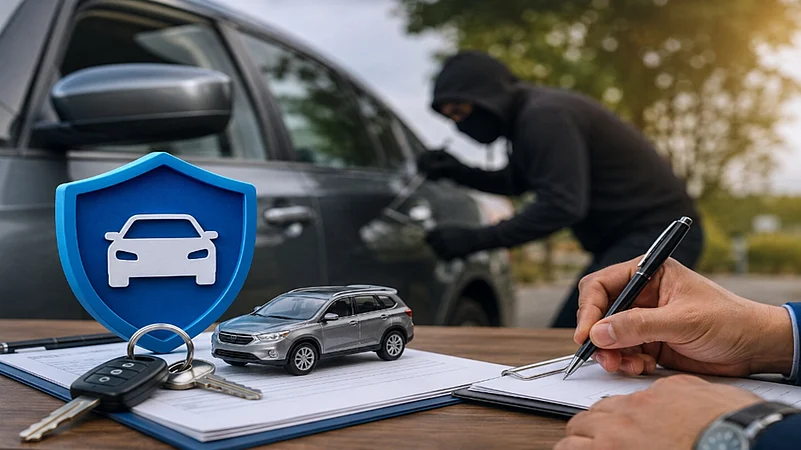

Summary of this article
Buying a comprehensive policy is an important first step, but understanding the policy's terms, exclusions, and the responsibility to take reasonable care of the insured vehicle can be equally important.
Every policy comes with certain conditions. One such condition is that the policyholder is expected to exercise reasonable care of the insured vehicle.
A few minutes spent understanding those details at renewal can make a meaningful difference later.
Delhi-based Rajan Gupta had never thought much about what happened after his car was stolen. Like most car owners, he knew the basics: keep the insurance active, renew it on time, and call the insurer if something goes wrong. So, when his nine-month-old Maruti Brezza disappeared from outside a petrol station, he immediately called the police and informed his insurer. He had comprehensive motor insurance and assumed the theft would be covered.
Then came a question he had never expected: Where were the keys when the car was stolen?
Gupta had left the keys in the ignition while he stepped away briefly. That one detail became an important part of how his claim was assessed.
His experience highlights an aspect of motor insurance that many car owners overlook. Buying a comprehensive auto insurance policy is an important first step, but understanding the policy's terms, exclusions, and the responsibility to take reasonable care of the insured vehicle can be equally important.

The Fine Print Matters When The Unexpected Happens
Most people buy motor insurance with one simple expectation: if something happens to the car, the insurance will take care of it. And in many situations, that is exactly what insurance is designed to do.
However, every policy comes with certain conditions. One such condition is that the policyholder is expected to exercise reasonable care of the insured vehicle. That doesn’t mean that a denial is automatic for every mistake or lapse in care. It depends on the specifics of the incident, the wording of the policy, and the insurer’s assessment of the claim.
For example, a car that was properly locked and stolen despite reasonable precautions is a very different situation from a vehicle left unattended with the keys inside.
“The purpose of insurance is to provide financial protection when unforeseen events occur. At the same time, policyholders should understand the responsibilities attached to their cover,” says Sanjiv Bajaj, Joint Chairman and Managing Director, Bajaj Capital Ltd. “Good insurance planning is not only about choosing the right policy. It is also about understanding what the policy covers, what it excludes and what the customer needs to do at the time of a claim.”
That distinction is worth understanding before a claim ever arises.
What Happens If Your Car Is Stolen?
The circumstances surrounding a theft can influence how a claim is evaluated.
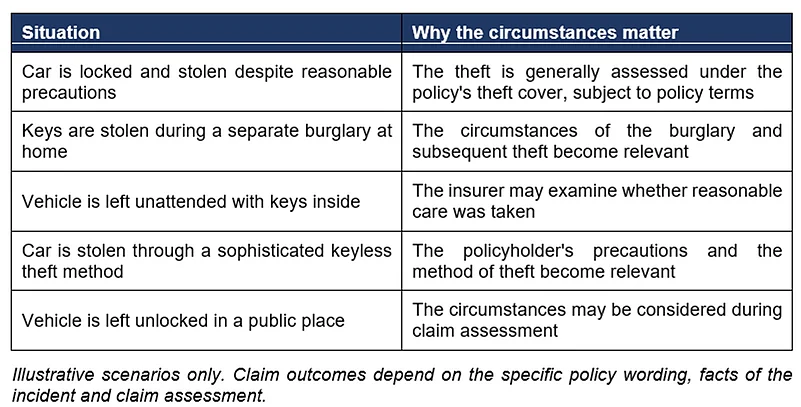

The takeaway for customers is simple: theft cover does not mean that every theft will be assessed in exactly the same way. The circumstances matter.
Your First Steps After a Theft Matter
If a vehicle is stolen, the priority should be to act quickly. File a police complaint or FIR as soon as possible and inform the insurer promptly. Keep both sets of keys safely available, along with the insurance policy, registration documents and purchase invoice.
The FIR is particularly important because it records the circumstances of the incident and forms part of the documentation required during the claim process.
“Customers often think of insurance only when something goes wrong. By then, understanding the process can become stressful,” says Bajaj. “Taking a few simple precautions in advance, keeping documents accessible, securing spare keys and knowing how to report a theft can make the claims journey considerably smoother.”
If the RC was inside the stolen vehicle, the policyholder may need to obtain a duplicate. This is when having digital copies of important documents safely stored can help. The same principle applies to the vehicle's spare keys. Keeping both sets safely at home and knowing where they are can avoid unnecessary complications when a theft claim is being processed.
Know Your Policy Before You Need It
The policy document contains important information about coverage, exclusions and the responsibilities of the policyholder. Yet most people read it only when they need to make a claim, when there is already enough stress to deal with.
A few minutes spent understanding those details at renewal can make a meaningful difference later. Check what your theft cover includes. Understand the documentation required in the event of a claim. Know where your spare keys are. Keep your vehicle documents safely accessible. And if something in the policy is unclear, ask your insurer or insurance advisor to explain it.
Because the best time to understand your motor insurance is not after your car disappears. It is while it is still safely parked in your driveway.





