





Summary of this article
The outperformance of micro-markets over the rest of the real estate market suggests a notable shift in buying psychology.
Areas along expressway corridors, infrastructure around metro connectivity, or near airports have shown steady traction as the need for enterprise expansion translates into contiguous growth in the housing landscape.
Housing prices in real estate projects along Dwarka Expressway, Gurugram, have surged about 3.5 times during the last five years due to high consumer demand amid improved infrastructure.
India’s real estate story is no longer defined by city-wide momentum alone; it is increasingly shaped by the performance of individual micro-markets. As the property market evolves, making room for micro-demographics, investors are no longer just investing based on the macro-level location, but are instead seeking specific investment corridors identified by the nexus of infrastructure delivery, work-related amenity supply, and liveability.
As such, the potential for high-yield investment is no longer located at the speculative market level, but at micro-level markets defined by the nexus of infrastructure visibility and value pricing.
Incidentally, the outperformance of micro-markets over the rest of the market suggests a notable shift in buying psychology. For homebuyers or investors,it is not the name of the city but the visibility of infrastructure that takes centrestage. Areas along expressway corridors, infrastructure around metro connectivity, or near airports have shown steady traction as the need for enterprise expansion translates into contiguous growth in the housing landscape.
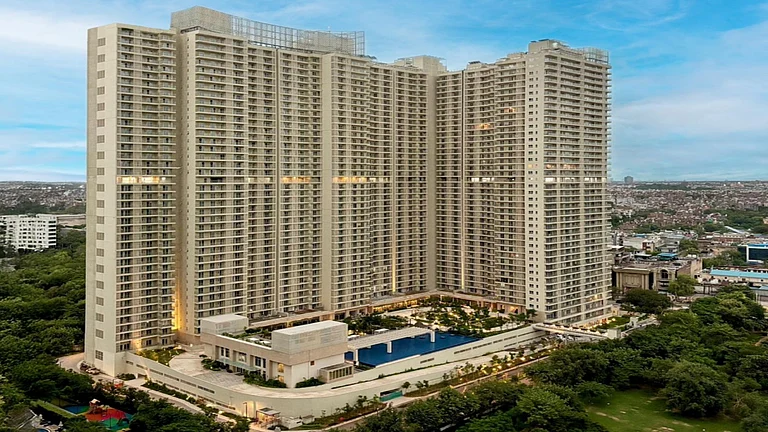
According to data from Cushman and Wakefield, Delhi-National Capital Region (NCR) recorded 14,248 new residential unit launches in Q4 2025, marking a 39 per cent rise over the previous quarter, and 2.5X higher on a year-on-year (y-o-y) basis. Gurugram witnessed 50 per cent of the quarterly launches. The majority of the launches were seen in peripheral locations, such as Dwarka Expressway (27 per cent), New Gurgaon (11 per cent), and Yamuna Expressway (8 per cent). Improved and hassle-free connectivity to the IGI Airport, affordability relative to central Gurgaon, and strong return prospects are driving residential activity in New Gurgaon and Dwarka Expressway.
A market analysis report by JLL shows that in Q4 2025, the total residential real estate market registered robust growth and recorded all-time sales of 302,867 units in the top-seven cities, including Delhi, Gurugram, Noida, Greater Noida, Ghaziabad, Faridabad, and Sohna. Faridabad is gradually becoming a serious rival to these cities, providing a cost-effective yet high-growth option for real estate investment.
Mohit Goel, managing director, Omaxe Group, says, “The NCR story today is no longer linear; it is corridor-driven and deeply infrastructure-aligned. While Gurugram has matured, markets like Faridabad are entering a structurally stronger phase. What differentiates Faridabad is land availability at scale, which allows for planned development rather than fragmented growth. The upcoming Noida International Airport at Jewar is catalysing the entire southern NCR belt, including Faridabad, by improving regional mobility and investor perception. As connectivity grids tighten, Faridabad stands at the intersection of affordability, land depth, and long-term industrial-commercial spillover demand.”
Pankaj Jain, founder and CMD, SPJ Group, says, “While new corridors attract attention, untapped and high-potential micro markets like Old Gurgaon continue to demonstrate the strength of established ecosystems. The location benefits from built social infrastructure, dense catchment, consistent commercial activity, and a stable tenant base. For investors, that translates into predictable rental absorption and lower volatility. Limited land availability also ensures that supply remains disciplined, which protects long-term value. In our view, high yield is not always about early entry; it is also about dependable cash flows. Mature locations like Old Gurgaon offer that balance between appreciation potential and rental stability.”
Identifying a high-yield micro-market today requires more than tracking price charts; it demands a sharper investment lens. The first filter is infrastructure visibility: projects that are physically progressing, not merely announced. Equally critical is the balance between residential supply and commercial depth, as sustained rental demand often follows employment hubs.
According to Square Yards, housing prices in real estate projects along Dwarka Expressway, Gurugram, have surged about 3.5 times during the last five years due to high consumer demand amid improved infrastructure.
A strong corporate profile along Noida Expressway, coupled with a continuous pipeline of premium residential, has resulted in a good rental market, led by IT and technology personnel. Now that infrastructure in Dwarka Expressway and SPR corridors is nearing completion, a fresh appreciation cycle will come on the back of a balanced mix of luxury and mid-premium developments in these corridors.
Yukti Nagpal, director, Gulshan Group, says, “The Noida Expressway has decisively transitioned into a refined, end-user–driven luxury corridor. The demand today comes from accomplished professionals, entrepreneurs, and global leaders who seek residences that mirror their stature and expectations. With transformative infrastructure, such as the metro expansion and the Noida International Airport visibly advancing, the region’s credibility is firmly established. The shift toward branded, design-led developments reflects a more discerning buyer mindset - where excellence in construction, service standards, and developer legacy is non-negotiable. In such a market, appreciation is not chased; it is earned through quality, vision, and ecosystem strength.”
Bhupindra Singh, COO, Rise Infraventures, says, “Residential buyers today are significantly more informed than they were a decade ago. They are studying micro-markets through practical indicators: actual possession timelines, rental absorption in completed projects, social infrastructure readiness, and the execution track record of developers. For many, especially those buying a first or second home, the decision is less about entering the ‘next big corridor’ early and more about choosing a neighbourhood where daily life is already functional. In Delhi-NCR, several residential pockets meet that criteria, but selectivity is critical. Sustainable value in housing will emerge in corridors where connectivity, community infrastructure, and disciplined supply create long-term liveability rather than short-lived hype.”



Investors are judging the entry price in relation to replacement cost to estimate appreciation headroom for the long term. Rental absorption velocity provides another practical indicator of market health, reflecting real demand as opposed to speculative demand. More than anything else, developer credibility and track record of execution remain central, given that timely delivery and quality determine whether the projected returns become tangible gains.
Therefore, the broader shift underway signals the gradual fading of speculative land banking as a dominant strategy. Capital is increasingly aligning with corridors where livability, infrastructure delivery and ecosystem planning converge. In this evolving framework, Delhi-NCR’s ongoing transformation offers a useful blueprint, illustrating how infrastructure-led corridors, when supported by residential and commercial depth, can create sustained wealth cycles rather than episodic spikes in pricing.





