

Summary of this article
If commuting between Gurugram, Faridabad and Noida becomes smooth and predictable, homebuyers can start thinking beyond distance alone.
Improved connectivity with Gurugram and Faridabad will push buyers to think more carefully about budget, commute time and lifestyle.
As the corridor moves closer to execution in the due course of time, it could bring a more balanced phase of real estate development cycle across NCR.
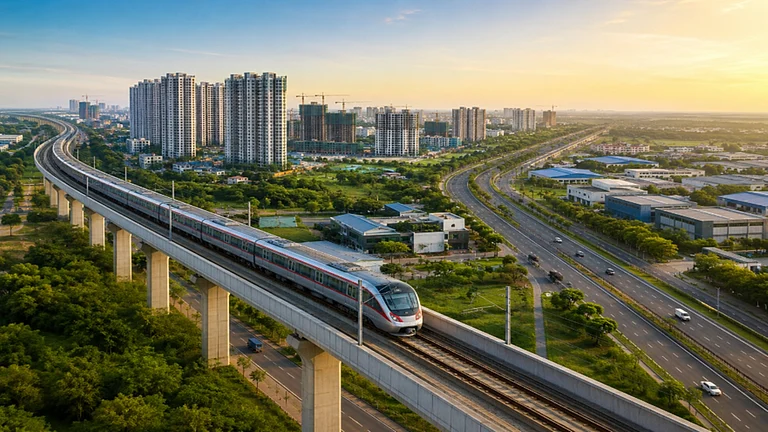
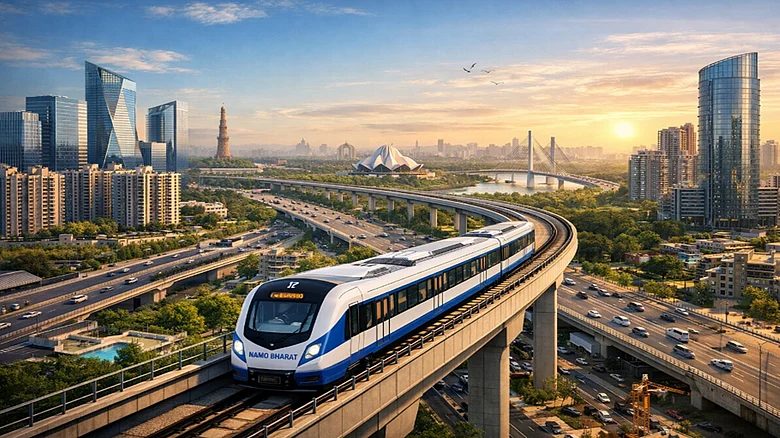
The National Capital Region (NCR) is witnessing a hyperactive growth in terms of infrastructure and innovative ways of utilising public transport for better connectivity. With an estimated investment of around Rs 15,000 crore, the proposed Gurugram-Faridabad-Noida Namo Bharat Corridor is increasingly being seen as a promising infrastructure project for the next phase of expansion in NCR. As the Detailed Project Report (DPR) for the same is finalised now, the largely elevated high-speed corridor is designed to reduce travel time across the three major urban centres to under an hour. This is potentially going to transform mobility patterns across NCR.
Infrastructure has always shaped where people choose to live in the region. Be it new expressways or metro lines, such developments have opened up fresh residential spaces. The proposed Namo Bharat corridor connecting Gurugram, Faridabad and Noida is expected to do the same. Homebuyers will be able to focus less on distance and more on space, lifestyle and long-term affordability, with faster and more reliable travel that is expected with this latest move.
The timing is significant as NCR’s property market is already growing steadily. In 2025, a major part of housing sales was generated from end-users and not short-term investors, showing more stable demand. Office leasing remains strong, backed by IT firms, global capability centres (GCCs) and flexible workspace operators. Investment is also increasing in warehousing and data centres. With better regional access, both housing demand and commercial activity could see further momentum.
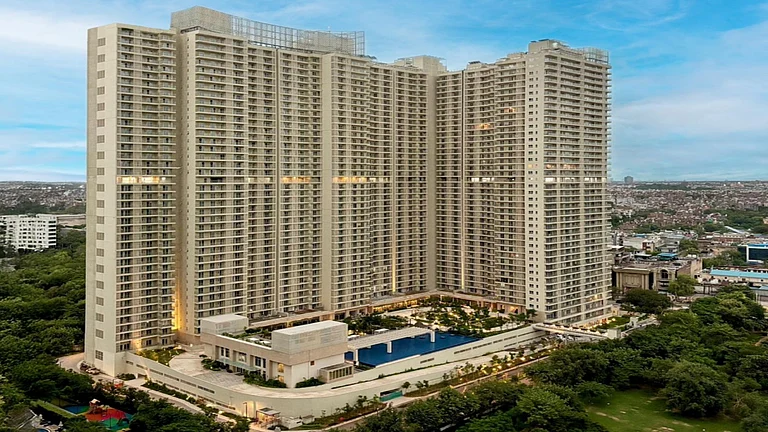
Among the three cities on the proposed corridor, Faridabad could see the biggest change. It has long been seen as a more affordable option compared to Gurugram and central Noida, but concerns around mobility have held it back. A high-speed regional transit link could improve this by providing faster and more reliable access to major job hubs across NCR, making the city more attractive to homebuyers.
If commuting between Gurugram, Faridabad and Noida becomes smooth and predictable, homebuyers can start thinking beyond distance alone. Families looking for bigger homes, planned communities and greener surroundings could consider Faridabad without worrying about being cut off from work hubs. Over time, this can help the city move from being a secondary option to a stronger residential choice in NCR.
Developers say the corridor may change how buyers see this region.
Mohit Malhotra, Founder & CEO of NeoLiv, says, “The Namo Bharat corridor has the potential to change how homebuyers view NCR by making cross-city travel faster and predictable. It positions the golden trinity of Faridabad, Gurgaon and Noida interconnected with commuting becoming seamless. Faridabad comes out as the third megacity of NCR and a strong first-choice for families seeking space, a luxury community and large organised green surroundings without losing access to commercial hubs. As the rapid rail advances, we foresee a more end-user-focused market where connectivity, planning and delivery standards shape long-term value.”
Developers with large land parcels in Faridabad could be well placed to tap into the rising demand. As buyers increasingly look for well-planned communities with good amenities, projects in organised micro-markets will see fresh interest. Better access could further support this demand and strengthen the appeal of such projects.
Manik Malik, CEO, BPTP, notes, “The upcoming Namo Bharat RRTS corridor is a significant milestone in strengthening integrated mobility across the NCR. It establishes basic infrastructure which enables fast multi-modal transportation access between Gurugram, Faridabad, Noida and Greater Noida to create accessible urban growth initiatives. The construction of major infrastructure projects enables residential growth and economic expansion because these projects establish vital connections between population areas and their vital work and business centres. The upgraded regional connection will bring special advantages to Faridabad because it will create better access, which will improve life quality for people who live there.”
The impact will not be limited to Faridabad. In Gurugram, the Namo Bharat RRTS corridor is expected to connect with key routes like NH-8, Dwarka Expressway, the metro network and Southern Peripheral Road. Better multi-mode access could allow professionals to live in Faridabad or Noida while working in Gurugram. Over time, this wider choice can also help reduce pricing pressure in the city’s main business areas.
Noida and Greater Noida, which already have strong metro and expressway networks, could also see fresh traction. Improved connectivity with Gurugram and Faridabad will push buyers to think more carefully about budget, commute time and lifestyle. Instead of choosing homes only based on how close they are to work, families can focus more on space, amenities and long-term value.
Sam Chopra, President & Country Head, eXp Realty India, says, “The finalisation of the DPR for the Gurugram–Faridabad–Noida Namo Bharat corridor is a pivotal moment for NCR’s next phase of urban and real estate growth. Regional transit systems of this scale redefine how people live and invest by reducing travel time and unlocking well-planned expansion zones. As commuting becomes easy across key NCR hubs, demand will naturally shift toward emerging, transit-linked corridors. In this evolving landscape, accurate data and transparent advisory will be essential.”
As the corridor moves closer to execution in due course of time, it could bring a more balanced phase of the real estate development cycle across NCR. Infrastructure projects usually have a wider impact, affecting land prices, shaping commercial activity and changing where people choose to live. With relatively competitive pricing, a strong residential base and better connectivity ahead, Faridabad could become an important chapter of the region’s next phase of market shift.
The final impact of this project will depend on fast work completion and general market conditions, but the Gurugram-Faridabad-Noida Namo Bharat Corridor has already begun to influence debates about NCR's upcoming development. The project would achieve its design goals to build transit-based development systems which would link regional growth systems into one unified development network.