




Summary of this article
Gold loans and jewellery sales can provide quick cash during emergencies
RBI caps gold loan-to-value ratios at 75–85 per cent, depending on loan amount
Personal loans avoid pledging assets but may involve higher interest costs
Selling jewellery eliminates repayment risks but means permanently losing the asset
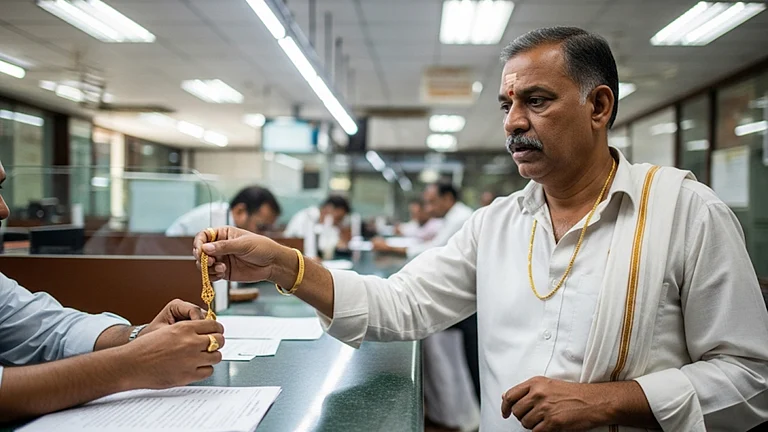
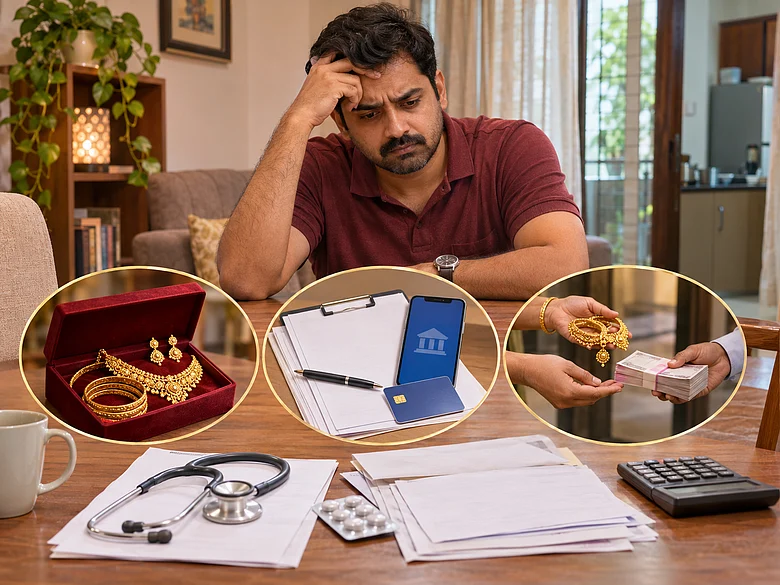
An unexpected hospital bill, a job loss, or a delayed payment can leave a household needing cash before savings are available. Often, a gold loan or jewellery sale may be completed within hours, while a fresh personal loan can take longer. But quick access does not tell you how much will land in your account, how much you will repay, or what asset you may lose. A gold loan pledges jewellery; a personal loan adds an unsecured equated monthly instalment (EMI), while selling gold ends the debt risk but parts with the asset. Compare net cash, full cost, and repayment certainty before choosing.
Compare Cash, Cost, And Speed
“How much money will actually come into my bank account? And what will this money finally cost me? Take a gold loan. If you already have gold jewellery, this can be one of the quickest ways to raise cash,” says Sujith Salunkhe, Securities and Exchange Board of India (Sebi)-registered investment advisor and founder and chief investment advisor of MoneyDhan.
A gold loan is valued on the gold content and purity, not the jewellery’s purchase price. Stones and making charges do not count. The Reserve Bank of India (RBI) rules cap consumption gold loans at 85 per cent of value up to Rs 2.5 lakh, 80 per cent up to Rs 5 lakh, and 75 per cent above that.
For eligible gold worth Rs 1 lakh, a borrower may get up to Rs 85,000 before charges. At illustrative three-year rates, a gold loan at 10 per cent means an EMI of Rs 2,743 and total interest of Rs 13,734; a personal loan at 15 per cent means Rs 2,947 monthly and Rs 21,075 total interest.
A personal loan is unsecured. Income, existing EMIs and credit history affect eligibility and pricing. Compare the Annual Percentage Rate (APR) in the Key Fact Statement, including fees, rather than the advertised rate.
“A gold loan suits a short cash gap with a clear source of repayment within months, for example, a delayed client payment, a bonus, or a maturing fixed deposit,” says Thomas Stephen, director and head – preferred, Anand Rathi Shares and Stock Brokers.
Jewellery sale avoids EMIs and interest, but making charges, GST, and stones are not recovered. Buyers may deduct for purity or refining, so get deductions in writing.
Check The Repayment Risk Before Borrowing
Gold loans and sales can be completed in hours; personal-loan disbursal ranges from minutes for pre-approved borrowers to days for new applications.
Check the gold loan’s repayment structure. Interest-only or bullet repayment can leave the principal due at maturity. If the borrower cannot repay, the lender may auction the pledged jewellery after following the required process. Review the schedule and fees before pledging family gold.
“A personal loan suits someone with no gold, or whose cash requirement is larger than the gold can support, and who has stable income and a reasonably strong credit profile,” says Stephen.
A personal loan avoids pledging jewellery, but missed EMIs can attract charges and damage the borrower’s credit record. Ensure the EMI fits the budget and check if an upfront fee reduces the amount disbursed.
“Selling suits a large or long-running need, a household that is unsure it can repay, or jewellery with limited emotional value. It ends interest and repayment risk, but the gold is gone,” says Stephen.
An heirloom may have emotional worth that no resale quote captures.
“The fastest money is not always the cheapest money. And the cheapest loan is not useful if you are not reasonably sure how you are going to repay it,” says Salunkhe.
For a temporary gap with a clear repayment source, consider a gold loan. Stable income may make a personal loan manageable. If repayment is uncertain, selling some jewellery may avoid adding debt. Borrow only what you can repay on time.
FAQs
What should I compare before choosing between a gold loan, a personal loan, and selling jewellery?
Compare the net cash you will receive, the total borrowing cost or sale deductions, how quickly funds will be available, and whether you can repay a loan on time.
What happens if I cannot repay a gold loan?
The lender may auction the pledged jewellery after following the required process. Check the repayment schedule, fees, and consequences before pledging gold.
When might selling jewellery make more sense than borrowing?
Selling avoids interest and EMIs, but you give up the gold and may lose value to deductions. It may suit a household that is unsure it can repay or has jewellery with limited emotional value.