





Summary of this article
If you have an emergency situation where you need cash, you can take a gold loan. But see if it would be cheaper to get a personal loan.
Make sure you know what interest rate your loan will carry and if there are any extra fees. Also, how long you have to pay back the loan and how they store your jewellery.
Don't borrow the maximum amount. If you take out less, you will have an easier time paying back the loan. And it’s less likely you'll lose your family's jewellery.
A family needs money to pay a college fee. A small business owner has to make an urgent payment to a supplier. In both cases, there may be gold jewellery at home that could help raise the money. The question is whether taking a loan against it makes more sense than applying for a personal loan or using another source of credit.
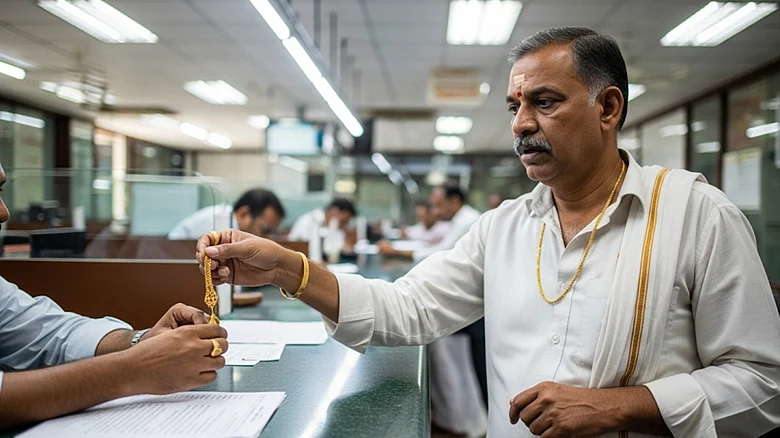
For many borrowers, a gold loan offers a way to arrange funds without selling jewellery. The lender keeps the gold as security, and the borrower gets it back after repaying the loan and meeting the agreed conditions. But pledging jewellery is a financial decision that needs as much thought as taking any other loan.
Vishal Singh, Managing Director, Country Head – Assets and Strategic Alliances, Consumer Banking Group, DBS Bank India, says borrowers are looking at gold loans alongside personal loans, credit cards and other borrowing options, depending on their needs.
When Does A Gold Loan Make Sense?
Speed is often an important consideration. Gold loans can be processed relatively quickly because the jewellery itself serves as collateral. The lender assesses its purity and value before deciding how much to lend.
The interest rate may also be lower than that on a personal loan, since the lender has security against the amount advanced. The difference, however, varies from one lender and product to another. A borrower should compare actual offers rather than assume that every gold loan will be cheaper.
A personal loan has one clear advantage: there is no need to hand over family jewellery. For someone who qualifies for a competitive interest rate and has a stable income, it may be a more comfortable option. Credit cards can work for smaller expenses if the bill is paid in full by the due date. If the balance keeps rolling over, the interest cost can rise sharply.
The choice, therefore, is not simply between a secured and an unsecured loan. It is about what the borrower can afford and how soon the money can be repaid.

The Repayment Plan Matters More Than The Loan Amount
Singh says, “Consider someone who pledges jewellery to meet a business expense, expecting a payment from a customer within a month or two. If that payment is delayed, the borrower may struggle to meet the loan repayment terms. The gold is still pledged, and interest and other applicable charges continue to add to the cost.”
This is why the terms of a gold loan deserve close attention. Some loans require periodic interest payments, with the principal due later; others follow different repayment arrangements. Borrowers should establish the payment dates, the total cost and the consequences of missing a payment before signing the agreement.
“They should also check how the jewellery is valued and recorded, where it will be stored and how it will be returned after the loan is closed,” he says.
These details may seem secondary when money is urgently needed, but they become important once the jewellery has been handed over.
Don't Pledge More Gold Than Necessary
Rising gold prices can allow borrowers to raise a larger amount against the same jewellery. That can be helpful when a substantial sum is required, but it can also tempt people to borrow more than they need.
If the immediate requirement is Rs 80,000, taking a gold loan of Rs 1.5 lakh just because that amount is available makes little sense unless there is a clear need for the extra money. A larger loan means a greater repayment burden.
“Gold prices can fall, too. If the value of the pledged jewellery declines, the loan-to-value ratio may be affected. Depending on regulatory requirements and the loan agreement, the lender may seek additional security or ask for partial repayment,” Singh says.
For many households, jewellery is not just another asset. It may be intended for a daughter's wedding or have been passed down through the family. The possibility of losing it following a default makes it important to be realistic about repayment capacity.


A gold loan can help bridge a cash shortage, but it should not be treated as easy money simply because jewellery is available. Before borrowing, compare the interest rate and charges with other options, work out how the repayments will fit into the household budget, and take only the amount required. Keeping the jewellery safe ultimately depends not just on the lender's arrangements, but also on the borrower's ability to repay the loan on time.





