Summary of this article
The Supreme Court permits the withdrawal of life support of a PVS patient, observing no chance of recovery.
Harish Rana has been sustained through life support for the last 13 years.
The common clause guidelines were issued in 2018.
With the ruling, the apex Court set the precedent for future euthanasia cases.
The Supreme Court of India has passed an order on March 11, 2025, allowing passive euthanasia for a man who has remained in a vegetative state for the last 13 years and has been surviving on life support. The Court formally allowed the withdrawal of life support, recognising the fundamental right to die with dignity. The bench led by Justice JB Pardiwala and Justice KV Viswanathan, evaluated the constitutional rights and medical ethics, and, recognising no hope of therapeutic improvement, permitted the end of biological existence.
Case Background
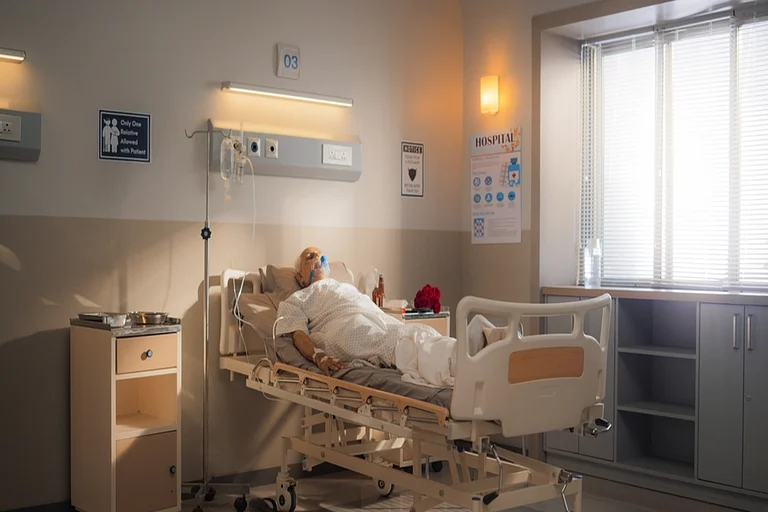
The subject in this case, the man of life support, is Harish Rana, now 32, who, when a young boy, fell from the fourth floor of his paying guest accommodation 13 years ago. The accident resulted in severe brain injury, leaving him in a persistent Vegetative state (PVS) with 100 per cent quadriplegia (a form of paralysis affecting all limbs), as per Live Law report. Since then, Rana has been sustained through Clinically Administered Nutrition (CAN) via surgically installed Percutaneous Endoscopic Gastrostomy (PEG) tubes.
In July 2024, his family sought relief from the Delhi High Court, but the court dismissed their plea because he (Rana) was not terminally ill. Then they approached the Supreme Court in August 2024, which initially refused the plea. In 2025, the family again approached the Supreme Court through a follow-up application, highlighting that Rana’s condition is deteriorating with massive bed sores and no chances of recovery.




The Court then formed a primary medical board to look into Rana’s condition and report. The board reported negligible chances of recovery. The Court ordered the examination by a secondary board constituted by the All India Institute of Medical Sciences (AIIMS).
Both the Primary and Secondary Medical Boards reached a unanimous opinion of withdrawal or withholding of the life support, which means the nutrition should be discontinued.
While seeking passive euthanasia, Rana’s parents expressed that life support was not in their son’s best interest as it only prolonged his suffering without any chance of recovery. Their counsel contended that CAN’s purpose is to provide medical treatment rather than just basic food and water, and thus, if it provides no therapeutic benefit, it should be allowed to be withdrawn legally.

Court Observation
The bench described the medical boards’ findings as a "sad report”. It was observed that the patient's condition has not improved in 13 years. The court expressed special appreciation for the parents’ unwavering devotion and love for their son, saying, "to love someone is to care for them even in the darkest times."
The court noted that CAN is a medical treatment that can be withdrawn based on the judgment of the medical boards, and as per the Common Cause guidelines, Court intervention is not necessary. However, in this case, this judicial order was necessary to set the precedent for the cases in future.
Note that in 2018, a Constitution Bench of the Supreme Court formulated the guidelines for passive euthanasia, which were further modified in 2023, under which life support withdrawal is allowed only when Primary and Secondary Medical Boards approve it.

Court Judgment
The Supreme Court ordered that all medical treatment, including CAN, be withdrawn or withheld, and waived the standard 30-day reconsideration period. The Court directed AIIMS to admit Rana to its palliative care centre and ensure that withdrawal is carried out in a dignified manner. The Bench also issued a nationwide directive requiring the High Courts to instruct their judicial Magistrates to process such intimations and mandated the Union of India to maintain panels of registered practitioners for secondary medical boards. The Court also recommended that the Union Government bring comprehensive legislation to formally regulate passive Euthanasia in India.